

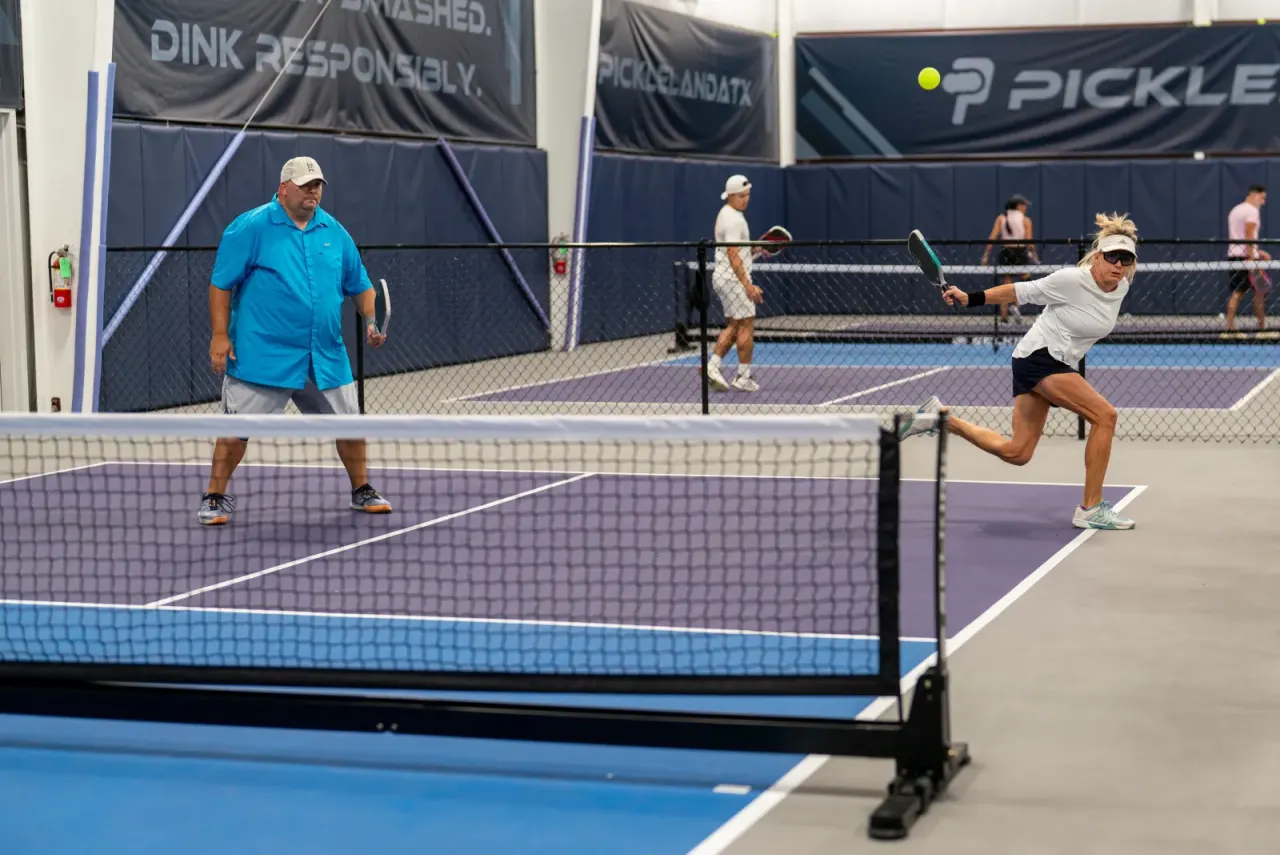
At first glance, a pickleball court and a tennis court look like cousins: same net-in-the-middle layout, similar painted lines, often sitting side by side at the same club. But step onto each one and the differences hit fast. A pickleball court is less than a third the size of a tennis court, the ball moves slower, and the kitchen line changes how you have to position yourself entirely.
Those gaps in size, surface, and speed are exactly what make one sport feel approachable and the other feel like a full sprint. Here’s how pickleball and tennis courts really compare, so you can pick the game that fits your style and fitness.
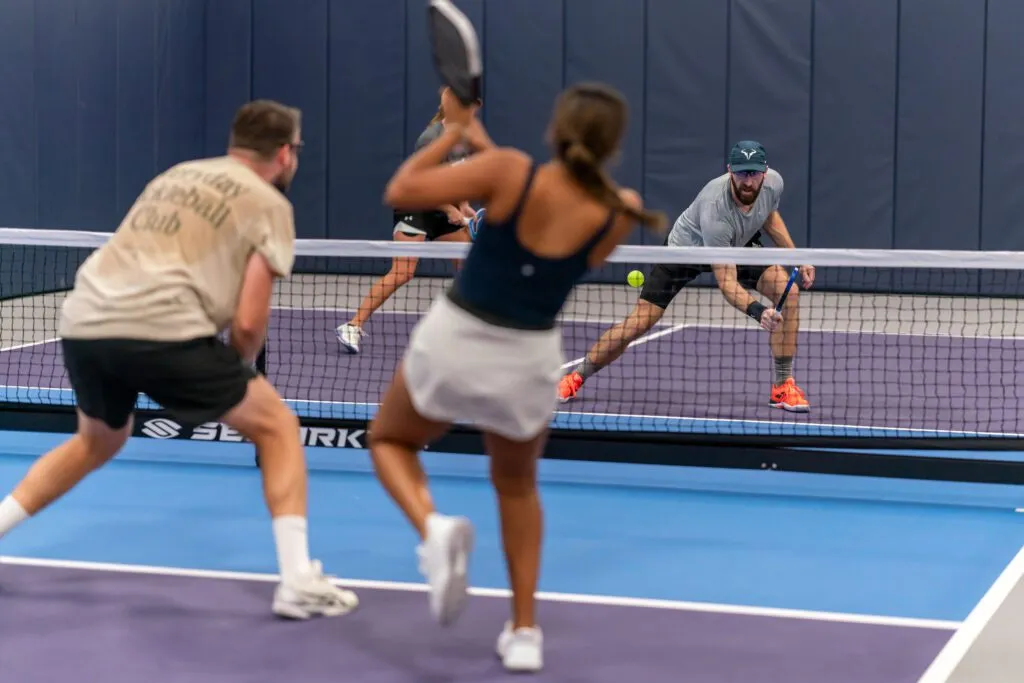
Difference of Pickleball and Tennis
Pickleball is a paddle sport that can be played indoors or outdoors and is popular due to its easy access and social environment. Additionally, pickleball games offer singles and doubles play, making it a flexible choice for all skill levels.
On the other hand, tennis is a traditional racquet sport played on a rectangular court divided by a net. Like pickleball, it can also be played in singles or doubles. Tennis features fast-paced action and strategic gameplay, attracting competitive athletes.
Why Does Court Design Matter?
Keep in mind that the design and layout of a court influence your gameplay. Understanding the differences in court size, materials, and speed enables you to adjust your strategies and improve your performance in both sports.
Here are some key aspects to focus on:
1. Size
Always remember that pickleball courts are smaller than tennis courts, resulting in quicker gameplay and strategic positioning. Below are the specific dimensions for each court type that you should know:
Pickleball Court Dimensions
- **Total Area:**20 feet wide and 44 feet long for singles and doubles.
- **Non-Volley Zone:**7 feet from the net, called the kitchen, prohibits volleys.
Tennis Court Dimensions
- **Total Area:**36 feet wide and 78 feet long for doubles; 27 feet wide for singles.
- **Service Boxes:**Each side has two service boxes measuring 21 by 13.5 feet.
2. Materials
Both pickleball and tennis courts can be built from similar materials, but the finish and texture impact ball bounce and speed. Here’s a quick guide that you should never forget:
Pickleball Court Materials
- Typically made of asphalt, concrete, or acrylic surfaces.
- The textured surface improves ball grip and minimizes slipping.
Tennis Court Materials
- Made of asphalt or clay, with premium courts using synthetic materials.
- Grass courts are also popular but require more maintenance.
3. Speed
Since playing tennis typically provides a faster-paced experience than pickleball game due to heavier balls and larger courts, it’s important to know this for adjusting your game strategy and stamina:
Pickleball Court Speed
- Balls are lighter and plastic, leading to slower gameplay.
- Smaller court size allows for quicker rallies and shorter reactions.
Tennis Court Speed
- Heavier balls with higher bounces create faster-paced tennis games.
- Larger courts demand more movement, affecting strategy and endurance.
Choose the Right Court for You
When you are deciding between playing on a pickleball or tennis court, you need to consider the following factors provided below:
1. Skill Level
For players who are just starting, pickleball provides a more enjoyable experience because the court is smaller and the game moves at a slower pace, making it easier to grasp.
2. Social Interaction
Take note that pickleball is typically enjoyed in a relaxed, social environment, whereas tennis tends to have a more competitive vibe, attracting players who are looking for a serious challenge.
3. Physical Fitness
If a more intense workout sounds appealing, tennis is a better choice due to its larger court size and quicker pace of play, keeping both your body and mind engaged.
Tips for Transitioning Between Sports
While switching between pickleball and tennis, here are the essential tips for you to enhance your experience:
1. Adjust Your Serve
Serving styles vary between pickleball and tennis. In pickleball games, players can use underhand, diagonal serves, whereas in tennis, players can serve overhead, adding excitement and strategy to both games.
2. Practice Court Movement
Don’t forget that pickleball’s smaller court needs quicker side-to-side movements, while tennis courts require covering more ground, which also leads to different styles of play and physical demands.
3. Get Familiar with Equipment
One thing to note is that pickleball paddles differ from tennis racquets in both design and weight, which can change the way shots are played and how the ball is hit.
Common Mistakes to Avoid
Most players make common mistakes when transitioning between sports. But for you to avoid these pitfalls, here are some key points that you should consider:
Underestimating Court Size
Sometimes, there are lots of beginners or new players who underestimate the smaller dimensions or size of the pickleball court, which can result in mistakes when positioning themselves during the game.
Ignoring Paddle Differences
Not understanding how paddles and racquets differ can affect how well a player performs and controls the ball during games. Also, this knowledge is essential for success in either sport.
Neglecting Strategy
Failing to adjust and adapt the strategies for each sport can limit both fun and success, making it harder to fully engage and appreciate the unique aspects of the game.
Famous Player Who Plays Tennis and Pickleball
Serena Williams is a legendary tennis player who has also embraced pickleball. With 23 Grand Slam singles titles to her name, she is renowned for her powerful serve and incredible athleticism on the court.
In recent years, Williams has transitioned to pickleball, showcasing her competitive spirit and skill in this rapidly growing sport. She appreciates the social aspect of pickleball and enjoys the more relaxed gameplay it offers compared to traditional tennis.
Her involvement has significantly raised awareness of pickleball, inspiring both tennis fans and newcomers to explore and enjoy the sport.
Know the Courts, Play Your Style!
Grasping the differences between pickleball and tennis courts can improve your game. Whether you enjoy the high-energy action of tennis or the friendly, accessible vibe of pickleball, each sport brings its own set of benefits and challenges.
By understanding how court size, materials, and speed vary, you can make choices that fit your interests and skill level. Want to learn more? Check our other guides:
- How Much Do Pickleball Players Make?
- What is DUPR Reliability Score? Your Path to Accurate Ratings
- 13mm Vs. 16mm Pickleball Paddles: Which One Is Right For You?
Frequently Asked Questions (FAQs)
Is Spin Allowed In Pickleball?
Yes, spin is allowed in pickleball. Players can add spin to their shots by adjusting their paddle angle or wrist movement, making it harder for opponents to predict the ball’s bounce.
Does Pickleball Score Like Tennis?
No, pickleball has a different scoring system from tennis. In pickleball, points can only be scored by the serving team, and games are typically played to 11 points, with the winner needing to be ahead by at least 2 points.
Which Net Is Higher: Tennis or Pickleball?
A tennis net is higher than a pickleball net. Tennis nets are 36 inches tall at the center, while pickleball nets are 34 inches tall at the center.