

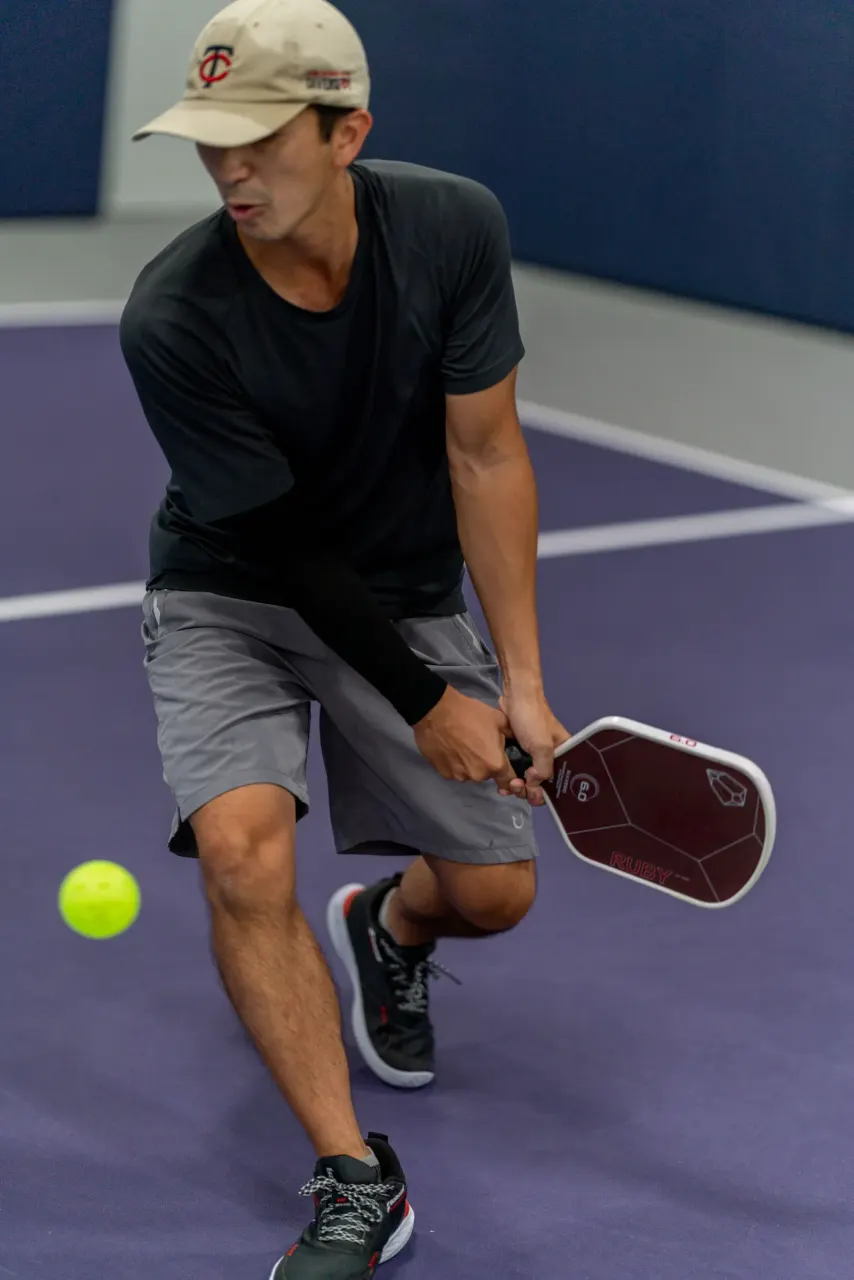
One of the most crucial elements of pickleball for every player to grasp is the “kitchen” and its related guidelines. Although the kitchen can be perplexing for newbies, it is essential for preserving the strategic balance of the game.
This article will go over what the kitchen is, how the rules there apply, and why learning pickleball requires an awareness of these aspects.
What Is the Kitchen in Pickleball?
The 7-foot non-volley zone (NVZ), on both sides of the net, is Pickleball’s “kitchen”. From sideline to sideline, the NVZ runs seven feet back from the net.

Players can’t seize control of the net by slamming balls at their opponents; that’s why the kitchen is there. This makes sets last longer and makes the game more strategic. It’s important to remember that the kitchen works for both singles and teams.
The “non-volley zone” is its official name, but many people just call it the “kitchen,” which makes the game more fun.
If you want to understand more about the kitchen in pickleball, Pickleland can assist you. You can explore our membership options and have the chance to practice with other passionate players.
Kitchen Rule Purpose
The kitchen rule in pickleball is designed to level the playing field. Without it, taller or more aggressive players might spend the entire game hovering near the net, making it difficult for others to compete.
By establishing this no-volley zone, pickleball encourages well-rounded skill development. Players need to use soft shots, control, and tactics rather than pure power.
The result? More intense, balanced, and enjoyable rallies.
What Are the Key Kitchen Rules?
Both new and experienced players need to understand and follow the cooking rules. You will learn about the main cooking rules here, which will help you understand what is and isn’t allowed in this important part of the court.
1. Kitchen Volleying Not Allowed
Volleying requires your feet to be behind the non-volley line and no paddle or body contact with the kitchen area during or after the shot.
When volleying the ball from the kitchen edge, be careful not to walk into the kitchen or onto the line. Even the slightest footstep or touch of the line after the volley counts as a fault, and you’ll lose the point.
2. You Can Enter the Kitchen at Any Time, But…
While volleying in the kitchen is not allowed, there is no rule against entering the kitchen itself. You are free to step into the kitchen to retrieve a ball that has bounced there.
However, once you’re in the kitchen, you cannot hit a volley until you have completely exited the zone and re-established your position outside the non-volley line.
This rule allows players to handle dinks, or soft shots, that land inside the kitchen area. Dinking is a popular strategy in pickleball, as it slows down the game and brings finesse into play.
When players dink, they exchange soft shots near the net, often aiming to outwit their opponents by forcing them into the kitchen and then taking advantage of their positioning.
3. Be Mindful of Your Momentum
Suppose you hit a volley outside of the kitchen, but your forward momentum carries you into the kitchen afterward.
In that case, this is still considered a fault. To avoid this, skilled players practice precise footwork and body control.
This involves mastering the art of positioning so that you can hit a volley without losing your balance or letting your body drift into the non-volley zone.
4. Double Bounces and the Kitchen
The kitchen rules also interact with the double-bounce rule in pickleball. There is a rule that says the ball has to bounce twice on each side before either team can start volleying.
For instance, both teams have to wait for the serving team’s bounce and the returning shot of the ball in the air.
The double-bounce rule creates opportunities to play in the kitchen. Once the ball has bounced twice, you can hit soft drinks into the kitchen area, forcing your opponents to move toward the net while preventing them from volleying.
5. Foot Faults in the Kitchen
During a volley, foot faults happen when a player crosses into the kitchen line or touches the kitchen line. Not only does the line itself count; any interaction with the area inside the line causes a fault while volleying.
In competitive play, foot faults are strictly monitored, and opponents can call for a review if they believe you’ve violated the rule. Pay attention to your footwork and don’t step on the kitchen floor to prevent fights in casual games.
Strategies for Playing Around the Kitchen
The kitchen plays a crucial role in how your pickleball matches unfold. Understanding how to use the kitchen effectively will dramatically improve your game.
1. Mastering the Dink Shot
Dinks are soft, controlled shots that land in the opponent’s kitchen, making it difficult for them to volley or return the ball with power.
This shot is especially useful because your opponent cannot volley the ball back without letting it bounce first, giving you time to set up your next move.
 Photo Credit: @aboveinteractive
The key to a successful dink is precision. Aim to land the ball just over the net into the opponent’s kitchen, keeping it low to prevent an easy return.
Dinks require patience and skill, as your goal is to outlast your opponent in a game of touch and control. If you want to master your dink shot, it’s best to get a membership at Pickleland and practice with other players.
2. Patience and Placement Over Power
In pickleball, the temptation to hit aggressive shots at the net can be strong, but the kitchen rules demand a different approach. Power shots can work in other areas of the court, but when dealing with the kitchen, placement and patience are far more effective.
Rather than trying to overpower your opponent, focus on placing the ball in difficult spots within their kitchen area. This forces them to move and potentially make errors.
By keeping the ball low and controlled, you can maintain the upper hand without risking a fault or losing momentum.
3. Stay Agile and Keep Moving
Footwork and agility are critical when playing around the kitchen. Since the kitchen is a no-volley zone, players need to be nimble and ready to react to dinks and soft shots.
Stay light on your feet, and practice quick movements in and out of the kitchen area.
One effective technique is to hover just outside the non-volley line, positioning yourself for volleys without crossing into the kitchen. This positioning allows you to defend against attacks while still being ready to step into the kitchen for a soft return if necessary.
4. Use the Kitchen to Set Traps
Advanced players often use the kitchen rules to set traps for their opponents. By drawing your opponent into the kitchen with well-placed dinks, you can force them into uncomfortable positions, where they’re more likely to make mistakes.
If your opponent is forced into the kitchen and returns a dink, you can volley a shot too far away for them to respond.
This strategy requires careful timing and an understanding of your opponent’s tendencies. Watch for patterns in their play, and use the kitchen rules to turn their aggression into an advantage for you.
Level Up Your Pickleball Game with Strategy
The kitchen may seem like a small part of the pickleball court, but its impact on the game is enormous. By learning and mastering the kitchen rules, you can elevate your game to new heights.
To master the kitchen is to master pickleball itself. So, the next time you step on the court, remember: Stay out of the kitchen unless you’re dinking, and always control your momentum.
Your success depends not just on your shots, but on your ability to navigate the non-volley zone with skill and finesse. So, if you want to level up your pickleball gaming, become a member at Pickleland today.
You can also read these articles below to help you navigate the rules of pickleball.
- Pickleball Challenge Court Rules, Formats, And Strategies For All Players
- Pickleball Singles Rules: Everything You Need To Know To Dominate The Court
- Pickleball Ladders Explained: Rules And Tips