
By the third game of a long session, the players who keep winning aren’t always the ones with the prettiest dinks, they’re the ones whose legs still fire on the last point. Pickleball looks gentle until you actually play it: quick lateral cuts, sudden sprints to the kitchen, and rallies that drag on far longer than they feel. Paddle time sharpens your shots, but it won’t build the speed, power, and endurance that hold up when everyone else is gassed.
That’s what off-court conditioning is for. The seven exercise categories below, dynamic warm-ups, plyometrics, agility, HIIT, strength, core, and mobility, target the exact physical demands the sport throws at you, with specific drills you can start running this week.
1. Dynamic Warm Up: Don’t Skip This
Purpose: Increase joint range of motion, raise muscle temperature, and activate stabilizing muscles to reduce injury risk.
- Leg Swings: 20 reps per leg (front-to-back and side-to-side). Promotes hip mobility for lateral court coverage.
- Arm Circles: 10 reps forward and backward. Prepares shoulder complex for overhead strokes and volleys.
- Walking Lunges with Torso Twist: 10 reps per side. Engages hip flexors and core rotation to simulate stroke mechanics.
Perform this sequence for 5–10 minutes before each workout or practice session.
2. Plyometrics for Explosive Power
Purpose: Develop rapid force production and recoil ability for quick starts, jumps, and directional changes.
- Lateral Bounds: 3 sets of 10 reps. Emphasizes hip abductor strength and single-leg stability.
- Box Jumps: 3 sets of 8 reps. Focus on soft landings and immediate rebound to improve vertical power.
Allow 60–90 seconds rest between sets. Incorporate plyometrics 1–2 times per week, ensuring proper landing mechanics.
3. Agility Ladder Drills: Footwork at Warp Speed
Purpose: Enhance foot speed, coordination, and agility for efficient movement around the court.
- In‑Outs: 2 passes. Step one foot into each rung, then both feet outside. Develops rhythm and proprioception.
- Lateral Shuffle: 2 passes per direction. Maintain low center of gravity and quick, light steps.
Perform ladder drills as part of a 15‑minute footwork circuit, 2–3 times per week.
4. HIIT Cardio: Build Endurance That Lasts
Purpose: Build cardiovascular capacity that mirrors the intermittent high‑intensity demands of match play.
- 30/30 Sprints: 10 rounds of 30 seconds sprint, 30 seconds active recovery (jog or walk).
- Burpee Broad Jumps: 3 sets of 10 reps. Combine full‑body explosive movement with anaerobic conditioning.
Schedule HIIT sessions 1–2 times weekly, ensuring at least 48 hours of recovery between hard workouts

5. Strength Training: From Core to Calves
Purpose: Improve muscular strength and balance to support powerful strokes, stable net play, and injury prevention.
- Single‑Leg Romanian Deadlift: 3 sets of 8 reps per leg. Targets hamstrings, glutes, and enhances unilateral balance.
- Goblet Squat: 4 sets of 12 reps. Promotes deep hip engagement and core stability under load.
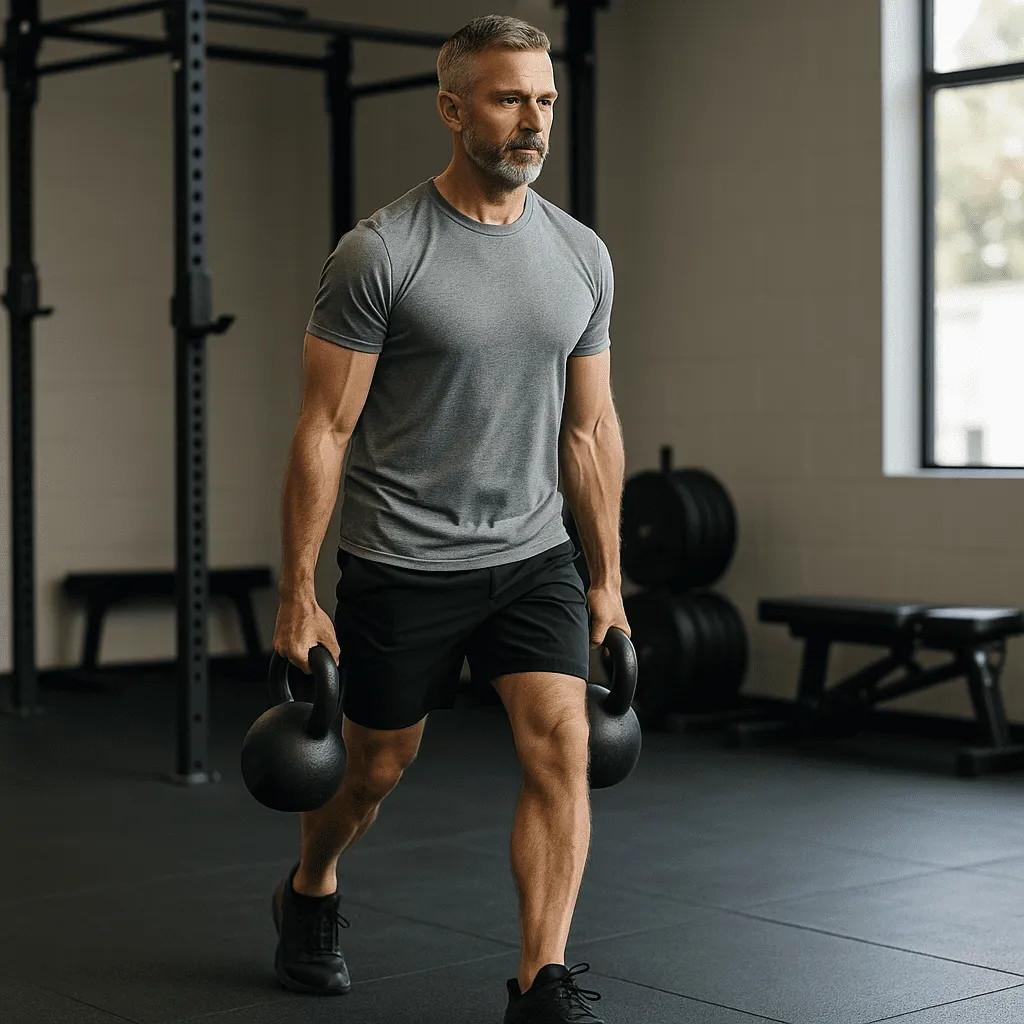
- Farmer’s Walk: 3 carries of 40 meters. Builds grip strength, shoulder endurance, and trunk control.
Integrate strength exercises 2–3 times per week, alternating lower- and upper-body emphasis.
6. Core and Stability: The Forgotten Foundation
Purpose: Strengthen the midsection to maximize force transfer during strokes and maintain posture under dynamic loads.
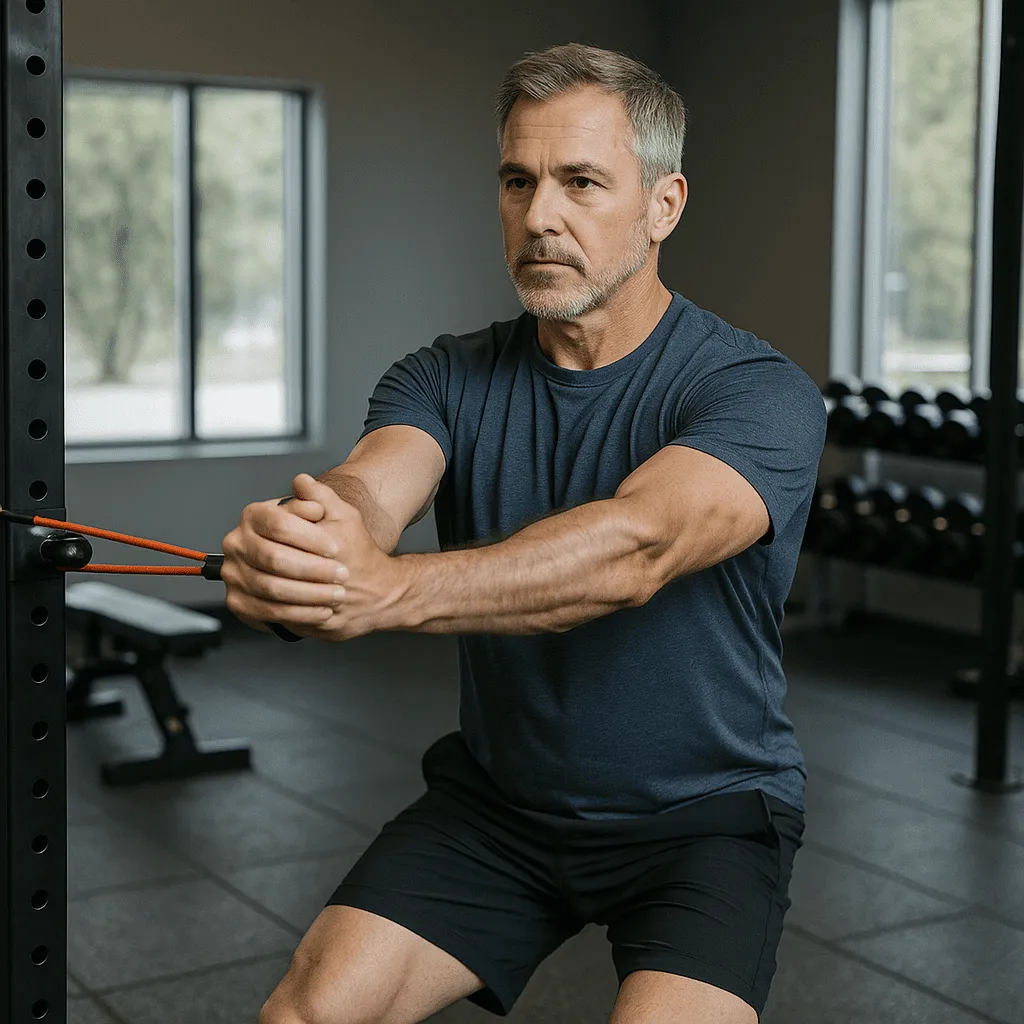
- Pallof Press: 3 sets of 12 reps per side. Trains anti‑rotation stability and oblique strength.
- Plank Variations: Front, side, and reverse planks for 45 seconds each. Develops isometric endurance of the entire core.
- Russian Twists with Medicine Ball: 3 sets of 20 reps. Enhances rotational power for dinks and drives.
Perform core routines at the end of strength sessions or as a standalone circuit twice weekly.
7. Cool-Down and Mobility: Seal the Deal
Purpose: Promote recovery, maintain flexibility, and reduce muscle soreness.
- Pigeon Pose: 2 minutes per side. Opens hips and relieves tension in the gluteal region.
- Thoracic Spine Rotations: 10 reps per side. Improves upper‑back mobility essential for overhead strokes.
Hold each stretch gently without bouncing. Complete after every training session
Putting It All Together
Weekly Plan:
- Monday: Plyometrics + Core
- Tuesday: Agility Ladder + HIIT
- Wednesday: Strength Training (Lower Body Focus)
- Thursday: Dynamic Warm-Up + Medium-Intensity Cardio (20–30 minutes)
- Friday: Strength Training (Upper Body & Core)
- Saturday: Full-Body Mobility + Light Pickleball Drills
- Sunday: Rest or Active Recovery (swimming, yoga)
If you’re serious about dominating on the pickleball court, you need more than paddle time. You need targeted conditioning that hammers your weaknesses and fortifies your strengths. No handholding, no “one-size-fits-all.” Tailor each session, track your progress, and above all, train smarter, train harder. Results don’t lie: put in the work off-court, and your opponents will feel the difference on.
Now grab that timer, set up your ladder, and get to work. Your next match is waiting, and it won’t wait for you to catch your breath.