

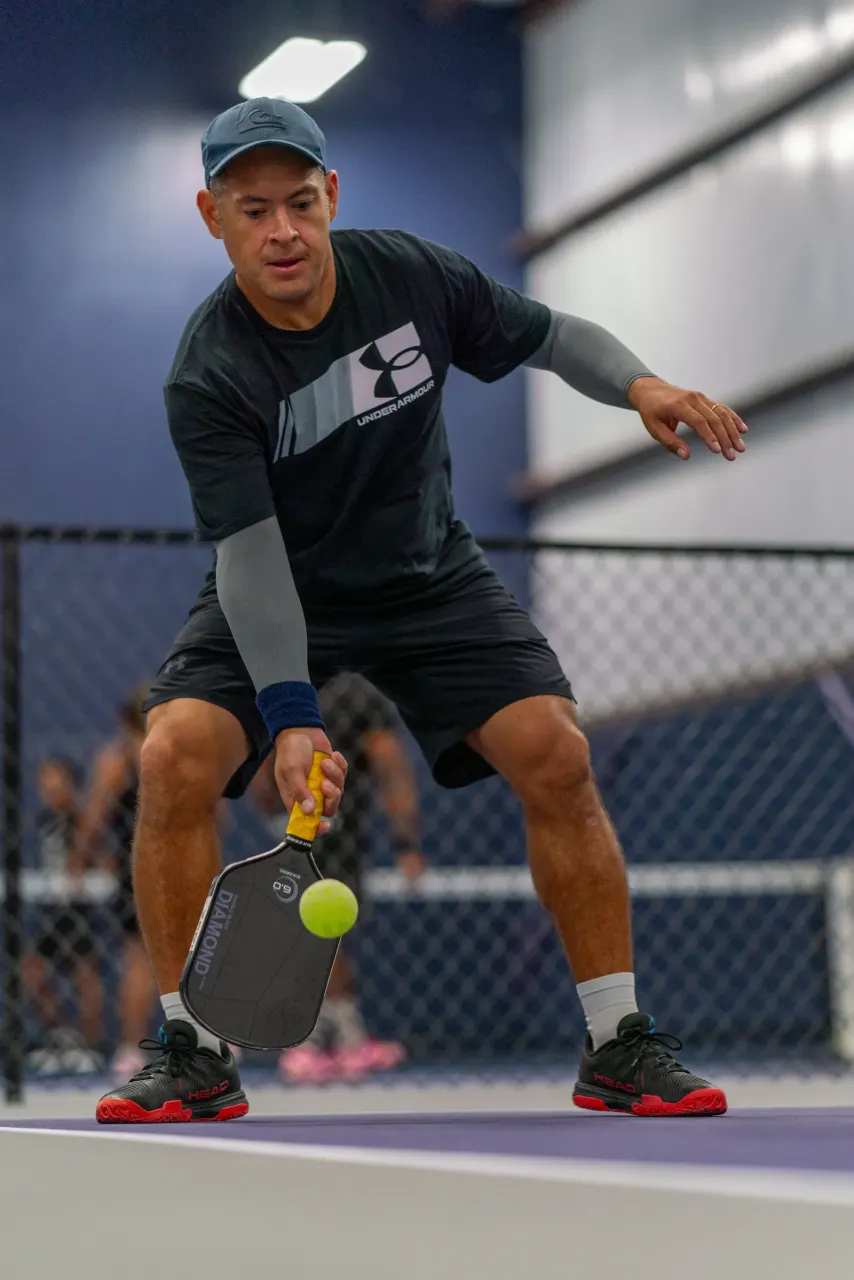
Open play is a blast, but the players who actually climb the rankings are the ones putting in reps when no one’s keeping score. Targeted drills are where consistency, shot variety, and split-second reactions get built — the stuff that turns a fun rec game into a winning one.
The drills below break your game down into its core pieces: serves, returns, drop shots, dinks, fast hands, and footwork. Whether you’re brand new to the court or chasing your next rating bump, work a few of these into every session and you’ll feel the difference fast.
Essential Pickleball Drills
1. Serving Drills
Did you know that serving is a foundational skill in pickleball that can set the tone for a point? Practicing serves enhances your ability and increases your serving reliability:
Target Serving
Practice serving to the corners or deep into the opponent’s side, to improve your skills to place serves accurately. With this serving, it helps you to challenge your opponent’s positioning.
Serve Variations
To diversify your serving strategy, work on different types of serve that can exploit different weaknesses in your opponent’s game, which keeps your opponent guessing. This serves includes the following:
- Underhand
- Topspin
- Sidespin
Consistency Drill
Repeatedly serve from the same spot while maintaining a steady form and aiming for precision. It enables you to monitor your progress, refine your technique, and track the number of successful serves.
2. Returning Drills
Doing a returning serve effectively, requires good timing and positioning. The drills focus on improve your ability will prepares you to handle different types of services with confidence:
Basic Return Practice
Return serves from different court positions to replicate various in-game situations. This helps you adapt to diverse service placements and improves your ability to respond effectively, which enhances your confidence.
Block and Counter
Focus on returning powerful serves with precise shots. If you are going to do this drill, it improves your ability to manage quick serves and develop resilience against strong opponents.
Footwork Drill
Always improve your game positioning and movement by practicing returns while moving to different spots on the court. If you have excellent footwork, it ensures better positioning for effective returns.
3. Drop Shot Drills
Performing a drop shot is one of the best pickleball drills that improves finesse, allowing you to execute soft shots that will make your performance excellent and create satisfaction:
Targeted Drop Shots
Aim to place drop shots in specific spots on the pickleball court, this will make it harder for your opponents to return the ball effectively. You can do this at:
- Just over the net
- Into the opponent’s kitchen
Pressure Drop Shots
Execute drop shots while dealing with simulated game pressure from a partner. Plus, this approach mimics the intensity of a real-life fair match, improving your ability to perform under stress.
Consistency Drill
Perform drop shots with accuracy because it makes a smooth stroke to guarantee the ball consistently lands in its intended spot. Doing these shots builds reliability and enhances your gameplay.
4. Dink Drills
Since drinking drills involve soft, controlled shots played close to the net, executing dink drills will help you to enhance the touch and accuracy for effective play near the net:
Crosscourt Dinking
Hit the ball diagonally across the court to target specific areas. This kind of exercise improves accuracy and trajectory control, as well as developing precision and strategic placement of shots.
Dink with Movement
Take soft shots while shifting positions on the court to maintain control and balance as you move, allowing you to have an effective play despite changes in positioning.
Rally Dink
Enable to improve your touch and response, engage in a series of soft shots with a partner.
Want to improve your game and join a vibrant pickleball community? Explore our memberships here.
5. Fast Hand Drills
While fast hands drills focus on improving quick reactions and hand speed, it is essential for playing at the net and enhance reflexes, which is crucial for handling fast exchanges:
Reaction Drills
Practice rapid exchanges with your pickleball partner to improve your speed and reaction time during the pickleball gameplay. Once you perform this reaction exercise, then it will help you to:
- Sharpen your ability to respond swiftly to quick shots
- Improving reflexes during intense play.
Volley Drill
Execute quick volleys, with an emphasis on rapid hand movements and accurate ball placement. This volley drill helps you to improve your ability to handle rapid shots and maintain control.
Rapid Fire
For you to simulate speed scenarios, participate in a sequence of rapid volleys with a partner, which also enhances your adaptability during rapid exchanges and enables you to build agility.
6. Footwork Drills
Many players always overlook the importance of footwork drills before playing a pickleball game match, yet these footwork drills are essential or reliable for improving agility and pickleball court coverage:
Ladder Drills
Unlike other drills, ladder drills involve using a physical ladder placed on the ground to practice quick and precise foot movements. Lots of player do this drill to:
- Enhances agility and foot speed
- Making your movements on the court more controlled
Cone Drills
You can navigate through a series of cones arranged in patterns to practice movement and positioning. While this drill helps you maneuver better during games, it also improves your court:
- Coverage
- Coordination
Shadow Drills
Knowing that shadow drills consist of mimicking the pickleball movements without an actual pickleball, executing shadow drills during your pickleball gameplay focuses on the following important factors, such as:
- Footwork helps you refine your movements
- Positioning skills that allow you to move fluidly during matches
7. Combination Drills
Once you make your practice sessions more effective for your pickleball game match, doing multiple skills into one comprehensive routine can enhance the various aspects of your game simultaneously.
Integrated Circuit
Rotating through serving and drop shots, creates a comprehensive practice routine. Plus, this drill combines various skills, allowing you to work on different aspects of the game in one session.
Scenario Practice
Simulate match situations by incorporating multiple drills to replicate real-game scenarios. Take note that this practice will help you prepare for actual match conditions and enhance your overall gameplay strategy.
Tips for Effective Pickleball Game Practice
1. Setting Goals
Take note to establish specific, measurable goals for each drill to track your progress and stay motivated. Clear goals help you focus on areas needing improvement and measure your success.
2. Regular Practice
Don’t forget that consistency is the key to improvement and by incorporating these drills into your regular practice routine, you can maintain your skills.
3. Incorporating Feedback
Remember to use feedback from practice sessions to adjust your techniques and strategies to achieve great performance. Also, always analyze your performance and make necessary adjustments to refine your skills.
4. Variety and Adaptation
By mixing different drills and adapting to various scenarios, you can ensure comprehensive skill development. Also, doing varied practice will help you stay more prepared for different match situations.
What Not to Do During Pickleball Drills?
Avoid Overtraining
Prioritize the quality of your drills and listen to your body when needed breaks for safe practice. Don’t push yourself too hard during practice, as excessive training can lead to:
- Fatigue
- Increase the risk of injury.
Don’t Neglect Technique
Maintain proper form and technique during all drills to avoid reinforcing bad habits. Incorrect technique can limit your improvement and lead to ineffective practice, which can affect your game performance.
Beware of Monotony
Avoid sticking to the same drills repeatedly without variation. Mixing up your practice routine addresses different aspects of the game, helps you stay motivated and develops a well-rounded skill set.
Elevate Your Pickleball Game with Targeted Drills!
Each pickleball drill targets different parts of your game, like serving accuracy, return effectiveness, or quick reactions at the net. By practicing these specific drills, you’ll see improvements in various skills, making you a more well-rounded player, that will help elevate your overall performance.
Engaging with the pickleball community interacting with fellow players and trying new techniques will help you continue to grow and become a better pickleball player. Browse this other post that will surely help you:
- Why Pickleball Is Here To Stay: Fad Or Future?
- How to Prevent Pickleball Injuries: Your Guide To Pickleball Safety
- Health Benefits Of Playing Pickleball: Everything You Need To Know
Frequently Asked Questions (FAQs)
What is the best pickleball rating?
The best pickleball rating depends on your skill level. Beginners typically are rated between 1.0 and 2.0. The ratings for intermediate and advanced players range from 2.5 to 3.5, respectively. As players gain experience and improve their skills, they move into higher rating categories. This progression reflects their growing ability to execute advanced techniques and strategies effectively. Professional players usually have ratings of 5.0 or higher. Although top players often have ratings of 5.0 or above, it’s more important to focus on improving your own rating.
What are the Three Faults in Pickleball?
There are three common faults that players should be aware of. The first is the foot fault, which occurs when a player steps on or over the baseline during their serve. The second is the net fault, when the paddle touches the net during a rally. The third is the double bounce fault, which happens if the ball bounces twice on one side of the court before being returned. Understanding and avoiding these faults is crucial for maintaining fair play and improving your game.
What is the best way to get better at pickleball?
To get better at pickleball, practice regularly and focus on different aspects of the game. Consider taking lessons from a coach to improve your technique and strategy. Incorporate a variety of drills into your practice routine to address specific skills such as serving, returning, and dinking. Set goals for each practice session to track your progress and stay motivated.