

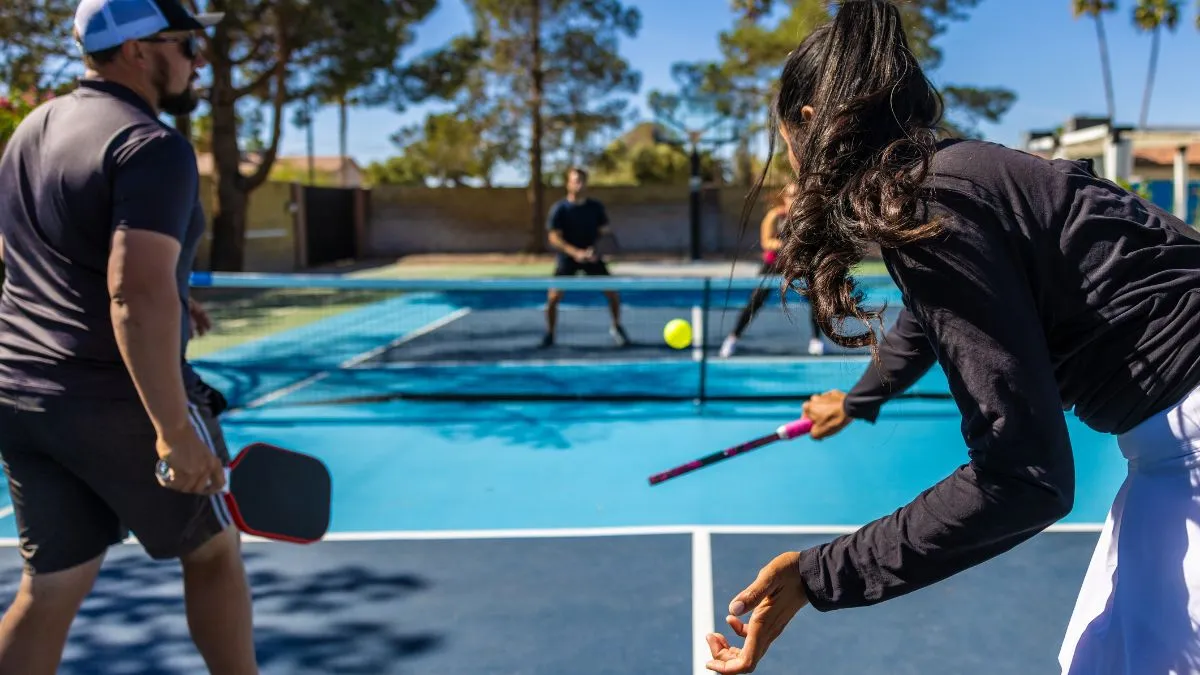
Same rules, same net, same plastic ball with holes in it — yet step from a gym onto an outdoor court and pickleball can feel like a different sport. The surface underfoot, the ball in your hand, and the wind at your back all change how the game plays.
Knowing how indoor and outdoor pickleball differ helps you adjust your shots, pack the right gear, and pick the court that fits your style. Here is what actually changes between the two.
Playing Surfaces
One of the most noticeable differences between indoor and outdoor pickleball is the playing surface. Indoor pickleball courts are typically found in gymnasiums, often utilizing basketball courts made of hardwood or synthetic materials like rubber or polyurethane. These smoother surfaces offer more consistent ball bounce, making it easier for players to anticipate and control their shots.
In contrast, outdoor pickleball courts are usually made of concrete or asphalt, which are rougher and less forgiving. The texture of these surfaces affects the ball’s bounce, often making it less predictable. Additionally, outdoor courts are exposed to the elements, such as wind and sunlight, which can further impact the game’s dynamics.
The Balls
The balls used in indoor and outdoor pickleball are specifically designed to accommodate the different playing environments. Indoor pickleballs are softer, lighter, and have larger holes, typically 26 in total. This design allows the ball to move slower and bounce less, which is ideal for the smooth, controlled surfaces of indoor courts.
On the other hand, outdoor pickleballs are made of harder plastic and have smaller, more numerous holes—usually 40. These balls are designed to handle rougher outdoor surfaces and resist wind interference, making them more durable and able to maintain a straighter trajectory even in challenging weather conditions.
The difference in ball characteristics means that players need to adjust their strategies depending on whether they are playing indoors or outdoors.
Environmental Factors
Playing pickleball outdoors introduces various environmental factors that are absent in indoor play. Weather conditions, such as wind, rain, and temperature, can significantly influence the game.
Wind can affect the ball’s flight, making it more challenging to control, while sunlight can impair visibility, particularly during morning or evening games. Players often have to adapt their clothing and gear, such as wearing hats and sunglasses, to cope with these conditions.
In contrast, indoor pickleball offers a controlled environment with consistent lighting and temperature. This predictability allows players to focus more on their technique and strategy without worrying about external factors. However, the enclosed nature of indoor courts can lead to other challenges, such as noise levels, which can affect communication between players.
Strategies for Indoor and Outdoor Play
Due to the differences in playing surfaces and environmental factors, strategies for indoor and outdoor pickleball can vary considerably. Indoor pickleball generally requires faster reflexes and precision due to the smoother surface and the ball’s reduced bounce.
Players might focus on quick volleys, drop shots, and controlled placements to outmaneuver their opponents. The indoor setting also means players can rely more on hand signals or louder verbal communication, as sound tends to echo in enclosed spaces.
Outdoor pickleball, however, demands a different approach. The rougher surface and potential wind interference mean that players need to be adaptable.
Lobs, deep shots, and power plays are more effective outdoors, where the ball’s unpredictable bounce and environmental factors can be leveraged to gain an advantage. Players also need to be more physically prepared to handle the impact of harder surfaces and varying weather conditions.
Pros and Cons of Indoor and Outdoor Pickleball
Indoor and outdoor pickleball each offer distinct advantages and challenges, depending on the playing environment and individual preferences. Here are the pros and cons of indoor and outdoor pickleball:
Indoor Pickleball
Pros:
- Indoor courts offer a stable environment with controlled lighting and temperature, allowing players to focus solely on the game.
- The predictable conditions make indoor play ideal for beginners who are still mastering the basics of the sport.
- The softer surfaces of indoor courts are gentler on players’ joints, reducing the risk of injury over time.
Cons:
- Indoor courts may be less accessible, especially in areas where outdoor play is more common.
- The enclosed space can amplify noise, making it difficult to communicate with partners during the game.
- Indoor balls, being softer, are more prone to damage and wear out faster than outdoor balls.
Outdoor Pickleball
Pros:
- Playing outdoors allows players to enjoy the benefits of fresh air, natural light, and exposure to Vitamin D.
- The variable conditions and rougher surfaces can make outdoor pickleball more exciting and challenging, pushing players to improve their adaptability and skill.
- Experienced players may prefer the unpredictability and additional challenges of outdoor play, which require a higher level of skill and strategy.
Cons:
- Outdoor play is heavily influenced by weather conditions, which can lead to cancellations or uncomfortable playing environments.
- The harder surfaces of outdoor courts can be tougher on players’ joints, especially during long or frequent play sessions.
- The changing position of the sun and outdoor lighting conditions can affect visibility, requiring players to adjust their positioning and gear.
Understand the Difference Between Indoor and Outdoor Pickleball
Whether you prefer indoor or outdoor pickleball depends on your playing style, skill level, and personal preferences. Indoor pickleball offers a controlled environment that is ideal for beginners and those who prefer a consistent playing experience.
On the other hand, outdoor pickleball provides a more challenging and dynamic environment that can be more rewarding for advanced players who enjoy adapting to changing conditions.
Understanding the key differences between indoor and outdoor pickleball—such as the playing surfaces, ball types, and environmental factors—can help you make an informed decision about where to play.
Each setting has its unique advantages and challenges, so consider experimenting with both to see which one aligns best with your playing style and goals.
To know more about playing pickleball, explore our membership options.
What are your thoughts about this? Click on the following links to find out more:
- Pickleball Vs. Padel Tennis – How Are They Different?
- 13mm Vs. 16mm Pickleball Paddles: Which One Is Right For You?
- Best Pickleball Courts In Temple: Top Spots To Play
FAQs
What are the main differences between indoor and outdoor pickleball courts?
Indoor and outdoor pickleball courts differ primarily in their surface material and environmental conditions. Indoor courts typically have smooth, polished surfaces like hardwood or gym flooring, providing consistent ball bounce. Outdoor courts are often made of asphalt, concrete, or cushioned surfaces, and can be affected by weather conditions such as wind and rain, which can impact the game.
How does the type of ball used vary between indoor and outdoor pickleball?
Indoor pickleball uses a ball with larger holes, making it lighter and easier to control in a wind-free environment. Outdoor pickleball balls have smaller holes, making them heavier and more durable to withstand the elements and the rougher court surfaces. The different ball types affect the speed, bounce, and spin during gameplay.
Are there differences in playing strategies for indoor and outdoor pickleball?
Yes, playing strategies can differ between indoor and outdoor pickleball. Indoors, players often focus on precise shots and controlled play due to the consistent environment. Outdoors, players must adapt to varying conditions like wind and sun, which may require more powerful shots and quicker reactions. Adjusting to these factors is key to performing well in outdoor matches.