

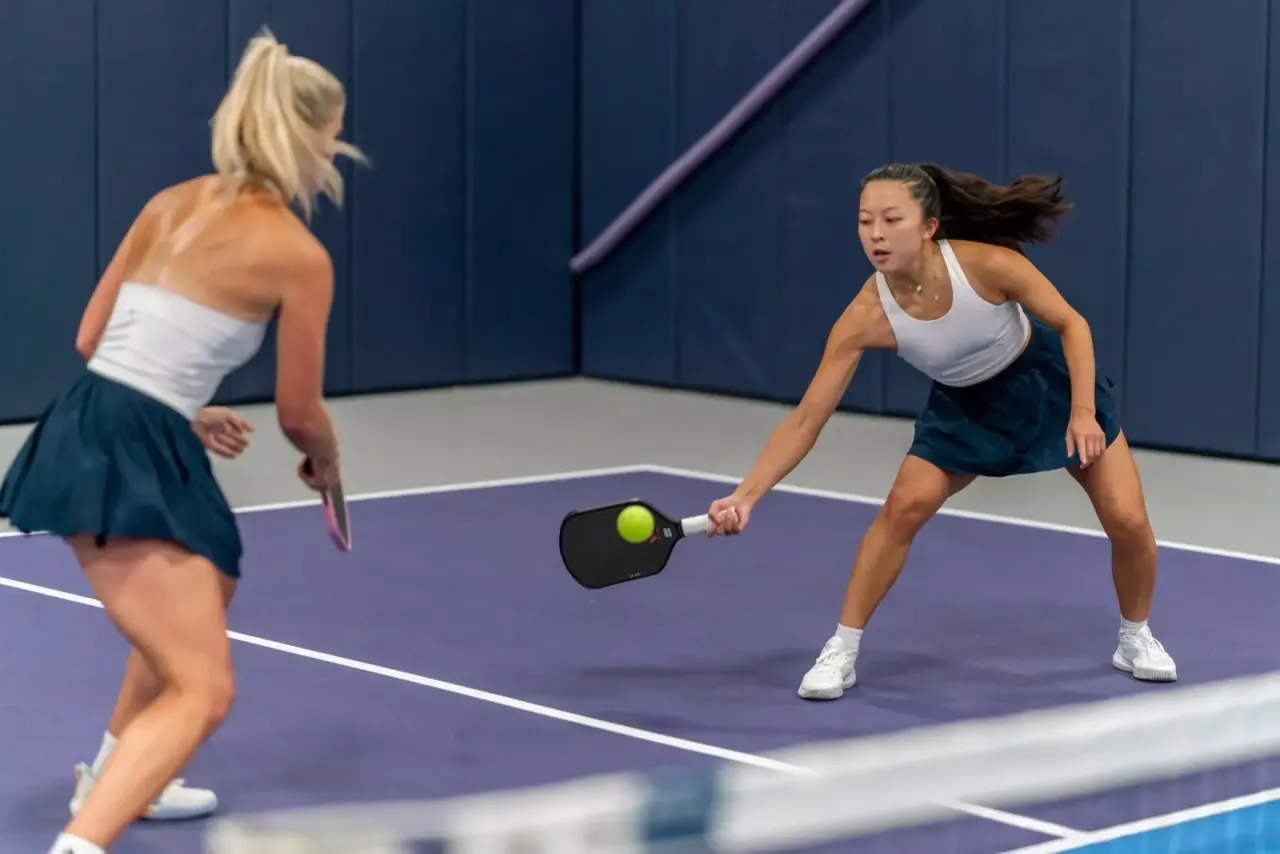
Mastering how to hold a pickleball paddle is a crucial first step toward improving your game. Whether you’re a beginner just getting familiar with the sport or an experienced player looking to fine-tune your skills, understanding different grips will affect your power, control, and overall technique.
This guide explores various ways to hold a pickleball paddle, helping you find the perfect grip for your playing style.

1. Understanding the Anatomy of a Pickleball Paddle
Typically, pickleball paddles are smaller than tennis rackets but larger than ping-pong paddles. The handle is short and octagonal, which influences how players grip it.
Also, the paddle face is where contact with the ball occurs, and depending on how you hold the handle, it will affect the angle and power of your shot.
The handle’s bevels (the flat surfaces and edges around the grip) are numbered from one to eight. These beveled edges help you align your hand properly, which plays a significant role in controlling the paddle and ball.
2. The Continental Grip: The All-Rounder
The Continental grip, often referred to as the “hammer grip,” is the most common and versatile way to hold a pickleball paddle. This grip resembles the way you would hold a hammer, making it intuitive for many beginners.
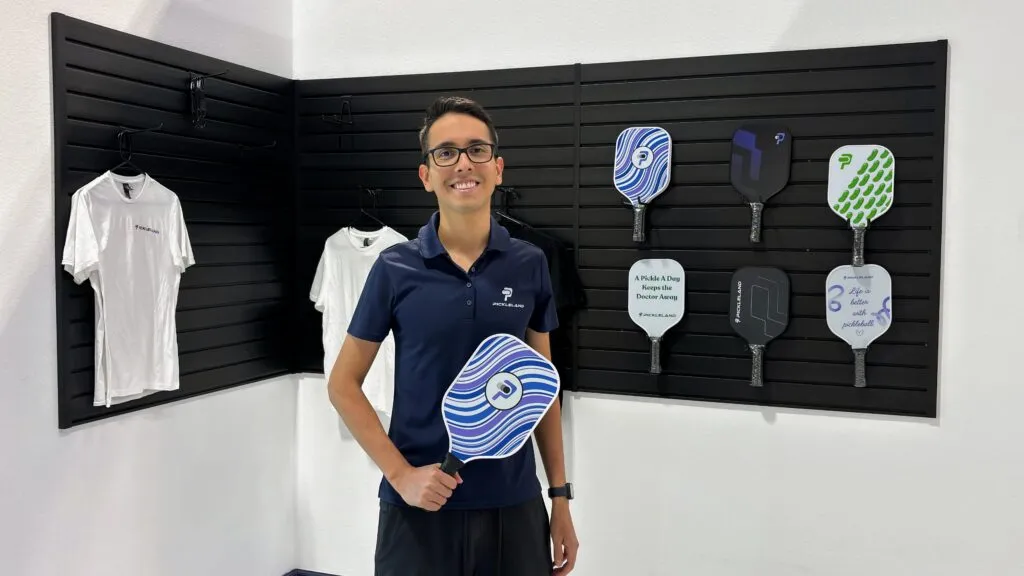
To get into the Continental grip, imagine shaking hands with the paddle. You want your palm to wrap around the handle with your thumb and index finger forming a “V” shape on the paddle’s bevels. Align your index finger with bevel three (or the side bevel) to create this grip.
Pros:
- Great for both forehand and backhand shots.
- Balanced between power and control.
- Easy to switch between various types of shots without changing grips.
Cons:
- May not provide the most power for aggressive shots.
3. The Eastern Grip: Versatility at Its Best
The Eastern grip is another favored grip for pickleball players, and it’s ideal for those who want versatility. The Eastern grip is achieved by aligning the base of your index finger with bevel two (one of the top corners of the paddle handle).
This grip works well for both forehand and backhand shots and doesn’t require you to change hand positions while playing.
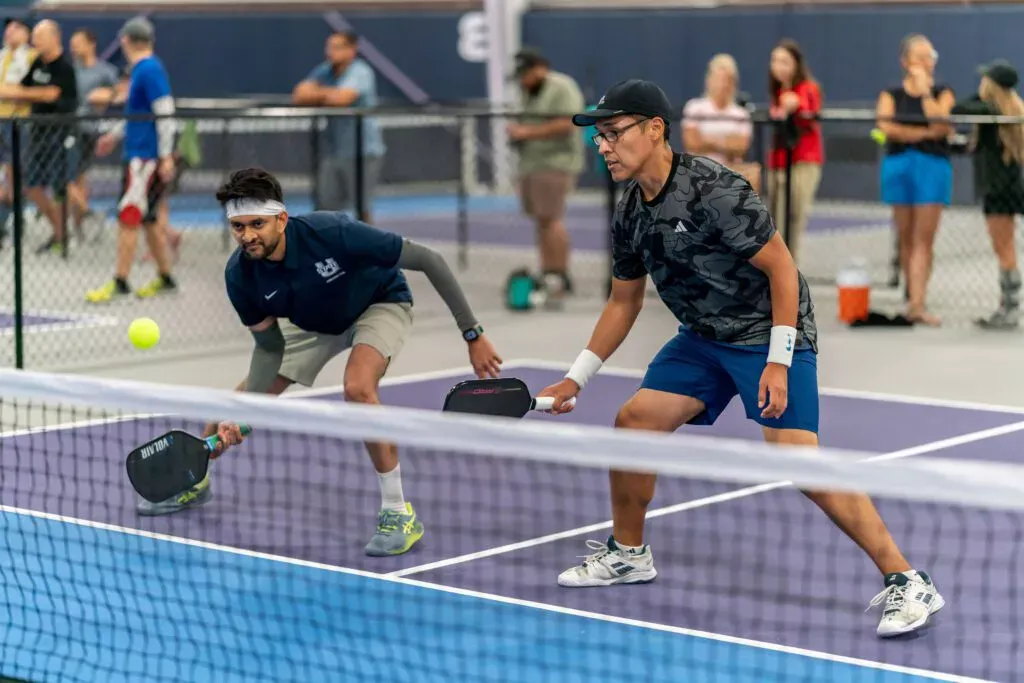
Many players describe the Eastern grip as “shaking hands with the paddle,” as it allows for a neutral hand position. This means that you can easily transition between forehands and backhands without much adjustment.
Pros:
- Extremely versatile for forehand and backhand shots.
- Offers good control over both power and placement.
- Ideal for players who need adaptability during fast-paced games.
Cons:
- May not deliver as much power as more specialized grips.
4. The Western Grip: Maximize Power and Spin
If you’re looking to add more power and topspin to your game, the Western grip may be the answer. This grip positions the base of your index finger on bevel four or five, which is closer to the bottom of the handle.

By rotating the paddle 90 degrees from the Eastern grip, your paddle face opens up, allowing for better wrist action. This grip is more common among advanced players or those transitioning from tennis.
While the Western grip delivers powerful forehands with more topspin, it comes with its downsides. The backhand becomes less effective, as this grip favors forehand shots, and the exaggerated wrist action can lead to a loss of control on softer shots.
Pros:
- Ideal for generating topspin.
- Powerful forehands that can dominate rallies.
- Great for offensive players who like to hit hard and fast.
Cons:
- Backhands become less effective.
- Can be difficult to control finesse shots.
5. The Importance of Grip Pressure
Regardless of which grip you choose, how tightly you hold the paddle significantly impacts your game. Beginners often grip the paddle too tightly, which restricts wrist movement and reduces power and control.
A looser grip, on the other hand, allows more fluid wrist motion, enhancing your ability to react quickly and generate power.
Try to maintain a relaxed grip, firm enough to control the paddle but loose enough to allow for flexibility in your wrist and arm. Experts often suggest holding the paddle with a pressure similar to holding a small bird: gentle but not so loose that it could slip away.
6. Adjusting the Grip for Different Shots
As you become more experienced, you’ll start noticing that different shots may require slight grip adjustments. For instance, you may want a stronger grip for aggressive shots like smashes and drives.
This will give you more power but can reduce control if overused. For delicate shots like dinks and drops, a looser grip is more effective as it allows for more finesse and precision. Learning to adjust your grip based on the situation is key to becoming a well-rounded player.
7. When to Change Grips
Most players naturally adjust their grip during a game without even thinking about it. For example, if you’re switching from a power shot to a soft dink, your hand will instinctively loosen or tighten the grip to accommodate the new shot type.
However, consciously practicing grip changes can help you gain more control over your game.
Players who use the Eastern or Continental grip often have to make fewer adjustments. On the other hand, those using more extreme grips like the Western grip may need to switch more frequently depending on the shot.
8. Customizing Your Paddle Grip
Many pickleball paddles come with standard grip sizes, but you can customize the feel by using overgrip tape. Overgrip tape not only increases the handle’s circumference but also provides additional comfort and moisture absorption.
For players with larger hands, increasing the grip size can prevent over-tightening, while players with smaller hands may benefit from thinner grips for more precise control. Make sure to experiment with different overgrips to find what feels most comfortable for your playing style.
9. Common Mistakes When Holding a Pickleball Paddle
When learning how to hold a pickleball paddle, beginners often make a few common mistakes that can affect their performance:
- Holding the paddle too tightly: As mentioned earlier, this restricts wrist movement and reduces both control and power.
- **Using a tennis or ping-pong grip:**While these grips work for other sports, pickleball requires more dexterity and mobility, and using improper grips can limit your ability to play effectively.
- Forgetting to adjust the grip for different shots: Each shot type requires its finesse, and staying with one grip style can make your gameplay rigid and predictable.
Find the Right Pickleball Paddle Grip
Finding the right pickleball paddle grip is a personal journey that will evolve as you develop your skills. The Continental grip provides a solid foundation for beginners, while the Eastern grip offers versatility.
For those seeking more power and spin, the Western grip is a great option, though it requires more finesse and control. Remember, there is no one-size-fits-all approach, and experimentation will help you discover what works best for your game.
To learn more, read the linked articles.
- Pickleball Accessories: Must-Have Gear For Every Player
- Smash On A Budget: Top Affordable Pickleball Paddles
- Top Pickleball Drills For Skill Improvement: Serving, Dinking, And Fast Hands
FAQs
1. What is the best grip for beginners in pickleball?
The Continental grip is widely considered the best starting point for beginners. It is versatile, easy to learn, and effective for both forehand and backhand shots. This grip allows new players to quickly adapt to different playing situations without needing to change their hand position. It’s also sometimes referred to as the “hammer grip” because of its similarity to the way you’d hold a hammer.
2. How tight should I hold my pickleball paddle?
Your grip on the pickleball paddle should be firm but relaxed. Holding it too tightly restricts wrist movement and reduces both power and control. A loose grip allows more flexibility and better reaction time during the game. Imagine holding the paddle with the same pressure you would use to hold a small bird—firm enough to control it but not so tight that it causes discomfort or limits movement.
3. Should I change my grip during the game?
Yes, adjusting your grip during different shots is a key part of advanced play. For instance, a firmer grip is beneficial for power shots like smashes, while a looser grip is better for finesse shots like dinks or drop shots. With practice, grip adjustments will become instinctive, allowing you to optimize your performance based on the situation.