
Doubles is where pickleball really comes alive—and where matches are won or lost on teamwork as much as talent. Two players who move in sync, talk constantly, and pick smart targets will routinely beat a pair of stronger athletes who don’t.
The good news? Most of what separates winning teams from the rest comes down to habits you can build with practice. Here are ten strategies to sharpen your serve, lock down the kitchen, and start outsmarting opponents on every point.
1. Master the Serve and Return
The serve and return are crucial in pickleball doubles. An effective serve is not just about getting the ball over the net—it’s about setting up your next move.
In doubles, aim to serve deep into your opponent’s court, ideally near the baseline. A deep serve forces your opponents to retreat, limiting their ability to attack right away.
When returning a serve, aim for the middle of the court. This strategy confuses your opponents, as both may hesitate, unsure of who should take the ball.
Additionally, returning to the center often targets the opponent’s backhand, which is generally weaker than their forehand. Another tip is to avoid return faults; consistency is key, and even a simple, well-placed return can prevent unforced errors that often cost points.
2. Control the Non-Volley Zone
The non-volley zone (or “kitchen”) is a critical area in doubles pickleball. Successful teams strive to control this area because it allows for a more offensive position and minimizes the chance for opponents to hit powerful shots.
Both partners should move toward the kitchen as soon as possible, ideally after the third shot.
When you’re at the kitchen line, keep your shots low to prevent your opponents from launching aggressive smashes. “Dinking” is a key tactic here, where you softly hit the ball just over the net, forcing your opponents into a delicate back-and-forth exchange.
Mastering dinks will keep you in control of the game, especially if your opponents are not as comfortable with softer, controlled shots.
3. Play as a Team: Communication and Movement
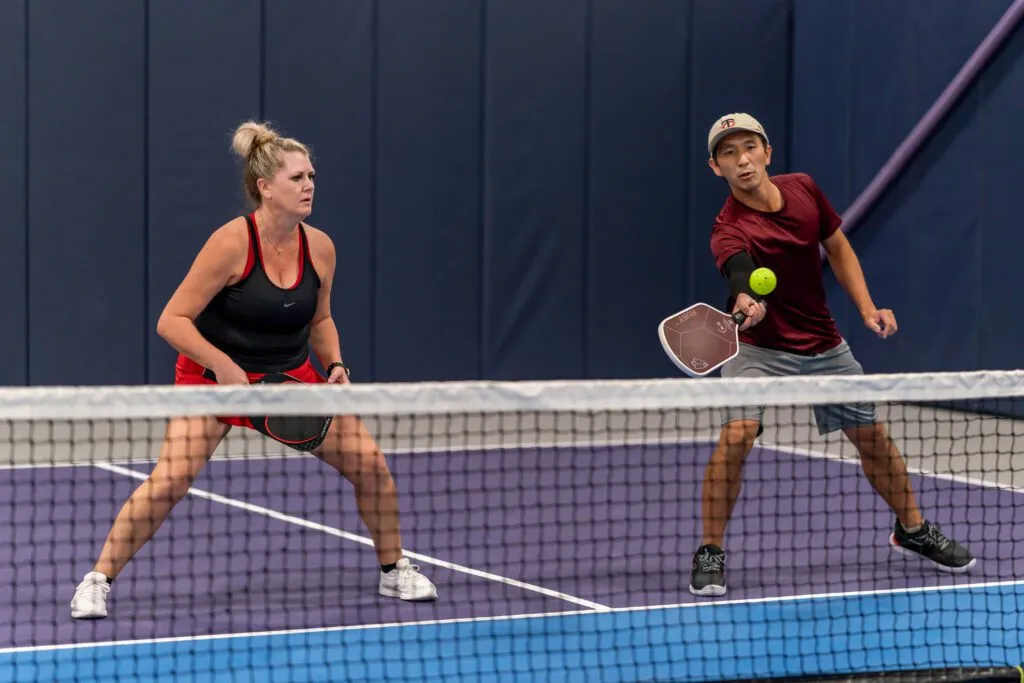
In doubles pickleball, teamwork is everything. You and your partner should move in unison, covering the court without leaving gaps for your opponents to exploit.
Visualize that you’re tethered by a rope: when one partner moves left, the other should shift in the same direction to maintain coverage across the court. This ensures that neither partner leaves an open space for the ball to slip through.
Clear communication is essential for success. Use short, decisive words like “mine” or “yours” to claim shots, and make sure both partners understand when to let the ball go out of bounds. Talking throughout the match helps avoid confusion, especially when facing fast-paced rallies.
4. Use the Third Shot Drop
The third shot drop is one of the most important strategies in pickleball, especially in doubles.
After serving, the third shot should aim to drop softly into your opponent’s kitchen, ideally making it difficult for them to return with a powerful shot.
The goal is to neutralize their aggression and allow your team to advance to the net.
If you can’t execute a third shot drop, hitting a low drive down the middle of the court is another effective option. This forces your opponents to move awkwardly or take a weak shot, giving you and your partner time to move forward.
5. Target Your Opponents’ Weaknesses
Understanding your opponent’s strengths and weaknesses can give you a significant advantage. For instance, aiming for an opponent’s backhand is a common strategy since it is often their weaker side.
Similarly, targeting the feet of an opponent stuck in “no man’s land” can force them into a difficult position, increasing the likelihood of an error.
Another tactic is to push your opponents back toward the baseline. By sending deep shots, you limit their ability to control the net, forcing them into defensive positions where it’s harder to make precise returns.
6. Keep It Simple and Avoid Unforced Errors
In doubles pickleball, many points are lost due to unforced errors rather than won by brilliant plays. Keeping your shots simple and consistent is often more effective than trying to make flashy, difficult plays.
Avoid risky shots with a low success rate, and instead focus on keeping the ball in play and waiting for your opponents to make a mistake.
For example, attempting a drop shot without mastering the technique can easily backfire, giving your opponents an easy opportunity to attack. Spend time practicing these shots during drills before using them in competitive play.
7. Dinking with Precision
A well-placed dink can disrupt your opponent’s rhythm, forcing them into awkward shots or even causing them to pop the ball up for an easy smash.
The key to successful dinking is patience. Instead of trying to end the rally quickly, use dinks to keep the ball low and within the non-volley zone, waiting for your opponents to make an error.
Additionally, aim to place your dinks at your opponent’s backhand or feet, as these are more difficult areas to return from. Dinking requires excellent control and touch, but mastering it will allow you to dominate the kitchen.
8. Play Smarter, Not Harder
While power can be an asset, especially when executing smashes, it’s often more effective to focus on shot placement and control.
Slower, well-placed shots that force your opponents to move out of position are more likely to win points than powerful but imprecise hits.
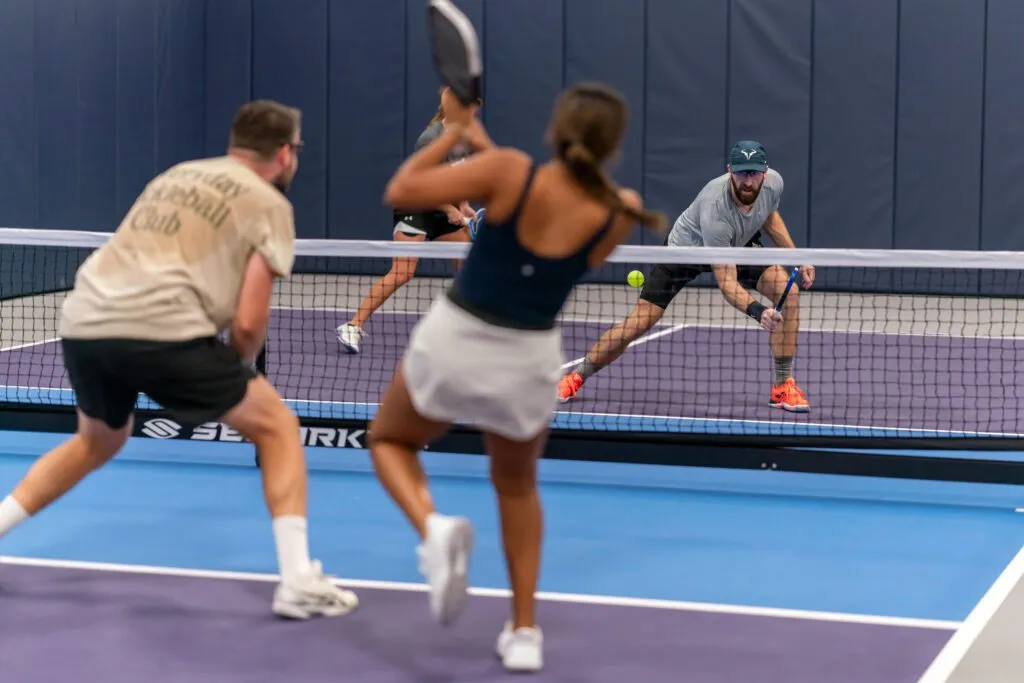
As you improve, you’ll notice that higher-level pickleball matches slow down, with players prioritizing precision and strategy over sheer speed. Anticipate where the ball will go and position yourself accordingly, reducing the need to rush around the court.
9. Vary Your Shot Selection
To keep your opponents off balance, it’s important to vary your shot selection. Mixing in dinks, lobs, drop shots, and drives can prevent your opponents from settling into a rhythm.
For example, after several dinks, throwing in a lob can catch them off guard, especially if they’re crowding the net.
Similarly, changing the pace of your shots can be an effective strategy. A sudden fast drive after a series of slower dinks can surprise your opponents, leading to mistakes.
Always keep them guessing by varying your tactics.
10. Mental Focus and Adaptability
It’s easy to get frustrated after making mistakes or losing a few points, but staying calm and focused can help you turn the game around.
Pickleball is as much a mental game as a physical one, and being able to adapt your strategy mid-game is key to overcoming challenging opponents.
If one strategy isn’t working, be prepared to adjust. For example, if your opponents are dominating the net, you may need to play more defensively, using lobs or deeper shots to push them back.
Flexibility and quick thinking can make all the difference.
Win in Doubles with Pickleball Strategy
Winning in doubles pickleball comes down to smart strategy, effective teamwork, and consistent execution. Mastering the basics—like controlling the non-volley zone, using the third shot drop, and moving in sync with your partner—will significantly boost your performance on the court.
With practice and a focus on strategy over power, you and your partner can outsmart even stronger, faster opponents. Stay patient, communicate clearly, and most importantly, enjoy the game!
Also read:
- How To Play Pickleball In The Wind? Tips To Play Like A Pro
- How To Improve Your Third Shot Drop In Pickleball?
- When Will Pickleball Become an Olympic Sport?
FAQs
1. What is the third shot drop-in pickleball, and why is it important in doubles?
The third shot drop is a soft shot typically hit just over the net, intended to land in the opponent’s kitchen area (non-volley zone). This shot helps neutralize the opposing team’s offensive advantage. It also allows you and your partner to approach the net, setting up a strategic rally rather than allowing the other team to gain control with a hard shot. It’s particularly effective in doubles as it helps both players establish better court positioning without inviting a powerful response.
2. How can we improve our communication on the court during a doubles match?
Good communication in doubles pickleball includes using simple terms like “mine” or “yours”. This is to indicate who will take the ball and call out “out” for balls likely to land outside the lines. Moving in unison with your partner is crucial to covering the court effectively, so keeping each other informed about positions and adjusting in sync can make a big difference. Practicing these cues during practice games also helps build trust and familiarity, making communication more fluid during intense rallies.
3. What’s the best way to control the non-volley zone (kitchen) in doubles?
To control the non-volley zone, both players should aim to move up to the kitchen line as soon as possible after the serve and return shots. At the kitchen line, using soft, controlled dinks keeps the ball low and makes it harder for opponents to attack. Consistent placement of low shots at your opponent’s feet or targeting their backhands can give you an advantage, as it restricts their ability to hit aggressive returns.