

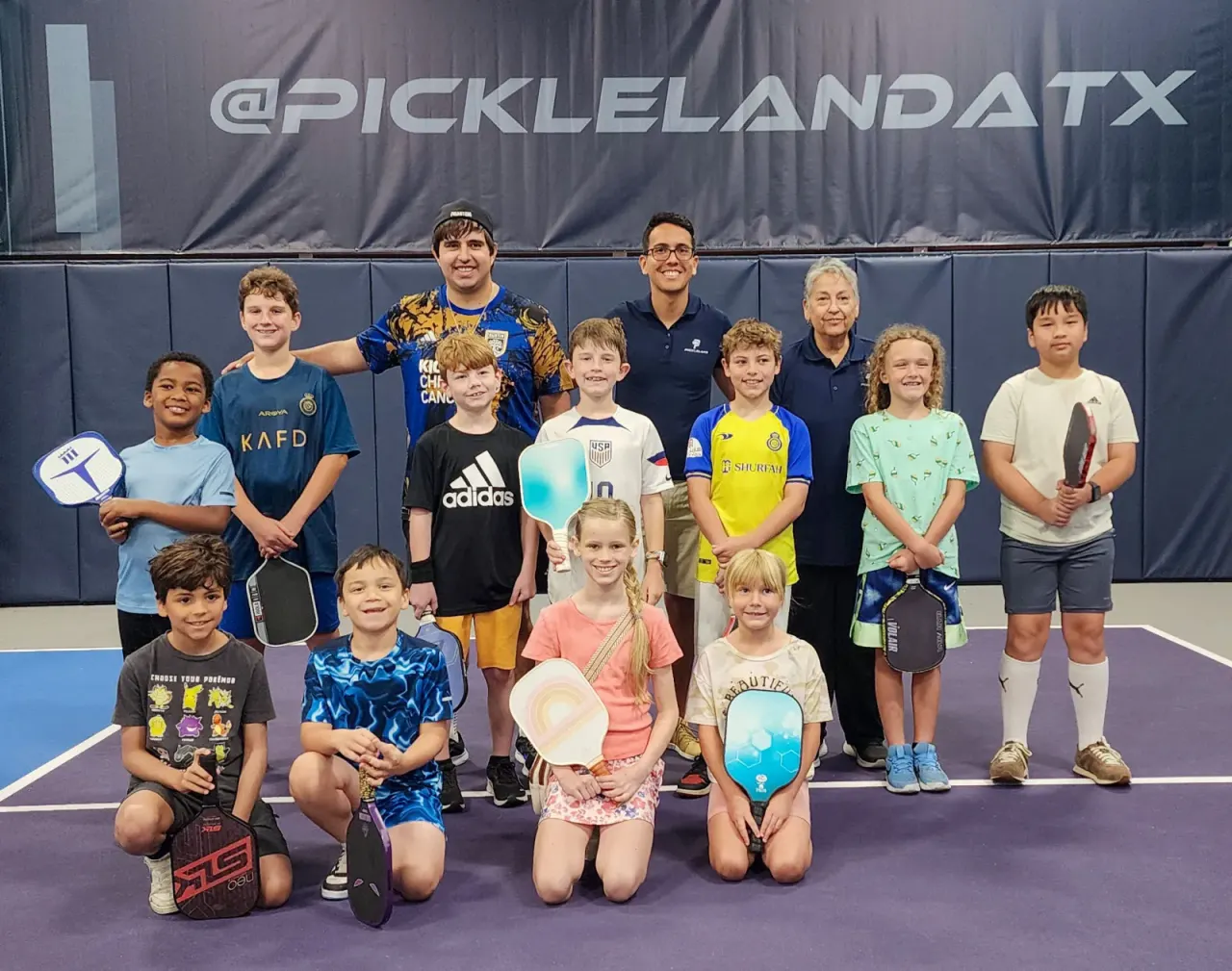
Kids don’t need lectures on footwork or shot mechanics — they need a game that feels like recess. Pickleball delivers exactly that: a quick-to-learn sport with a forgiving ball, a short court, and instant rallies that keep young players laughing instead of zoning out.
The drills below turn the fundamentals — coordination, paddle control, teamwork, and quick decisions — into playful mini-games. Whether you’re a coach running a junior clinic or a parent hitting in the driveway, these are easy to set up and built to keep kids moving and grinning.
Guiding Principles
Introducing kids to pickleball is the key to making learning as engaging and effective as possible. Here’s a closer look at how you approach this:
1. Experiential Learning
Take note that kids excel at learning pickleball through play. These pickleball mini-games are designed to get your kids on the court, practicing skills in a fun, real-game environment.
2. Practical Application
For kids, each game ties directly to core pickleball skills, ensuring kids practice essential techniques used in real matches. This approach guarantees fun while effectively developing a child’s game abilities.
3. Maximizing Fun
Remember, the goal of this game is to integrate learning into enjoyable activities, so skill development feels like play rather than work, making the process engaging and fun for kids.
Mini Games and Drills
Once your kids have mastered the basic techniques and fundamentals of pickleball, it’s time to bring some excitement into practice sessions with engaging mini-games and drills.:
1. Sneaky and Chipmunk
In this game, you will act as a chipmunk catching tossed balls with both hands. It improves your coordination and movement. Increase difficulty by adjusting toss height or adding fakes.
2. Don’t Drop the Dinner
Pretend you’re a server delivering a meal (the ball) on your tray (paddle) without dropping it. Helps you learn paddle control and how the paddle angle affects the ball’s direction.
3. Hit-The-Target
Stand on one side of the net and hit the ball into different targets on the other side. Boosts control and distance. Change target size or placement for varying difficulty.
4. Giraffes and Snakes
Act as the zookeeper, calling “Giraffe” for a high ball or “Snake” for a low ball. While your partner responds with the right shot to practice height control and quick decisions.
5. Dragons and Knights
The Dragon tosses a ball to you, and you block it with a volley. Teaches you to use a controlled, small swing. You can adjust the toss speed “forehand” or “backhand.”
6. Softy and Smashy
Call out “Softy” for low shots and “Smashy” for high shots before hitting. This teaches kids to identify good shots and choose wisely. Increase the challenge with quicker decisions or continuous play.
7. Dinky, Dinky, Do!
Hit the ball up twice, saying “dinky,” and pass it to your partner, saying “do.” This builds patience for better rallies.
8. Beat the Bounce
Partners toss the ball back and forth, getting ready before it bounces. This improves your movement skills. Change the toss height and speed or add a third player for challenges.
9. Popcorn
Make sure you keep the ball (popcorn) bouncing straight up after it hits the ground. Build your rallying skills and paddle control. Try forehands and backhands, or add movement challenges.
10. Surf’s Up
While tossing the ball back and forth, get into a sideways stance before catching it. Helps you learn the proper setup for groundstrokes. Balance the toss or use forehand/backhand terms.
11. High, High, Low
Aim to hit two high balls followed by one low ball over the net, this helps you practice the high-high-low shot pattern for pickleball. Create distance or shot types as needed.
12. Bucket Ball
Try to land the ball in a bucket on the court with a gentle, controlled shot. Improves your accuracy and touch around the net. Use multiple buckets or make it competitive.
Tips for Coaches and Parents
Teaching kids pickleball can be a rewarding experience, but it requires a thoughtful approach to keep them engaged and motivated. Here are some key strategies to help coaches and parents create a positive and productive learning environment:
1. Keep it Fun
Know that the key to teaching kids pickleball is making drills fun and engaging. When your kids enjoy the activity, then kids are more likely to practice and improve more skills.
2. Encourage Teamwork
Nothing to worry about because there are so many pickleball drills that can be done in pairs or small groups, which also promotes teamwork and communication among pickleball young players.
3. Praise and Positive Reinforcement
Kids thrive on praise. Acknowledge the young player’s successes and progress to build the confidence and motivation. Also, positive reinforcement helps kids feel valued and encourages continued effort and improvement.
4. Adapt to Skill Levels
Don’t forget to modify the pickleball drills to match the skill levels of the kids. Start with simple drills for beginners and gradually introduce more challenging ones as it progresses.
Psychological Benefits of Pickleball Drills:
Engaging in the pickleball drills provides more than just physical skill development. Pickleball drills and games also offer significant psychological benefits:
1. Confidence Building
Completing the drills will enhance a child’s confidence and self-esteem, as your kids will see tangible improvements in kids skills and abilities, which reinforces kids beliefs and capabilities.
2. Problem-Solving Skills
Lots of drills encourage rapid thinking and quick decisions, which aid in developing problem-solving skills in kids. Plus, this creates your child’s ability to analyze situations and find effective solutions.
3. Stress Relief
Joining physical activity with enjoyable games can help reduce stress and anxiety. The combination of movement and fun promotes relaxation and emotional well-being, making it an effective way to alleviate tension.
4. Social Interaction
Drills frequently involve teamwork and competition, enhancing social skills and cooperation. Pickleball drills teach kids how to work with other players, communicate effectively, and handle both winning and losing gracefully.
What to Avoid
Avoiding common pitfalls can make a significant difference in how well children learn and enjoy the process. Here are some key things to steer clear of:
1. Overloading
Always begin with simple drills and gradually increase complexity to avoid overwhelming kids with too many rules at once. This approach keeps kids engaged and helps build their skills steadily.
2. Frustration
Ensure drills are suitable for the kid’s age and adjust the difficulty to maintain your kid’s motivation and engagement. Additionally, tailoring activities help keep your kids interested and actively learning.
3. Repetition
Keep in mind that while practice is crucial, having an excessive repetition of the same drill may cause your kids boredom. Always vary activities to keep kids engaged and interested.
Boost Kid’s Coordination with Engaging Pickleball Drills!
Pickleball is an excellent sport for kids, providing both fun and valuable physical and social skills. The drills are designed to be entertaining and engaging, while also improving young players’ pickleball abilities.
In addition, incorporating the activities will help develop coordination, teamwork, and strategic thinking.
- What Is Pickleball: History, Gameplay, Rules, And Gear
- Forget The Golf Club – It’s Time To Network at A Pickleball Club
- How To Increase Employee Engagement And Decrease Turnover
Frequently Asked Questions (FAQS)
What Are the 5 Rules of Pickleball?
The five basic rules of pickleball include serving underhand, hitting the ball over the net, staying out of the non-volley zone, allowing only one bounce per side, and scoring only on the serve. Additionally, games are typically played to 11, 15, or 21 points, with players needing to win by at least 2 points.
Why Is it Called Pickleball?
Pickleball is named after Pickles, the family dog of one of the sport’s co-founders, who would chase after the ball during play. The name was chosen because Pickles was known for running off with the ball, and the game was named in his honor.
How Long is a Pickleball Game?
A pickleball game typically lasts between 15 to 30 minutes, depending on the skill level of the players and the length of rallies. Games are played to a predetermined number of points, usually 11, 15, or 21, and must be won by at least 2 points.