

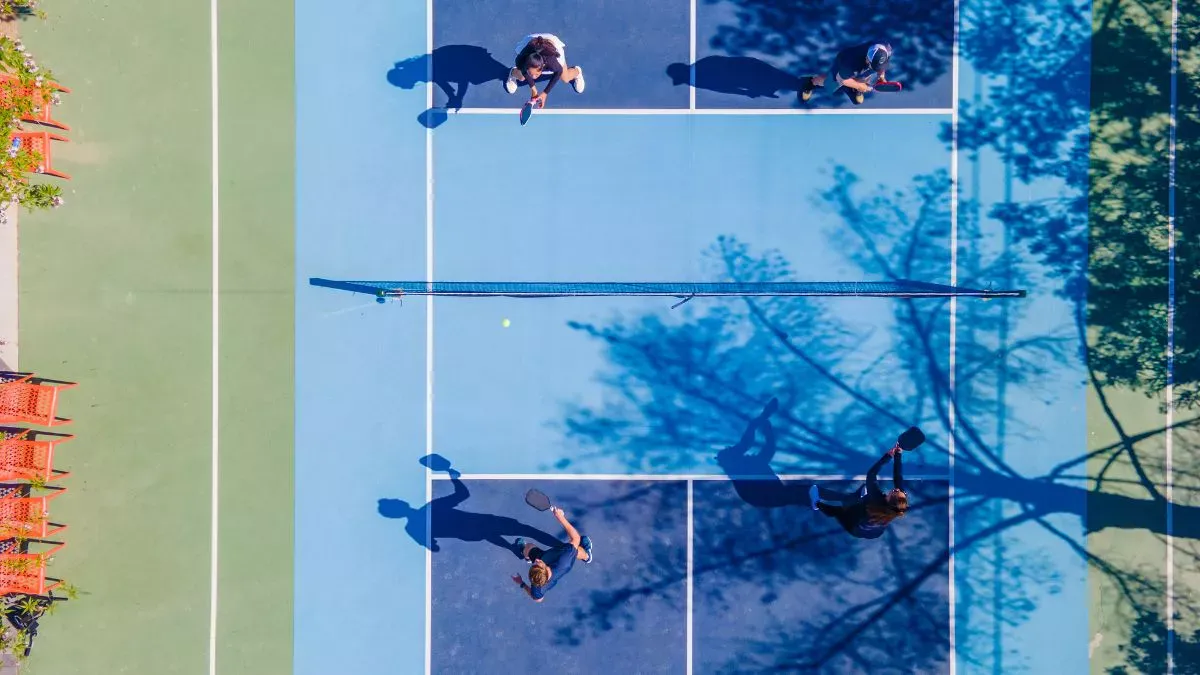
A blazing sun, a gusty afternoon, or a sudden downpour can turn a great pickleball session into a frustrating one. The same shot that lands clean on a calm day can sail long in the wind or skid off a wet court, and the heat can wear you down before the game even gets going.
The good news: a few smart adjustments to your gear, your strategy, and your safety habits let you keep playing well no matter what the forecast throws at you. Below we break down exactly how to handle heat, cold, wind, and rain on the court. For Texas summers specifically, see our summer safety and hydration guide for playing pickleball in Texas heat.
Effects of Extreme Weather on Pickleball Play
Extreme weather can impact your pickleball game. Heat, cold, wind, and rain all affect how you play and how the ball behaves.
Each weather condition brings its own set of challenges, but there are some common factors they are alike, such as:
Court Damage
High temperatures and intense sunlight can damage outdoor pickleball courts. The heat can cause cracks in the surface and make the court uneven, which affects the ball’s bounce and movement.
Other than that, rain can lead to water damage, making the court slippery and unsafe. Over time, this damage can make playing conditions unpredictable and challenging.
Indoor Effects
If it’s very hot or cold outside, the indoor climate may be affected, making it uncomfortable for players. High humidity can cause indoor courts to become sticky or slippery, while cold weather might lead to condensation on the court, affecting traction.
These conditions can make it difficult to maintain control of the ball and impact your overall performance.
Hot, Cold, or Windy? Master Pickleball in Any Weather
Playing pickleball in different weather conditions requires some adjustments to ensure you stay comfortable and perform well. With that in mind, here’s how you can do it:

Playing in the Heat
1. Wear Sunglasses
Sunglasses protect your eyes from the sun’s glare, which can be intense on the court. They help you see the ball more clearly and reduce eye strain. Look for sunglasses that block UV rays for the best protection.
2. Opt for a Hat or Visor
A hat or visor shades your face and eyes from the sun. It helps keep you cooler by blocking direct sunlight and can prevent overheating. Choose a lightweight, breathable material to stay comfortable.
3. Apply Sunscreen
To protect your skin from UV rays, you need to use sunscreen often. Use a lot of it on your face, arms, and any other skin that will be exposed. Reapply it every two hours or after sweating. For better defense, pick a sunscreen with a high SPF.
4. Hydration is Key
Staying hydrated is crucial in the heat to prevent dehydration and heat-related illnesses. Drink water regularly before, during, and after your game. Consider sports drinks if you’re playing for extended periods to replenish lost electrolytes.
Dealing with Windy Conditions
1. Adjust Your Shot Selection
In windy conditions, the ball can be carried or pushed unpredictably. Choose shots that are easier to control, such as low, steady shots rather than high, powerful ones. Aim to keep your shots closer to the net to reduce the impact of the wind.
2. Be Patient
Wind can make the ball move erratically, so it’s important to stay patient. Wait for the right moment to strike and don’t rush your shots. Allow the wind to settle before making your move to increase your accuracy.
3. Communicate with Your Partner
Wind can affect how you and your partner play together. Talk openly about your strategies and how the wind is influencing your shots. Clear communication helps ensure you both stay on the same page and adjust your positions accordingly.

Playing in Rainy Conditions
1. Wear Appropriate Footwear
Wet courts can be slippery, so it’s crucial to wear shoes with good grip. Choose footwear specifically designed for sports that have non-slip soles to prevent falls and maintain stability. Proper traction helps you move confidently and avoid accidents on the wet surface.
2. Dry Your Paddle
Rain can make your pickleball paddle slippery and hard to control. Keep a towel handy to regularly wipe down your paddle and remove any moisture. A dry paddle ensures better grip and control during play, reducing the risk of mishits.
3. Play Defensively
With the court being wet, the ball may not bounce as high or move predictably. Focus on a defensive style of play, using softer, more controlled shots rather than aggressive ones.
By playing defensively, you reduce the risk of errors and maintain better control over the game despite the slippery conditions.
Why Being Prepared for Extreme Weather Matters in Pickleball
When playing pickleball, preparing for extreme weather is essential. Here’s why being ready for challenging weather conditions matters:
Prevent Injuries
In bad weather, courts may be slippery or hard to navigate, which raises the risk of falls and injuries. Accidents are less likely to happen when players are properly prepared, such as by wearing the right gear and choosing safe playing conditions.
Maintain Performance
Temperature, wind, and rain can all affect how well you play and how well you do in games. Dealing with these conditions is easier if you are ready with the right gear and plans.
Protect Equipment
Pickleball gear, like paddles and balls, can get broken by bad weather. Protective gear that you wear in bad weather and store properly can help your gear last longer.
Ensure Safety
Weather conditions like lightning or severe storms can pose serious safety risks. Being aware of weather forecasts and choosing to play in safe conditions helps protect you and your fellow players from potential hazards.
Embrace the Challenges to Improve Your Pickleball Skills and Resilience
Facing challenging weather conditions in pickleball isn’t just about overcoming obstacles; it’s an opportunity to enhance your skills and build resilience.
By preparing adequately and adapting your strategy, you not only improve your game but also become a more versatile and confident player. So, keep pushing your limits, and watch how your abilities and love for the game evolve.
After reading the advice on how to play pickleball in inclement weather, kindly click the following link.
How do you really feel about it? Get more information by clicking on these links:
- Every Indoor Pickleball Club in Austin, Compared
- Creative Ideas For Corporate Team Building
- Forget The Golf Club – It’s Time To Network at A Pickleball Club
There is no need for you to ask about pickleball. Type them in the box below if you want to. All of your questions will be answered in the next blog post.
FAQs
1. Why Do You Feel Dizzy When Playing Pickleball?
Feeling dizzy during pickleball can happen for several reasons. Extreme heat or humidity can lead to dehydration and overheating, making you feel lightheaded. Rapid changes in movement and intensity can also disrupt your balance, especially if you’re not used to such activity.
2. How Do You Increase Your Stamina for Pickleball?
Improving stamina for pickleball involves a mix of aerobic and strength training exercises. Regular cardiovascular workouts, such as running or cycling, help build endurance and improve overall fitness. Strength training exercises, like squats and lunges, enhance muscle strength and resilience, which are crucial for long matches. Additionally, practicing pickleball regularly, combined with a balanced diet and sufficient rest, will gradually boost your stamina and performance on the court.
3. What Wind Speed is Too High for Pickleball?
Wind speed can affect your pickleball game significantly. Generally, winds over 15-20 miles per hour can make playing difficult and impact the ball’s trajectory. For the best experience, try to play in lighter winds or on calm days. If it’s too windy, consider rescheduling your game or moving indoors if possible.