

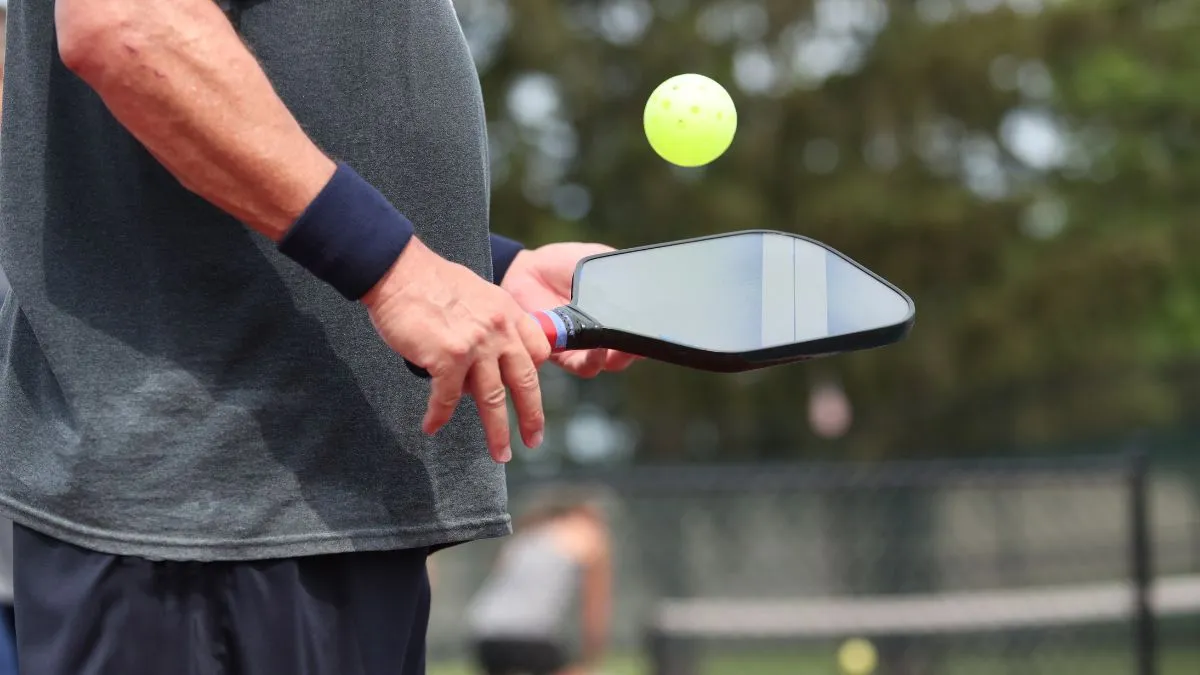
As the popularity of pickleball continues to rise, paddle manufacturers are constantly coming out with various paddles that best suit different playing styles and personal preferences.
Of the many variants available, the most common are the 13mm and 16mm pickleball paddles, both with their pros and cons.
Below, we break down how the two differ in feel, power, and control — and how to match each one to your playing style and preferences.
Understanding Paddle Thickness
An essential factor in the design of a pickleball paddle is its thickness, which can make all the difference in any player’s game. The thickness of a paddle core is measured in millimeters and is often associated with the paddle’s feel, power, and control characteristics.
What Does Paddle Thickness Mean?
Paddle thickness refers to the thickness of your paddle’s core, it is the material that is sandwiched between the paddle’s face on either side. The core usually comprises lightweight materials such as polymer, aluminum, or Nomex.
It is measured in millimeters and normally varies from 11mm to 16mm, though some paddles may be thinner or thicker. Most of the time, the core’s thickness can affect the paddle’s weight, feel, and performance.
Common Paddle Thicknesses
13mm and 16mm are the most common paddle thicknesses among players. Both have benefits and drawbacks thus, making them more or less useful in specific playing styles and personal preferences.
13mm and Below
If you are leaning towards getting a 13mm paddle, here are the factors you need to consider:
- Generally considered to be “thin core” paddles
- Weighs less and provides a quicker swing and more power
- Lesser control compared to thicker paddles
- For players with an aggressive approach
16mm and Above
For those opting for a thicker paddle, here are the things that you need to know:
- Known as “thick core” paddles
- Typically heavier and offers more control
- Less power compared to thin core paddles
- For players who are particular with control especially when it comes to drop shots, resets, and dinks
Comparing 13mm and 16mm Pickleball Paddles
Understanding the difference with varying thicknesses is critical to getting the right pickleball paddle for an enhanced performance on the court. This comparison can guide you through the factors associated between the 13mm and 16mm paddles including power, control, comfort, and impact absorption.
Power vs. Control
One of the basic considerations players must make in choosing a paddle thickness is the balance between power and control. These are things that you need to know when it comes to a 13mm and a 16mm’s power and control characteristics:
13mm Paddles
- Provides enhanced power and a more pronounced ball impact.
- Can generate speed and spin easily.
- Effective for players who like to dominate the backcourt and on offense.
- Caters to an aggressive playing style due to its powerful serves and shots.
16mm Paddles
- Gives more control and precision.
- Allows you to place shots more accurately, especially in dinks and drop shots.
- Suitable for players who value touch and placement more than raw power.
- Preferable for strategy players who want control throughout a rally.
Comfort and Impact Absorption
Two of the most important factors that can influence a player’s performance and satisfaction in playing pickleball are comfort and impact absorption. Here are key comparisons between the 13mm and 16mm paddles about comfort and impact absorption:
- 16mm paddles provide more comfort because of their enhanced impact absorption qualities.
- 13mm paddles have feedback and responsiveness which allows players to adjust quickly during fast-paced rallies.
- A thicker core material helps lessen the impact hence, reducing the strain on a player’s arm.
Weight and Maneuverability
This directly affects your performance and comfort in playing pickleball. The difference between 13mm and 16mm pickleball paddles can change the way you handle the paddle during the play, impacting the way you execute your shots.
13mm Paddles
Most of the time, a 13mm paddle thickness is associated with a lightweight, improving your maneuverability on the court. Due to this, these paddles are generally preferred by players who like quick reactions and agile movements for the following reasons:
- Increased Hand Speed: Their light weight makes the paddle swing faster, thus helping the player to react quicker and make fast returns.
- Enhanced Control: A thinner core means they deliver more control over the ball, thus allowing the player to place their shots better.
- **Power Generation:**Due to the increased swing speed, a player can create powerful shots without the additional strain of a heavy paddle.
16mm Paddles
Though generally heavier, 16mm paddles have their advantages, especially for playing styles that place focus on stability and control and the following:
- **Weight and Stability:**The added weight absorbs the energy from the ball, making it feel more controlled and forgiving during long rallies.
- Larger Sweet Spot: Enables the player to hit an effective shot even when the ball does not connect perfectly with the paddle face.
- Shock Absorption: Its thickness lessens the impact on players’ arms and wrists preventing injuries associated with repetitive motions.
Choosing the Right Paddle for Your Game
With the different thicknesses and weights of the paddles, together with various playing styles, choosing the right paddle is essential in improving how you enjoy your time on the court.
Here are a few factors to consider in choosing the right paddle:
Playing Style Considerations
Playing style, more often than not, dictates which type of paddle will suit your game best. Here are reasons why your playing style can affect your pickleball paddle choice:
- Aggressive Players: They can benefit from lightweight paddles which lets them swing faster and react quicker. It allows players to hit hard shots while retaining maneuverability.
- Defensive Players: 16mm paddles are recommended for these players because they provide more control and precision. The increased sweet spot and shock absorption results in more accurate placements and a softer touch.
Skill Level and Experience
These key factors influence how comfortable a player feels with handling the paddle and its effect on their shots. Knowing the different paddle thicknesses can help you choose a paddle that aligns with your current skills and further development.
- Beginner Level Skills: 13mm paddles are suitable for beginner players who are still developing their skills due to their easy handling and better swing mechanics.
- Advanced Level Skills: 16mm paddles may be preferable for advanced players who are already experienced in executing accurate shots
Testing and Personal Preference
Players should try out different thicknesses and weights to gauge the feel and find a suitable balance for their playing style. Additionally, personal preferences like grip size, shape, and surface material may be important to one’s comfort and performance.
Be Equipped with the Right Paddle Today!
Ultimately, having a proper type of paddle greatly enhances your play, boosts skills, and makes playing pickleball all the more enjoyable. For players who want more control, opt for a 16mm paddle whereas if you are looking for something with more power, choose a 13mm pickleball paddle.
Want to find out more? Check out these blogs below:
- What Is Pickleball: History, Gameplay, Rules, And Gear
- Pickleball Vs. Tennis: Key Differences Explained
- 7 Basic Pickleball Rules For Beginners: A Complete Guide
Frequently Asked Questions (FAQs)
What Are The Official Pickleball Paddle Specs?
USAPA rulebook officially states that “The combined length and width, including any edge guard and end cap on the paddle, shall not exceed 24 inches”. The length must also be 17 inches or less in total.
Is Carbon Fiber or Graphite Better for Pickleball?
If you want a lightweight and responsive paddle that offers the most power in your shot, a carbon fiber paddle would be recommended. On the other hand, for more durability and comfort, a graphite paddle can be the best option for you.
Why Are Pickleball Paddles Expensive?
Materials used influence the amount of money charged for paddles. In most cases, the best pickleball paddles are usually made from expensive materials, which in turn affect their prices.