
Nothing separates the 3.0 players from the 4.5s quite like the dink. It looks deceptively simple — a soft, arcing tap that barely clears the net — but landing one in the kitchen, time after time, under pressure, is where games are quietly won and lost. Master the dink and you control the pace at the net instead of getting bullied off it.
Dinks can be used as shots on offense or defense. On offense, they put pressure on their opponents to make mistakes or make it easy for them to score.
While on defense, they help stop hard shots and ease the load. The main goal is to make the dink impossible to hit by landing the ball in the other team’s kitchen with its peak on your side of the court. This makes the other team let the ball bounce instead of volleying it.
When you keep dinks low, your opponents have to hit them up, which makes it harder for them to return the shot well. Here’s how to dial in the perfect dink, with the tips and strategies that will sharpen your soft game and let you take over at the kitchen line.
Essential Strategies for Improving Dinks in Pickleball
Your opponent will probably set you up for an easy shot or, even better, commit a fault if you can implement these pickleball dinking methods into your game.
1. Creating Space for Your Dink Shots
A common misunderstanding is that to be good at dinking, you have to just barely clear the net. Although this may look good, it doesn’t always mean that the shot is good. It’s not a good dink if it just misses the net and goes in the strike zone of the other player.
It doesn’t matter how close a dink is to the net; where it lands makes a difference.
So, instead of shooting only an inch above the net and taking a chance that you might miss, aim 6 to 12 inches above. This extra room turns into your dink’s flight path, which helps you make more consistent shots.
Embrace Soft Hands for Effective Dinking
Soft hands make shots that are soft. To begin, hold your paddle with a hammer grip, also known as a continental grip.
The index finger and thumb will give you most of the power. The other three fingers will help keep you steady. This grip makes hands softer, which stops dinks from being too violent.
Utilize Shoulder Movement for Controlled Dinks
Don’t use your wrist or make big swings when you’re dinking. Keep your wrist stable and stiff to stop it from moving on its own. Instead, use your shoulder to move the paddle.
You can keep your low, soft dinks with a one-foot gap over the net if you lift the paddle with your shoulder instead of your arm or wrist.
2. Target Pressure Points
Make things difficult for your opponent in the game to get them to make mistakes. Push dinks are a good strategy.
These are aggressive shots that hit right in front of your opponent’s feet, usually in the last third of their non-volley zone. This job puts a lot of pressure on the person and gives them chances to make mistakes.
Advantages of Push Dinks
- **Reaction Time:**Your opponent has to scramble because they don’t have much time to respond, and they often can’t reset before the ball drops.
- **Angle:**To clear the net, your opponent has to hit higher and farther, which makes it harder to keep a good angle.
- Distance: For your opponent to make contact, they have to get low. This makes their paddle go farther in less time, which makes it harder for them to manage the shot.
Executing Push Dinks
Hit with more firmness while maintaining control. Adapt your shot based on your opponent’s position:
- A soft shot over the net might work better if you are far from the line.
- Just outside the kitchen line, a push dink can land in their hit zone.
- When you hit a forehand, try a different angle to keep them thinking.
Keep Your Dinks Unpredictable
Switch up your dinks to keep things interesting. If you are ahead and want to make your opponent make a mistake, you might want to use push dinks.
This approach helps you win because it keeps your opponent guessing and makes them more likely to make a mistake.
3. Volley Whenever Possible
In pickleball, dinking is very important, especially in doubles where it often decides who wins. There are different kinds of dinks, but the dink shot, in which you hit the ball out of the air, is a good way to put pressure on your opponent.
Why Dink Volleys Add Pressure
By volleying the ball instead of letting it bounce, you cut down on the time between when your opponent hits the ball and when they go back to get it.
In this fast-paced sport, even a fraction of a second can make a big difference. If you give your opponent less time to change, they are more likely to make a mistake.
The Advantage of Dink Volleys
It’s hard to keep a rally going when you only rely on spinning dinks. Instead, try to volley your dinks and only hit bouncy ones once in a while.
To do this, bend your knees and do a controlled lift dink without taking a step back. This strategy will help your game because it will put steady pressure on your opponent.
4. Dink in Front
This is an important part of all techniques for dinking and volleying. To do it right, you have to dink from in front of your body.
Key Techniques
Stance
Put your feet a little farther apart than hip-width apart and bend your knees a little. This is an athletic stance. Being in this pose keeps you on the balls of your feet and makes you faster at reacting.
Court Position
As people talk near the kitchen, stay put. Plant one foot and step back with the other if you need to move back. Then, go back to where you started to keep your balance and room.
Paddle Position
Put your arms in and hold your paddle out in front of you with your feet about one to two feet apart at the non-volley zone line. This is your athletic stance. This set-up makes sure that you dink from the right spot.
Swing
Do not loosen up your backswing. You are likely to pop the ball up if you reach past your shoulder. To escape being dinked from behind, keep your arms out in front of you at a right angle.
Force Dead Dinks
Set up situations that make it hard for your opponent to do successful dinks to get an edge. These weak shots, called “dead dinks,” happen when you’re not balanced, in the wrong place, or using the wrong form.
They’re easy to return, which makes them very important for winning rallies. If your opponent can’t even come up with a dead dink, they are more likely to make a mistake.
Strategies to Force Dead Dinks
Create Discomfort
Try to stay away from your opponent’s strong points, like their forehand. You can try to hit the ball into their backhand or right in the middle of their stance. It also works to dink low and close to their feet. Change up your shots so they don’t become easy to guess.
Avoid Allowing Front Play
Hit your opponent in places that aren’t in their strike zones, like to the sides, to make them move or swing farther back than they’d like.
Prevent Aerial Hits
Make your opponent bounce, which will make it harder for them to slow you down. To make them bounce in the last third of their kitchen, you need to move quickly and precisely.
Tips to Hitting the Perfect Pickleball Dink
Check this out and make sure that all of these things are part of your dinking method.
1. The Continental Grip for Dinking
The most important thing for a good dink is to use the right and most flexible grip, which makes it easy to do both forehand and backhand dinks.
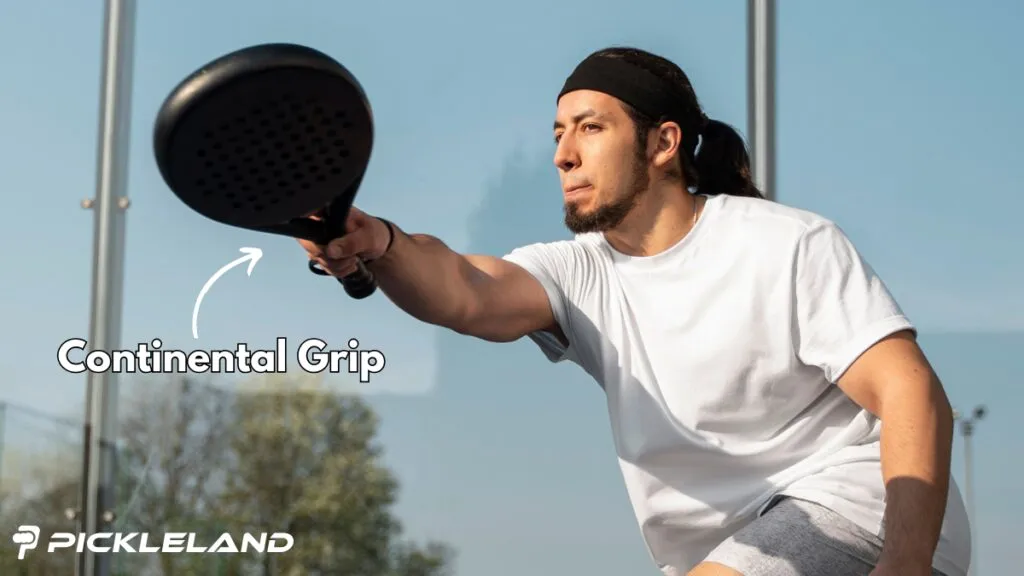
It’s important to have a single grip that works for all shots at the net, since you don’t have time to change grips during a fast-paced attack.
For dinking, volleying, and other net plays, the European grip is the best choice.
To find the continental grip:
- Hold your paddle so that one edge is up and one is down.
- Find the part of your grip that is on top right now and label it “0 degrees.”
- If you’re right-handed, make sure your whole hand stays on the grip and place the index knuckle of your right hand at the 45-degree spot on it.
Holding the grip too far to the right, like at 90 degrees, can make it hard to do backhand dinks. This is called an Eastern Forehand grip.
2. Utilizing Your Legs in Dinking
When dinking, it’s important to use your legs. Players often bend at the waist while their legs are straight and stiff. This puts stress on the back and raises the risk of injury, and it also makes it harder to move when the pass is played away from you.
Get down on the ground, bend your knees, and keep your back straight. Then, use your legs to push. Don’t forget to keep your feet moving too.
You should be able to send the ball over the net with the power from your legs moving your paddle forward. You don’t have to make as big of a paddle swing when you use your legs, which gives you more control over your shots.
3. Ensure Your Dink Stays Within the Kitchen
In the kitchen, you should focus on keeping your dink short instead of just hitting it low. Even if it’s hit a little higher over the net, a short dink will usually stay low.
Your opponent can hit the ball if it’s high enough, so you need to stop them from taking it out of the air. You make it more likely that they will have to dink back instead of attacking if you make them let it bounce or make a low-contact shot.
4. Optimal Dink Swing
Keep your low-to-high swing line steady when dinking. People often make the mistake of throwing the paddle behind their body, which can cause timing problems, late contact, and pop-ups.
Keep the contact point in front of you and focus on a fast, tight follow-through. Start with a short backswing and end with a short follow-through. Focus on a light push instead of a big swing.
If you let your follow-through go on too long, you could overhit and not be ready for the return strike.
Master the Perfect Pickleball Dink!
To enhance your dinking skills on the pickleball court, prioritize these fundamental steps. They form the core of successful dinking and are essential for becoming a proficient player on the court.
Remember, while winning isn’t everything, having a solid grasp of the game and playing it skillfully can significantly improve your chances. So, embrace these techniques and strategies to dink like a pro and enjoy the game to its fullest!
Feeling more confident about your dinking skills? Dive into related articles for further understanding.