
People of all ages and skill levels enjoy playing pickleball because it is fun and fast-paced. Usually, it’s played in singles or doubles formats, but a 3-person version has become a popular alternative when only three players are available.
This variation keeps the game engaging and introduces new challenges for players.
Only have three players? You can still get a great, competitive game going. Here are the 3-person pickleball rules, the most popular formats, the strategies that win, and how this version differs from traditional pickleball.
What is 3-Person Pickleball?
In this game format, three people play pickleball with one on one side of the net and two on the other.
This style is also called Cutthroat or Australian. The game lets players play pickleball without a fourth person and adds an exciting element.
Each player’s skills, speed, and strategy are tested when competing alone against a pair.
Basic Rules of 3-Person Pickleball
Here is what you need to know first about this pickleball game format.
Court Setup and Positioning
3-person pickleball is played on a standard pickleball court, which measures 20 feet wide and 44 feet long. It has a 7-foot non-volley zone or kitchen on each net side.
Players take positions as follows:
- The solo player stands on one side of the net.
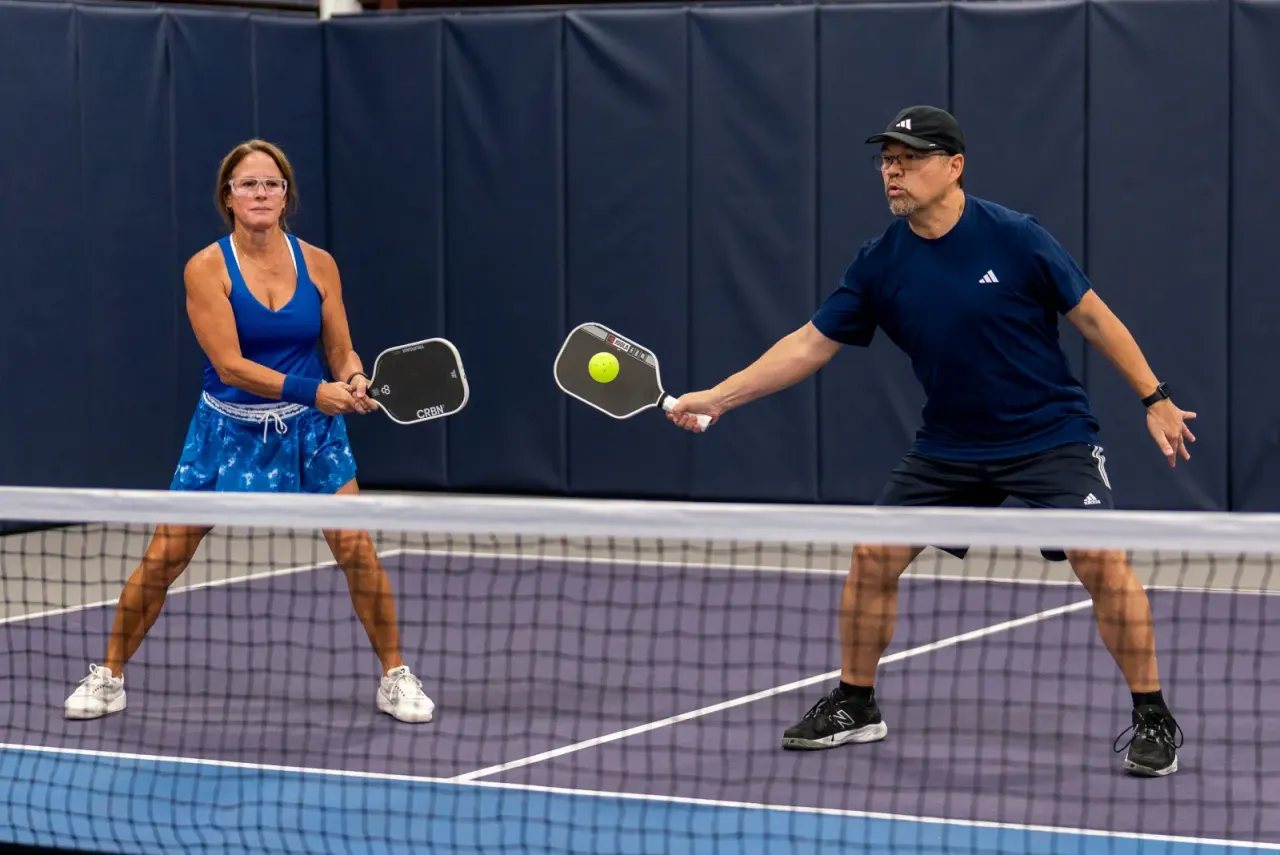
- The other two players called the pair, stand on the opposite side.
Solo players must move quickly and strategically to cover the court. During rallies, the opposing players must work together to cover their side without crowding each other.
Serving Rules
Serving in 3-person pickleball has rules. The single player serves the pair to start the game.
As in traditional pickleball, serves must be diagonal from the right-hand side to the opposite right service box. The solo player serves as long as they score.
If they lose the rally, the next player in rotation becomes the solo player, shifting positions so everyone plays solo.
The serve must be underhand and below the waist, like always, and cannot land in the kitchen. Everyone gets to play offense and defense by rotating between solo and paired roles.
Rally and Scoring
A 3-person pickleball scoring system differs from doubles or singles. Only the single player scores. If the pair wins the rally, they only prevent the single player from scoring.
While the pair defends, the solo player has more incentive to take risks and play offensively, keeping the game balanced.
Games are usually 11 points, and players must win by 2 points. After each point or serve error, roles change, allowing each player to play solo and score points.
Variations of 3-Person Pickleball
There are a few common ways to play 3-person pickleball, each adding a unique twist to the game. Here are the main variations you might encounter:
1. Standard Cutthroat Pickleball
In the Cutthroat version of 3-person pickleball, one player serves and plays solo against two opponents on the other side. If the single player wins the rally, they score.
However, if they lose, the next player becomes single, creating a new pairing. Switching between solo and paired roles requires quick strategy changes.
2. Rotating Cutthroat (Self-Scoring Variation)
Each player tracks their score in self-scoring Cutthroat. This setup is common in recreational play, where each person competes individually.
The solo player can be allowed two faults (two serve attempts) to level the playing field, especially if the other two are more advanced.
This version promotes competition because players must balance offensive and defensive play knowing their score counts for performance.
3. Full-Court Solo Play
In Full-Court Solo Play, the soloist covers the entire court. Since it makes the game harder, this variation is normally only played by experienced single players.
The opposing pair must also cooperate in removing holes the single player can exploit. This physically challenging version emphasizes agility, quick thinking, and cooperation.
Strategies for Success in 3-Person Pickleball
Whether you’re the solo player or part of the pair, 3-person pickleball requires strategy. Here are some effective approaches for each role.
For the Solo Player
Solo players should focus on positioning and shot placement. Since you’re covering the court alone, shoot for shots that require the duo to move quickly, especially in gaps.
Shooting along the kitchen line makes it difficult for the pair to return without entering the kitchen, which is illegal.
- Keep opponents on their toes with drop and angled shots.
- Play near the net for faster returns, but beware of lobs.
- Change angles and power to surprise your opponents.
For the Pair
To avoid confusion and overlap, the pair must communicate well. Talk about who covers what before you start and call plays during rallies.
Working together and using your numbers can help you stop the solo player from scoring.
- Position yourself to cover the court.
- Use defensive lobs to distance and disrupt the soloist.
- Be cautious and avoid shots that could give the other a point.
For All Players
Variating shots and serves is crucial in 3-person pickleball. Switching shots like drop shots and powerful drives can confuse your opponents.
Since the single player has to cover more ground, properly placing shots will help you win rallies.
Also, work on footwork and reflexes. Moving quickly and covering the ground with a few steps assists the single gamer.
Common Mistakes in 3-Person Pickleball (and How to Avoid Them)
Mistakes can be costly in 3-person pickleball. Here are some common errors players make and ways to avoid them.
Overcommitting to One Area
One common mistake, especially for the solo player, is overcommitting to one side of the court. This can leave large parts of the court open, making it easy for the pair to exploit gaps.
Focus on balanced movement, and avoid rushing to one side unless necessary.
Miscommunication Among the Pair
In the paired position, lack of communication is a major issue. Players often get in each other’s way, which can result in missed shots or easy points for the solo player.
Establish clear signals, and communicate constantly about who will take each shot.
Poor Shot Selection
Trying risky shots can backfire, especially for the solo player. Instead of taking high-risk, low-reward shots, focus on steady and controlled returns.
For the pair, consistent, accurate shots can keep the solo player on the defensive and reduce the chance of giving up points.
Try 3 Person Pickleball Now
3-person pickleball is an enjoyable way to play when a fourth player isn’t available, and it brings new excitement to the game. This variation requires skill, strategy, and teamwork, making it a great addition to any pickleball enthusiast’s routine.
Whether you’re looking to improve your game or simply have fun with friends, 3-person pickleball offers a unique and rewarding experience.
Learn more through our other insightful guides and resources:
- Top Pickleball Drills For Skill Improvement: Serving, Dinking, And Fast Hands
- How To Be A Better Pickleball Teammate?
- Top Pickleball Drills For Kids: Boost Game Skills With Enjoyment
Frequently Asked Questions (FAQs)
1. How do you set up the court for 3-person pickleball?
The court remains the same as in standard pickleball, measuring 20 feet by 44 feet, with a 7-foot kitchen area near the net. One player takes the solo position on one side, and the two others play as a pair on the opposite side.
2. How does scoring work in 3-person pickleball?
Only the solo player can score points. If they win the rally, they earn a point. If they lose the rally, no one scores and the next player rotates into the solo position. The game usually goes to 11 points, with the winner needing to lead by at least 2 points.
3. Do the serving rules differ in 3-person pickleball?
Yes, the solo player starts the serve, and it must be underhand and diagonal, similar to standard pickleball rules. The serving rotation changes whenever the solo player loses a rally, allowing all players to take turns as the solo server.