

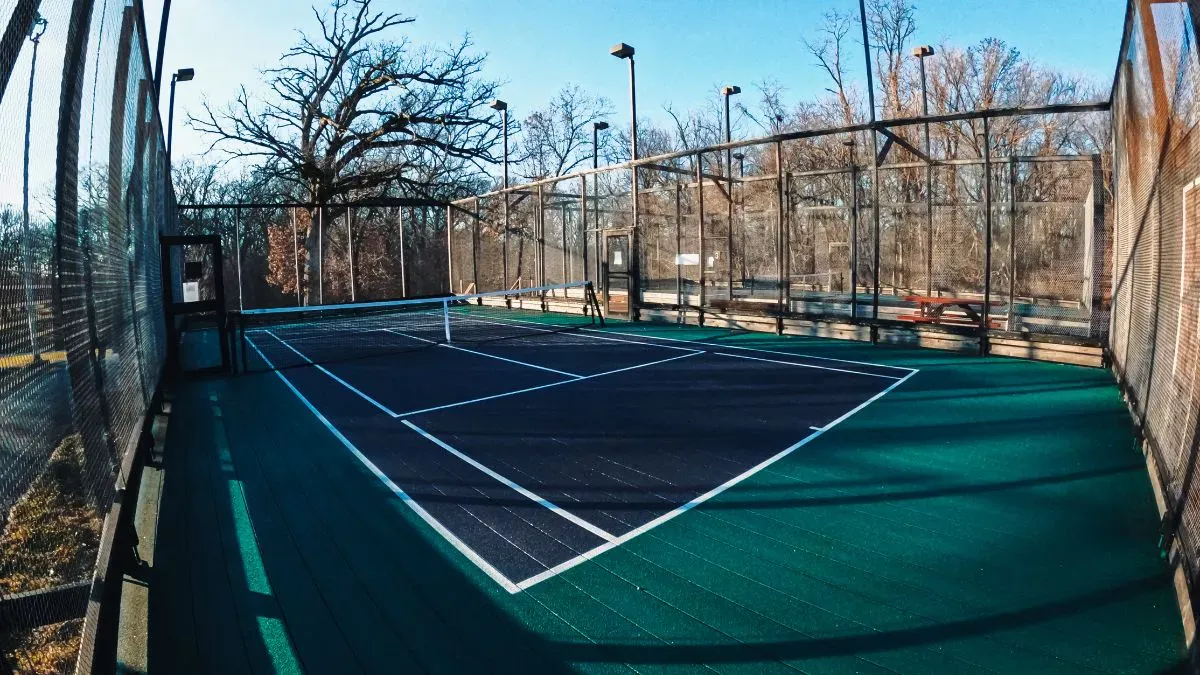
Imagine stepping out your back door for a quick game whenever the mood strikes, no court reservations, no drive across town, no waiting on a public court. A backyard pickleball court turns your yard into a year-round hangout for family game nights and friendly neighborhood matches.
Building one is more achievable than you might think. With the right planning, surface, and a few key measurements, you can create a court that plays great and lasts for years. This guide walks you through every step, from choosing the location and laying out the lines to picking a surface, installing a net, and budgeting the whole project.
1. Choose the Right Location
Ideally, you’ll want a flat, level surface to minimize extra groundwork. The space required for a standard pickleball court is 20 feet wide by 44 feet long.
However, it’s best to add extra space for movement, making a total area of about 30 feet by 60 feet. This allows for proper positioning around the court and minimizes obstacles during play.
If you already have a flat surface, such as a driveway or a basketball court, you could repurpose it by marking out the lines and setting up a portable net.
Orientation
A key tip for outdoor court placement is aligning the court north-south. This orientation helps minimize the impact of sunlight, reducing glare during games and allowing for better visibility throughout the day.
2. Court Dimensions and Layout
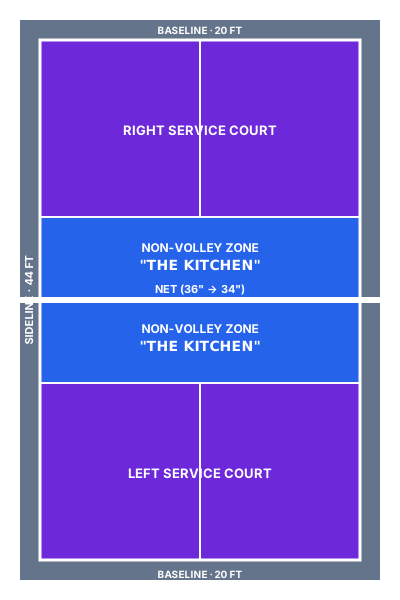
Pickleball courts follow standard dimensions, with the playing surface measuring 20 by 44 feet. You’ll also need to account for various key areas:
- Baselines: These are the lines running parallel to the net at the ends of the court.
- **Sidelines:**The boundaries running along the sides of the court.
- **Non-Volley Zone (Kitchen):**The 7-foot area extending from the net on both sides, where players cannot volley the ball.
- Service Courts: Divided by a centerline extending from the net to the baseline, creating two equal sections on each side of the court.
Using the Pythagorean Theorem for Accurate Layout
Laying out the court requires precision. Start by marking one of the sidelines (44 feet) with a straight line. Then, using a 90-degree angle, mark the baseline (20 feet), ensuring the corners are square.
You can use two measuring tapes to confirm the accuracy of the diagonals, which should measure 48 feet, 4 inches. Once the perimeter is set, you can mark the remaining lines using chalk, painter’s tape, or vinyl court markers.
3. Surface Selection
The surface of your pickleball court is a crucial consideration, as it impacts both gameplay and durability. Two common options for outdoor courts are asphalt and concrete.
Concrete
A concrete court provides the most durable playing surface and requires less maintenance than asphalt. It’s ideal for long-term use, especially in regions with varied weather conditions.
Asphalt
Asphalt is more affordable but requires regular maintenance to avoid cracks and wear over time. It may need resurfacing every 5 years to maintain a good playing surface.
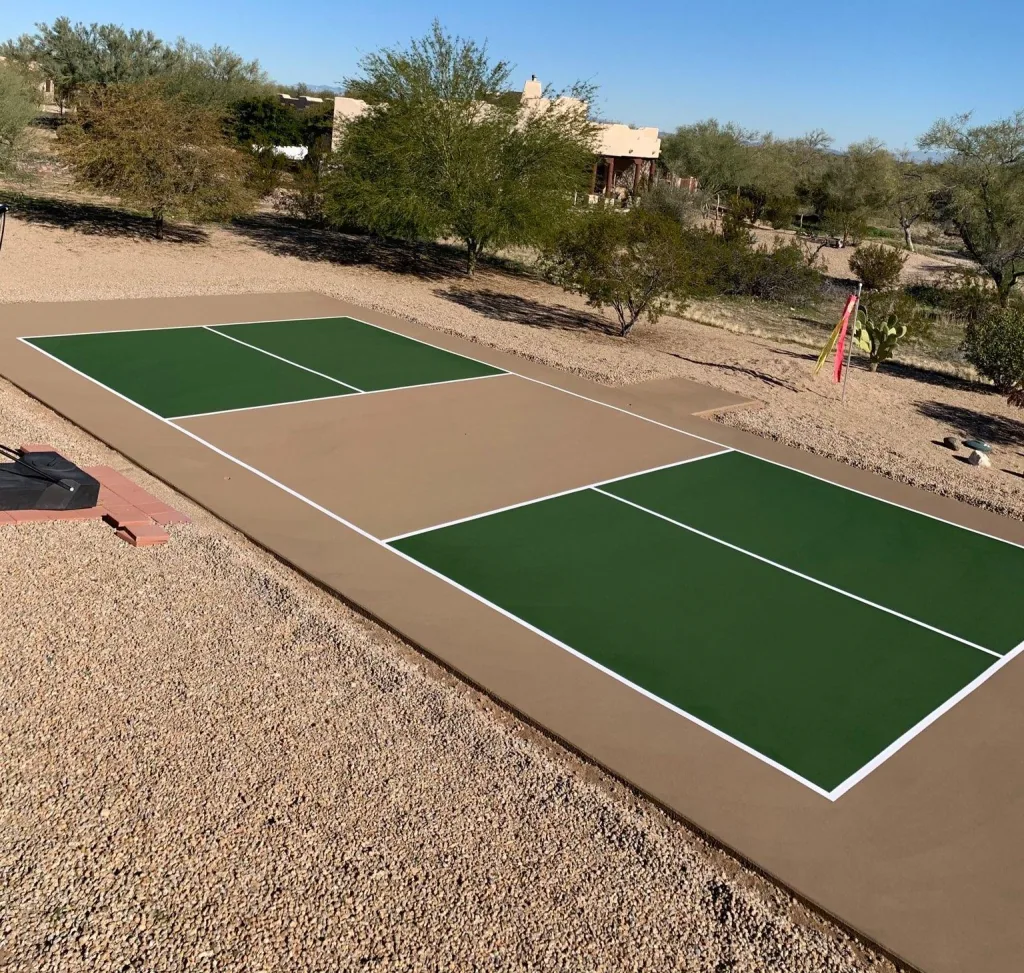
If you don’t want to permanently pave a surface, you can use temporary court tapes or chalk to mark out a court on existing driveways or other flat surfaces.
4. Court Painting and Line Marking
To ensure your court meets pickleball regulations, it’s important to paint the court lines clearly and correctly. USAPA guidelines recommend using white paint for the lines, which should be 2 inches wide. Line contrast is crucial to visibility, especially if you’re painting on asphalt or concrete.
You can either use:
- **Chalk:**Quick and easy to apply but needs frequent reapplication.
- Liquid chalk: Offers stronger contrast and longer durability.
- **Tape:**Provides a longer-lasting solution, though it may require more effort to install.
You’ll need about 198 feet of tape or chalk to cover the entire court, including the sidelines, baselines, centerline, and kitchen line.
5. Net Installation
A regulation pickleball net is 36 inches high at the sidelines and 34 inches high in the center. You have two options for installing a net:
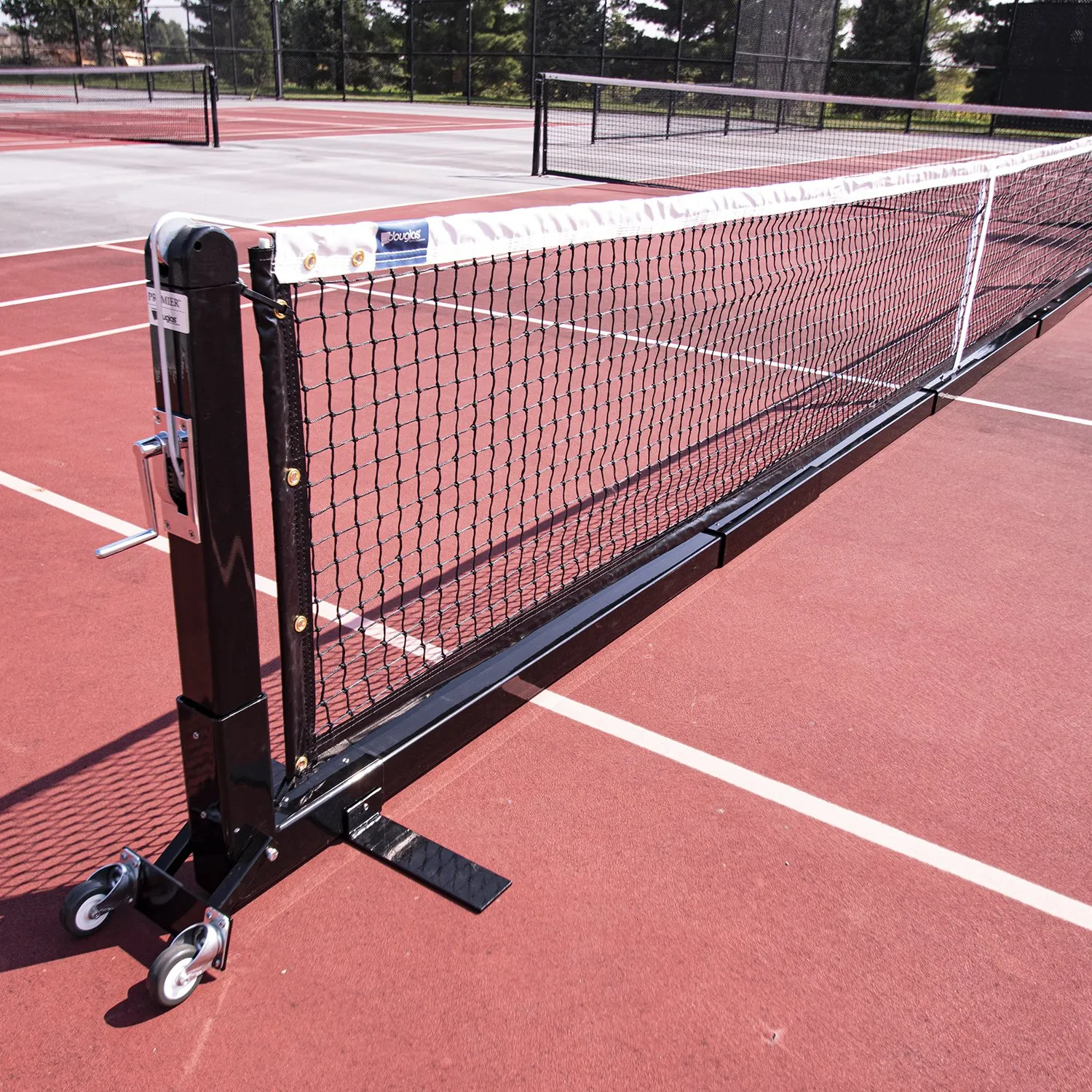
Portable Net
Easy to set up and remove, portable nets are a good choice if you don’t want a permanent setup. These nets come with metal tubes that fit together, and they can be taken down when not in use.
Permanent Net System
For a more stable, long-term option, consider installing a permanent net system with posts set in concrete. This option is ideal for those looking to create a permanent, dedicated pickleball space.
When installing the net, ensure it is centered and properly tensioned to meet the height requirements.
6. Optional Add-Ons
After laying down the basic court, there are several optional upgrades you can add to enhance your pickleball court:
Fencing
Adding a fence around your court helps keep balls in play and prevents them from rolling into other areas of your yard. A chain-link or vinyl fence around the perimeter works well.
Windscreens
If your court is exposed to windy conditions, installing windscreens along the fence can help reduce wind interference during play.
Lighting
To maximize court use, especially in the evening, consider installing outdoor lighting. LED lights are energy-efficient and provide bright illumination for nighttime games.
Seating and Shade
For added comfort, you can set up seating areas with benches or chairs along the sides. Installing a shade structure, such as a canopy or pergola, will offer protection from the sun during hot days.
7. Court Surface Maintenance
Maintaining your pickleball court is crucial to ensure its longevity and quality of play. Asphalt courts may need more frequent maintenance than concrete ones, with resurfacing recommended every five years. Regular cleaning and inspections for cracks or wear will help keep your court in top condition.
If you’re using chalk or tape for court lines, be prepared for occasional touch-ups. For those with permanent lines, resealing the court every few years will help protect the surface.
8. Cost Considerations
Building a pickleball court in your backyard can vary significantly in cost, depending on the materials and features you choose. The average cost for a permanent court ranges from $15,000 to $45,000, but you can save money by using an existing surface or opting for portable solutions.
Here’s a breakdown of potential expenses:
- Surface Installation: Asphalt or concrete surfaces cost $15 to $40 per square foot.
- Net and Posts: A portable net can cost between $150 to $400, while a permanent net system may range from $500 to $1,500.
- Fencing: Installing a fence can cost $1,500 to $4,000 depending on the materials and height.
- Lighting: LED lighting systems may cost between $2,000 to $5,000.
For a more affordable option, consider starting with chalk or tape lines and a portable net before committing to a permanent court.
Build a Pickleball Court in Your Backyard
Building a pickleball court in your backyard is a rewarding project that offers endless hours of entertainment and physical activity. With the right planning, materials, and setup, you can create a high-quality pickleball court that serves as the perfect space for friendly competition and fun.
Check our other insightful guides here:
- Open Play Pickleball in Austin: Your Guide to Finding the Best Courts
- How To Prepare For Your First Pickleball Tournament?
- The Best Surface for a Pickleball Court
FAQs
What are the dimensions of a standard pickleball court?
A standard pickleball court measures 20 feet wide by 44 feet long, but you’ll need extra space around the court, ideally 5-10 feet on each side, for player movement.
What is the best surface for an outdoor pickleball court?
Popular surfaces for outdoor pickleball courts include concrete, asphalt, and sports court tiles. Concrete and asphalt provide a durable, smooth playing surface, while sports tiles offer better cushioning for joint relief.
Can I build a pickleball court in a small backyard?
Yes! While a full-sized court requires more space, you can scale down the dimensions to fit your backyard. Just ensure the lines and proportions are accurate to maintain the game’s integrity.