
If you’re over 55 and looking for a sport that’s fun, social, and actually good for your health — pickleball might be the best thing you haven’t tried yet.
It’s not just hype. The research backs it up. Pickleball improves cardiovascular fitness, strengthens muscles, sharpens your brain, and — maybe most importantly — gets you out of the house and into a community. Here’s what the science says, and why this sport is tailor-made for older adults.
The Cardiovascular Benefits Are Real
A study cited by the Cleveland Clinic found that middle-aged and older adults who played one hour of pickleball three days per week for six weeks improved their blood pressure, cholesterol, and cardiorespiratory fitness levels. That’s meaningful change in just a month and a half.
Pickleball involves short bursts of movement — quick steps to the net, lateral shuffles, reaching for volleys — that elevate your heart rate without the sustained pounding of running or high-impact sports. It’s interval training disguised as fun.
Players also burn about 40% more calories during a 30-minute pickleball game than during 30 minutes of walking, according to research highlighted by the AARP. If you’re looking for a more engaging way to stay active than laps around the neighborhood, this is it.
It’s Easier on Your Joints Than You’d Think
One of the biggest concerns for seniors starting a new sport is joint stress. Pickleball addresses this in several ways. The court is about one-third the size of a tennis court, so you’re covering far less ground. The paddle is lightweight (typically 7–8 ounces), and the plastic ball doesn’t have the heavy impact of a tennis ball.
That smaller court means less running and more positioning. You can play an entire game without ever sprinting. The movements are more about quick, short steps and smart court placement — which is why players in their 70s and 80s compete comfortably alongside people decades younger.
That said, a good pair of court shoes with lateral support is essential. Most pickleball injuries come from ankle rolls and slips, not from the sport itself. Invest in proper footwear and you’ll reduce your risk significantly.
Balance, Coordination, and Fall Prevention
Falls are the leading cause of injury for adults over 65. Pickleball directly targets the physical skills that prevent falls — balance, coordination, reaction time, and lower body strength.
Every rally requires you to shift weight, change direction, and react quickly to the ball. These movements strengthen the stabilizer muscles in your legs and core that keep you upright. Over time, regular play builds the kind of functional fitness that translates directly into daily life — catching yourself on an uneven sidewalk, navigating stairs with confidence, moving through your house without thinking about it.
According to Mayo Clinic Press, pickleball provides a full-body workout that engages multiple muscle groups, helping to maintain bone density and improve coordination that’s crucial for fall prevention.
Your Brain Benefits Too
Pickleball isn’t just a physical workout — it’s a mental one. Every point requires real-time decision-making: where to place the ball, when to move forward, how to read your opponent’s body language, whether to dink or drive.
This kind of strategic thinking keeps your brain engaged in ways that walking or swimming simply don’t. Research suggests that activities combining physical movement with cognitive demands are particularly effective at maintaining cognitive function as we age, improving memory, attention, and problem-solving skills.
Put simply: pickleball makes you think while you move. That combination is powerful for long-term brain health.
The Social Connection Might Be the Biggest Benefit
Loneliness and social isolation are serious health risks for older adults — linked to increased rates of depression, cognitive decline, and even heart disease. Pickleball tackles this head-on.
A 2024 scoping review of 27 studies published in the Journal of Physical Activity and Health found that pickleball participation was associated with better well-being, more social interaction, and increased physical activity. The sport’s doubles format naturally creates conversation and connection. You’re not just exercising — you’re building friendships.
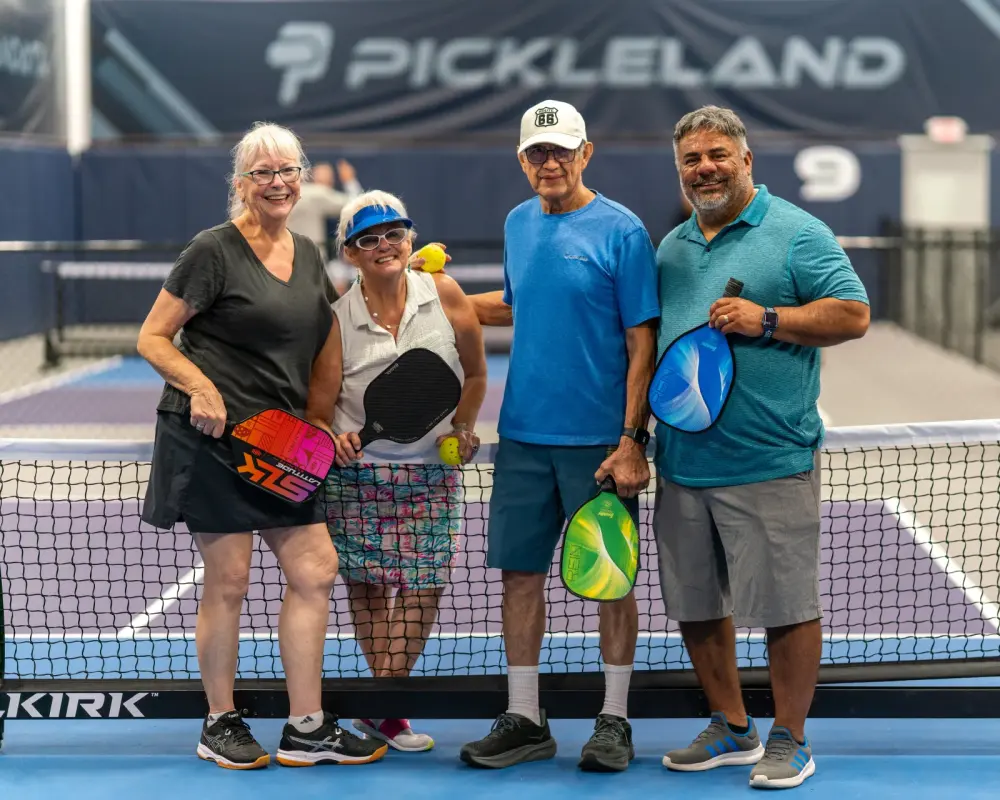
Most pickleball communities skew older, which means you’ll be playing alongside people in a similar life stage. The culture is welcoming, supportive, and genuinely fun. It’s common to see groups grab coffee or lunch together after morning play sessions.
How Much Pickleball Do You Need to Play?
The CDC recommends at least 150 minutes of moderate-intensity exercise per week for adults. If you play pickleball for about four and a half hours each week — say, three 90-minute sessions — you’ll meet that recommendation while barely feeling like you’re “exercising.”
Start with two sessions per week and see how your body responds. Many seniors find that once they start playing, the challenge is playing less, not more. The sport is genuinely addictive in the best way.
Getting Started in Pflugerville and Austin
If you’re in the Austin area, there are plenty of options for seniors looking to start playing. For indoor play — which means no Texas sun, no wind, and comfortable temperatures year-round — Pickleland in Pflugerville offers morning open play sessions that are perfect for the 55+ crowd.
We’re launching dedicated weekday morning sessions (starting at 8am) designed specifically for players who prefer a calmer, social atmosphere before the afternoon rush. No experience needed — just show up, grab a paddle, and play.
For outdoor options, check out the courts at Wells Branch, Brushy Creek Sports Park in Round Rock, or the Pflugerville Recreation Center. Many of these locations have morning groups that play regularly.
A Few Tips for Seniors Starting Out
Warm up before you play. Five minutes of light walking and gentle stretching — especially your shoulders, wrists, and ankles — makes a real difference in how you feel during and after play.
Hydrate more than you think you need to. In Texas, especially. Bring a water bottle and drink between games, not just when you’re thirsty.
Start with doubles. Less court to cover, more social, and more forgiving of mistakes. Virtually all recreational play is doubles anyway.
Don’t skip rest days. Pickleball is addictive, but your body needs recovery time — especially when you’re building up to it. Two to three sessions per week is a great rhythm to start with.
Consider a beginner clinic. Learning proper technique from a coach helps you avoid bad habits and reduces injury risk. It’s a small investment that pays off for months.
It’s Never Too Late to Start
There are competitive pickleball players in their 80s. There are people who picked up the sport after retirement and say it’s the best thing they’ve done for their health in decades. The barrier to entry is low, the community is warm, and the benefits — physical, mental, and social — are well-documented.
If you’ve been looking for something active, social, and genuinely enjoyable, pickleball checks every box. And the best time to start is right now.
Check out our schedule at Pickleland to find morning sessions, beginner clinics, and open play times that work for you.