

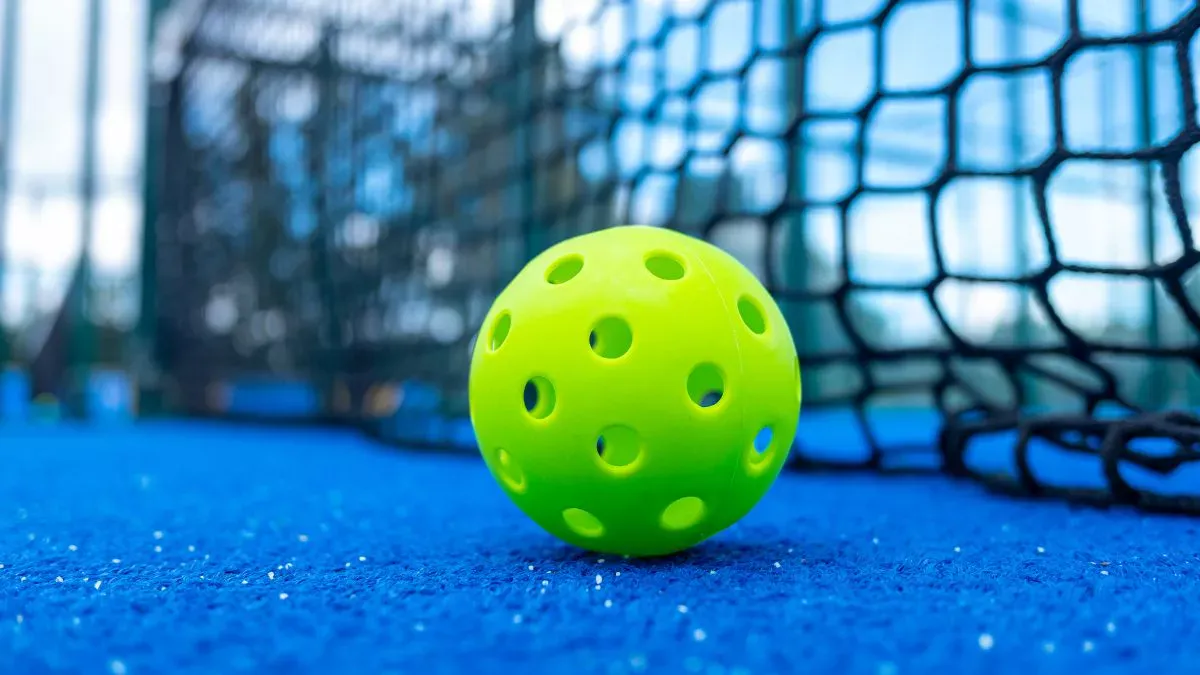
Grab a pickleball for the first time and it looks deceptively simple: a hollow plastic sphere riddled with holes, somewhere between a wiffle ball and a whiffle of nostalgia. But that little perforated ball is doing a lot of work. Its weight, hardness, and the exact number of holes shape how fast the game moves, how much spin you can put on a shot, and whether a rally turns into a soft dinking battle or a power slugfest.
Below, we break down what pickleballs are actually made of, how indoor and outdoor balls differ, the official size and weight standards, and the brands you’ll see most on the courts — so you can pick the right ball for where and how you play.
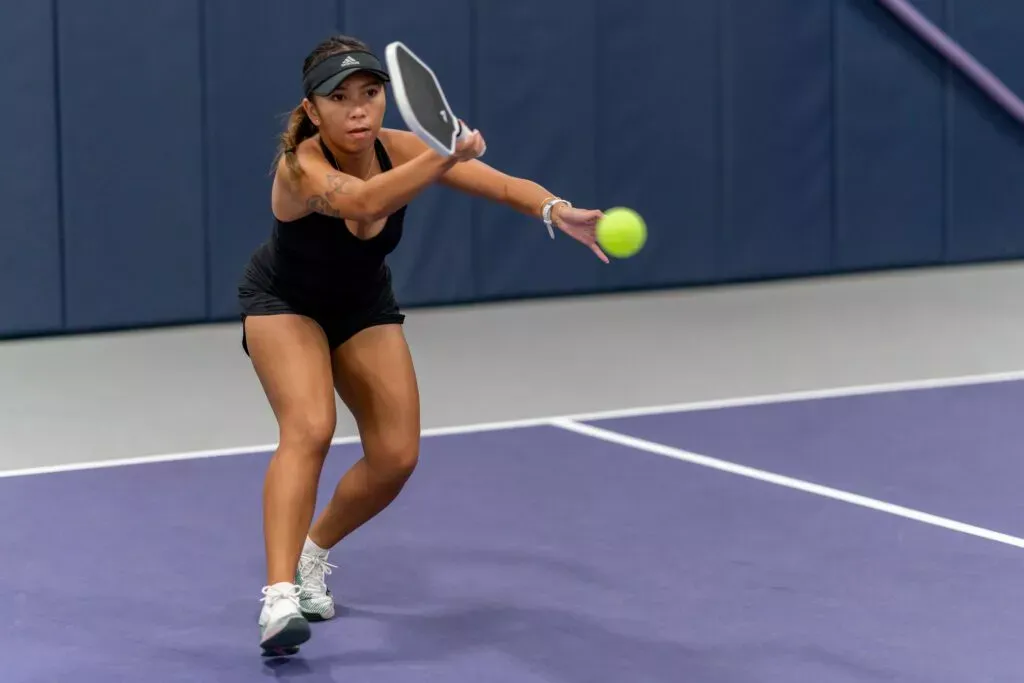 Photo Credit: @aboveinteractive
Overview of a Pickleball
Pickleballs are lightweight, durable, and perforated plastic balls, designed for smooth flight and consistent bounce. The ball’s design and material ensure that it performs well in various environments, whether on outdoor courts or indoor gym surfaces.
Pickleballs come in two primary types: indoor and outdoor, each tailored to specific playing conditions. These balls are not only essential for casual play but are also standardized for competitive matches and tournaments.
Material and Construction
Pickleballs are made of hard plastic, typically a durable polymer, which allows them to withstand the rigors of the game, especially on abrasive surfaces like outdoor courts. The perforations, or holes, in the ball, are designed to regulate airflow, ensuring stable flight during play.
Also, the number and size of these holes vary depending on whether the ball is intended for indoor or outdoor use.
A standard pickleball measures between 2.874 and 2.972 inches in diameter and weighs between 0.78 and 0.935 ounces, per USA Pickleball’s equipment standards. Despite their lightweight nature, pickleballs are engineered to endure consistent use, though their lifespan depends on factors such as playing surface and weather conditions.
Types of Pickleballs
The main distinction between pickleballs lies in their suitability for either indoor or outdoor play. While both types look similar, they have subtle differences in structure, performance, and durability.
Indoor Pickleballs
Indoor pickleballs are softer, lighter, and feature fewer and larger holes—typically 26. These larger holes allow for more controlled play, as the ball moves more slowly and is easier to direct.
This makes indoor pickleballs ideal for finesse and strategy-based play, with a focus on longer rallies.
Since indoor courts tend to have smoother surfaces, indoor balls don’t face the wear and tear caused by rough, outdoor surfaces.
Consequently, they tend to have a longer lifespan compared to outdoor pickleballs. Players who prioritize ball control, spin, and precision often prefer indoor pickleballs.
Outdoor Pickleballs
Outdoor pickleballs are designed to withstand harsh conditions, including wind and rough court surfaces. They are slightly heavier, harder, and have more holes (usually 40 smaller holes).
These design features allow for better wind resistance, faster gameplay, and durability on rougher surfaces.
Outdoor pickleballs tend to offer less control compared to indoor versions, making them better suited for power-oriented players who rely on quick reflexes and aggressive shots.
However, their denser material also makes them more susceptible to damage from rough surfaces, reducing their lifespan.
Pickleball Colors and Visibility
Pickleballs come in a variety of colors, including yellow, white, and neon green, with yellow being the most popular. The choice of color often depends on the lighting conditions and the color of the playing surface.
For example, bright colors like neon yellow or green are ideal for outdoor courts, as they provide high visibility against natural backgrounds. Meanwhile, indoor pickleballs might be white or neon green to ensure optimal contrast with indoor environments.
There are no strict rules about which color to use, but choosing a color that contrasts well with the background enhances visibility and improves reaction times during play.
Popular Pickleball Brands
Some links below are affiliate links — as an Amazon Associate, Pickleland earns from qualifying purchases at no extra cost to you.
Several brands dominate the pickleball equipment market, offering balls that cater to different play styles and environments. For our hand-picked paddle and accessory recommendations, see the Pickleland gear guide. Some of the most popular ball brands and their products include:
Onix Dura Fast 40
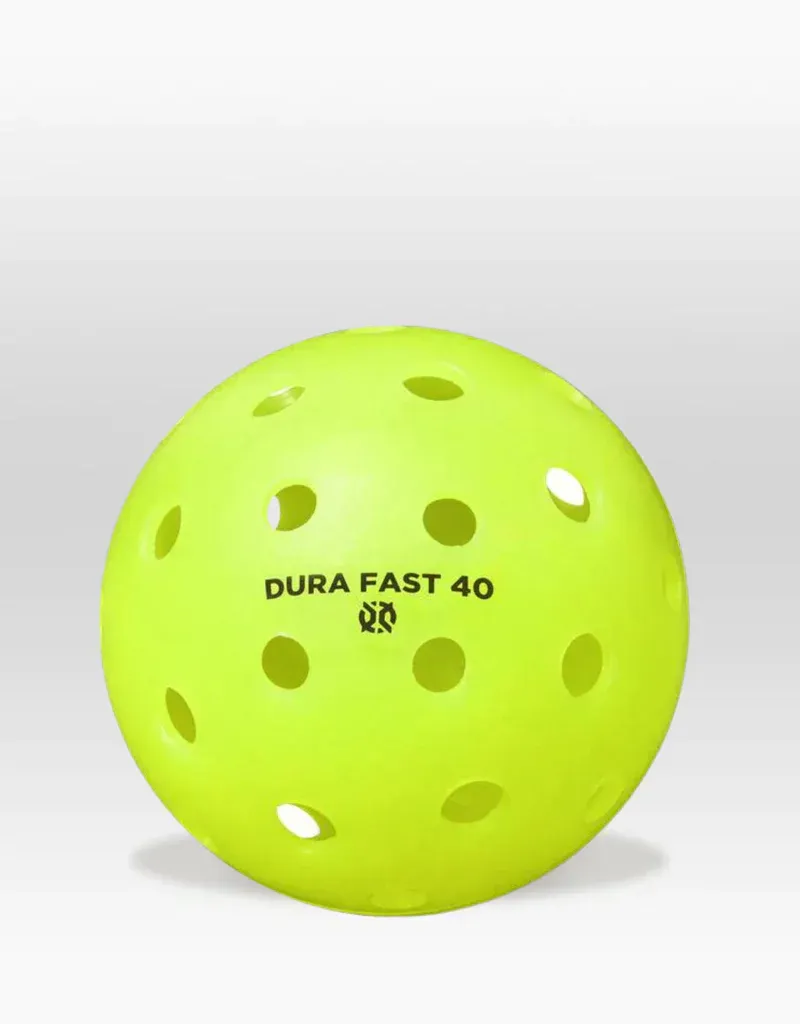
Photo: ONIX.
This outdoor ball is renowned for its durability and precision. It is a popular choice for tournaments due to its consistency and speed and features 40 small holes designed to handle outdoor conditions effectively.
Franklin X-40
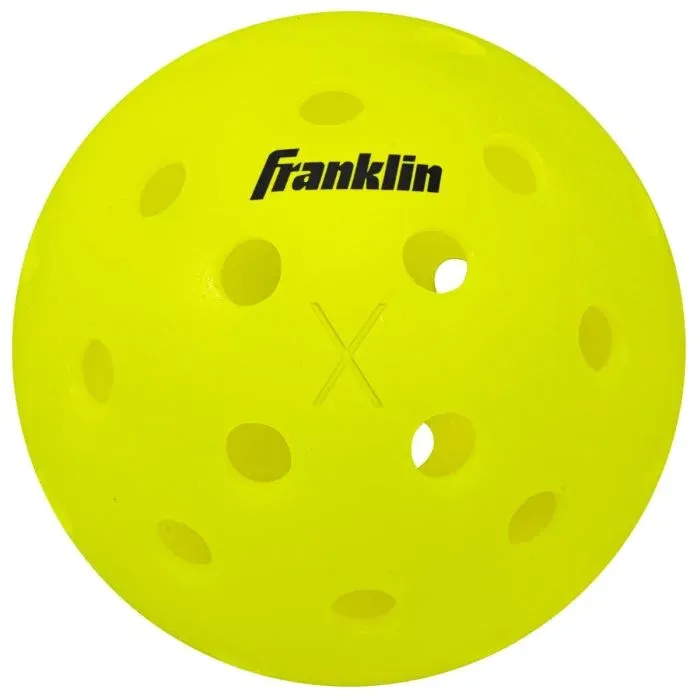
Photo: Franklin Sports.
Another popular outdoor ball, the Franklin X-40 offers excellent flight control and durability. It has 40 drilled holes that maintain balance and flight stability during outdoor play.
Franklin X-26
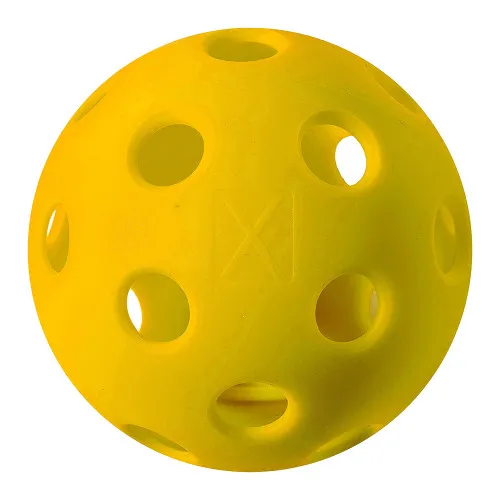
Photo: Franklin Sports.
The indoor version of the Franklin ball, the X-26 has 26 large holes and is known for its softer feel, making it a top choice for indoor pickleball enthusiasts. This ball is optimized for control and balance, providing a great playing experience on smooth indoor courts.
Gamma Photon
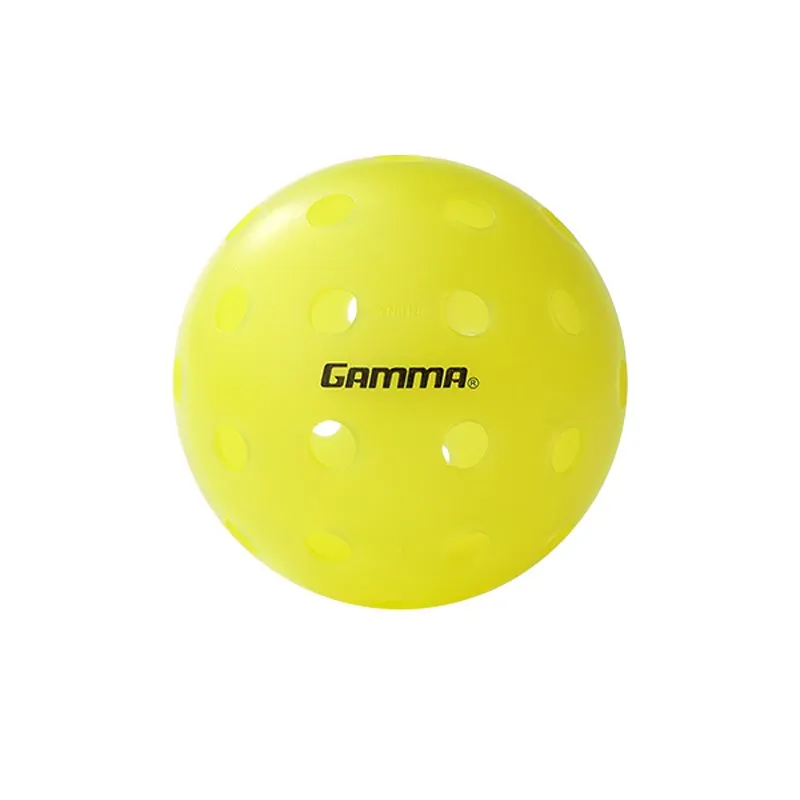
Photo: Gamma.
This ball is available for both indoor and outdoor play and is known for its thick, durable construction. Gamma Photon balls are brightly colored, enhancing their visibility in any setting, which helps players track the ball during fast-paced games.
Pickleball Ball Regulations
For official play, pickleballs must meet specific regulations set by governing bodies like USA Pickleball (the sport’s national governing body in the U.S.). These regulations specify the ball’s size, weight, bounce, and flight characteristics.
For example, a regulation pickleball must bounce between 30 and 34 inches when dropped from a height of 78 inches onto a granite surface plate.
Tournament organizers often require specific ball models to be used in official matches. For instance, the Onix Dura Fast 40 was for years the standard outdoor ball at professional pickleball tournaments.
The Professional Pickleball Association (PPA) has since switched to the Vulcan VPRO FLIGHT, which remains the official ball of the PPA Tour and Major League Pickleball (now in its 40-hole “Generation 2” version).
Difference Between a Pickleball and a Wiffle Ball
While pickleball and wiffle balls may appear similar at first glance, there are critical differences between the two. Both are perforated plastic balls, but they serve different purposes and are constructed differently.
A wiffle ball, commonly used in a baseball-style game, has larger, fewer holes, which allow for more erratic flight patterns.
Pickleballs, on the other hand, are designed for more controlled flight and consistent bounce, essential for a game that involves precision and speed.
Although wiffle balls can be used in casual pickleball play, they do not provide the same experience or performance as a dedicated pickleball. For competitive play, it’s always recommended to use a standard pickleball that meets regulation standards.
Maintaining and Replacing Pickleballs
Pickleballs, like all sports equipment, are subject to wear and tear. The lifespan of a pickleball varies depending on factors such as the playing surface, frequency of play, and whether the ball is used indoors or outdoors.
Outdoor pickleballs generally have a shorter lifespan due to their exposure to rough surfaces and environmental conditions. Cracks, reduced bounce, or visible wear are signs that a pickleball needs to be replaced.
To maintain consistent performance, players should regularly inspect their pickleballs and replace them as needed. High-quality pickleballs are relatively affordable and available at sporting goods stores and online retailers.
Balls in the Pickleland Shop
From the Pickleland shop: balls. Each card shows the current price and availability.
Understand the Different Kind of Ball in Pickleball
Pickleball balls may seem simple at first glance, but they are a crucial element of the game, designed with specific features to optimize gameplay across various environments.
Choosing the right type of pickleball—whether it’s softer with fewer holes for indoor play or a denser ball with more holes for outdoor games—can greatly impact your performance.
Looking to elevate your pickleball experience beyond your current club? We may not have been the first in town, but we’ve set ourselves apart by doing things differently and better! Learn more about us here.
Also read:
- Pickleball Accessories: Must-Have Gear For Every Player
- Top Pickleball Drills For Skill Improvement: Serving, Dinking, And Fast Hands
- Smash On A Budget: Top Affordable Pickleball Paddles
FAQs
1. What is the difference between indoor and outdoor pickleballs?
Indoor and outdoor pickleballs differ primarily in their weight, construction, and the number of holes. Indoor pickleballs are lighter, softer, and have larger holes (typically 26) to offer more control and longer rallies. They are designed for finesse and slower-paced games on smoother indoor surfaces. Outdoor pickleballs are heavier, harder, and have more (typically 40 smaller) holes to handle windy conditions and faster gameplay. These outdoor balls are more durable but wear down faster due to rough surfaces.
2. How long does a pickleball last, and when should it be replaced?
The lifespan of a pickleball varies depending on whether it’s used indoors or outdoors, the playing surface, and how often it’s played. Indoor balls tend to last longer due to smoother surfaces, while outdoor balls are exposed to rougher conditions and may crack or lose their bounce more quickly. Signs that a pickleball needs to be replaced include visible cracks, reduced bounce, or general wear and tear. Regular inspection of the ball is recommended to maintain optimal gameplay.
3. What are the standard regulations for pickleball balls in tournaments?
Pickleballs used in official tournaments must meet specific standards set by organizations like USA Pickleball. The ball should weigh between 0.78 and 0.935 ounces, measure between 2.874 and 2.972 inches in diameter, and must bounce 30 to 34 inches when dropped from a height of 78 inches onto a granite surface plate. Tournament organizers often specify which ball to use, such as the Onix Dura Fast 40 or the Franklin X-40 for outdoor play, ensuring consistency in competition.