
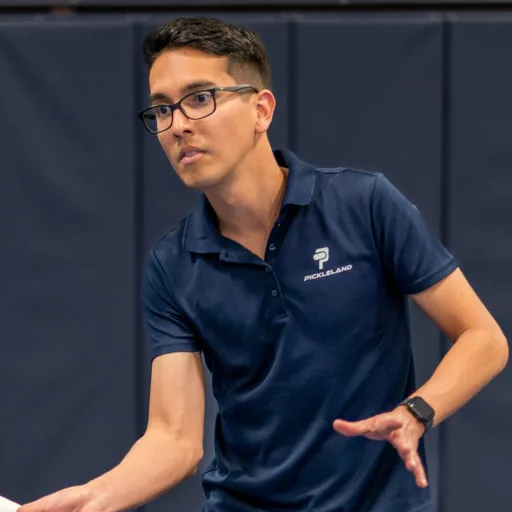
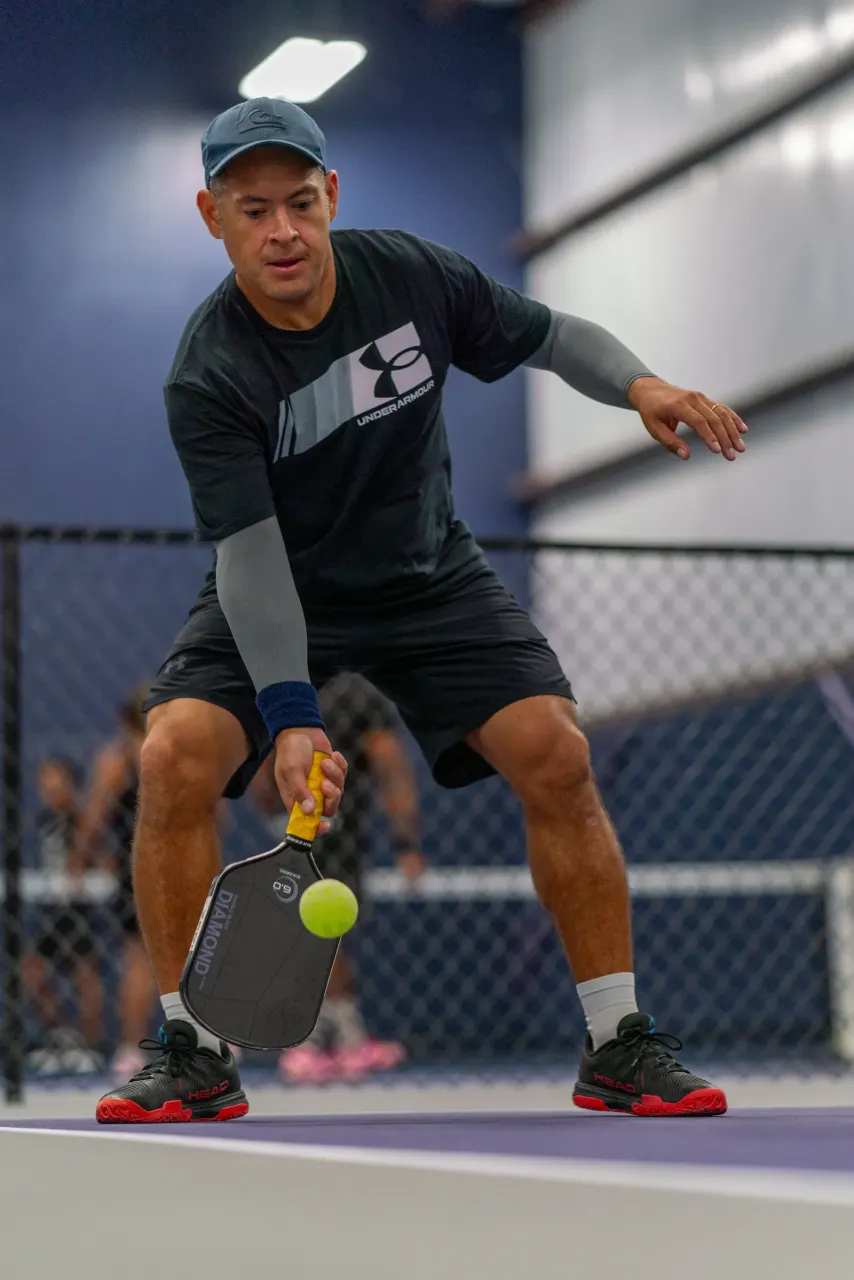
Your body isn’t ready to play pickleball the moment you step on the court. Cold muscles, stiff joints, and a heart rate still in “driving to the facility” mode are exactly how pulls, strains, and tweaks happen — especially on that first point when you reach for a quick drop or lunge for a cross-court dink.
The fix is simple: a 5–10 minute dynamic warm-up before your first game. Below is a pickleball-specific routine we run through at Pickleland that hits the shoulders, hips, knees, and ankles you’ll actually use on court.
Why Dynamic Warm-Ups Beat Static Stretching
Old-school static stretching — holding a hamstring or quad stretch for 30 seconds before you play — can actually make cold muscles less explosive for the first few minutes of play. Dynamic stretching is different. You move through controlled ranges of motion, gradually raising your heart rate, body temperature, and joint mobility at the same time.
Lee Health’s Dr. Diana Young told her athletes that a 10–15 minute warm-up dramatically cuts injury rates in recreational sports — and pickleball’s rapid direction changes, overhead swings, and sudden lunges stress the exact joints a warm-up protects (shoulders, knees, hips, and ankles).
The short version: save static stretching for after your session. Before you play, move.
The 10-Minute Pickleball Warm-Up Routine
Run through these in order. No equipment needed — do them right on the court or in the parking lot. About 30–45 seconds per movement.
1. Light Cardio (2 minutes)
Jog the baseline to baseline, or march in place with high knees. The goal is a slight sweat, not exhaustion. You want your heart rate up and blood moving before you start stretching anything.
2. Shoulder Circles & Arm Swings (1 minute)
Arms straight out to your sides. 10 small forward circles, 10 small backward circles. Then 10 big circles each direction. Finish with arm swings — reach both arms across your chest, then swing them wide open like you’re giving someone a huge hug. The shoulder is the most-used joint in pickleball. Give it attention.
3. Torso Twists (30 seconds)
Stand with feet shoulder-width apart. Rotate your torso left and right, letting your arms swing loose around your body. This mobilizes your thoracic spine — critical for your forehand, backhand, and overhead swings.
4. Walking Lunges with a Reach (1 minute)
Step forward into a lunge. As you drop into the lunge, reach both arms overhead and slightly back. Alternate legs for 10–12 total steps. This opens your hip flexors and warms your quads in the same movement pattern pickleball uses (lunging for low balls).
5. Dynamic Side Lunges (1 minute)
Stand tall. Step out to your right, dropping into a side lunge with your left leg straight. Push back to center. Repeat to the left. Do 8 per side. Pickleball is a lateral game — you need your adductors and inner thighs primed before you start chasing wide shots.
6. Leg Swings (1 minute)
Hold the fence or a wall for balance. Swing one leg forward and back 10 times, then side to side 10 times. Switch legs. This wakes up your hip joints — the single biggest driver of quick direction changes.
7. Inchworms (1 minute)
Stand, bend at the hips, walk your hands out to a plank position, then walk them back to your feet and stand up. 5 reps. Hits your hamstrings, shoulders, core, and calves in one clean movement.
8. Ankle Rolls & Calf Raises (30 seconds)
Roll each ankle 10 times in each direction. Then 15 calf raises. Your ankles absorb every push-off, stop, and pivot. Don’t skip this one if you’ve ever rolled an ankle chasing a lob.
9. Fast Feet (30 seconds)
Small quick steps in place, like you’re on a hot griddle. Stay low. This primes your nervous system for the quick first step pickleball demands — the difference between getting to the ball and watching it go by.
10. Slow Dinks, Then Drives (2 minutes)
Grab your paddle and a partner. Start at the kitchen line. Hit slow, controlled dinks for a minute. Then step back and hit easy drives for another minute. This is a sport-specific warm-up — you’re waking up the exact muscle firing patterns you’ll use in the first game.
Pickleball-Specific Stretches to Add If You’re 50+ or Injury-Prone
If you’ve got a cranky shoulder, pickleball elbow creeping in, or you’re in our Morning Picklers group, add these three to the end of the routine:
- Wall shoulder slides: Back flat against a wall, arms in a “goalpost” position, slide them up and down the wall 10 times. Wakes up the rotator cuff.
- Wrist flexor stretch: Arm straight out, palm up. Gently pull your fingers back with the opposite hand. Hold 15 seconds each side. Helps prevent pickleball elbow.
- 90/90 hip sit: Sit on the ground with one leg bent in front, one bent behind, both at 90 degrees. Lean forward gently over the front leg. 20 seconds per side.
Common Warm-Up Mistakes We See at Pickleland
A few patterns come up over and over when players come in for lessons or open play:
- Skipping it entirely. “I’ll warm up during the first game.” You won’t. You’ll start cold, play stiff for a game, and risk a tweak every time you reach or lunge.
- Only stretching the legs. Shoulders, wrists, and thoracic spine drive most of your swing mechanics. Warm them up too.
- Going too hard. This isn’t a workout. If you’re gassed before game one, you warmed up wrong.
- Static stretches only. Holding a stretch for 30 seconds before play can temporarily reduce power output. Save static stretching for after.
Should You Warm Up Differently for Tournaments vs Open Play?
Yes — slightly. For open play, 5 minutes is plenty since you’ll rotate in and get a few easy games to find your rhythm. For a tournament or a ladder match, stretch the routine to 10–15 minutes and add more ball-work at the end (dinks, drives, returns, serves). Your first tournament game is usually your hardest — you want to be fully warm before the first point.
The Cooldown (Don’t Skip This Either)
After your session, walk around for 3–5 minutes to let your heart rate settle, then do static stretches: hamstrings, quads, hip flexors, calves, chest, and shoulders. 20–30 seconds per stretch. This is where static stretching belongs — after, not before.
If you want to go deeper on injury prevention, check out our full guide to preventing pickleball injuries and our off-court pickleball workout for strength and conditioning between sessions.
Warm Up With Us at Pickleland
Come play at Pickleland — we have 9 indoor courts, open play for all levels, and coaches who will gladly walk you through a proper warm-up. First time visiting? Book a court or grab a day pass and come see us in Pflugerville. Your knees, shoulders, and future self will thank you.