
Most players obsess over their serve and their dink. The shot in between — the return of serve — gets a fraction of that practice time, even though it determines whether you start the point moving forward to the net or stuck scrambling on the baseline. A smart, deep return keeps the serving team pinned back. A short or mishit one hands them the transition and the point.
The good news: the return of serve is one of the most coachable shots in pickleball. A few clear principles — where to stand, where to aim, and when to drive versus drop — will sharpen it faster than almost any other part of your game.
Why the Return of Serve Is More Important Than You Think
In pickleball’s rally sequence, the return of serve is shot two. After it lands, you and your partner are expected to sprint to the kitchen line while the serving team waits for the bounce. That means your return buys your team time. A deep return pushes the servers back toward the baseline, extending that window. A short return lets them creep forward, and you arrive at the net against opponents who are already on top of it.
At higher levels, a well-placed return practically guarantees a neutral third shot situation. At lower levels, it’s a direct point — servers who get a short, pop-up return immediately attack, and the rally is over before it begins.
Where to Stand Before the Return
Positioning before the ball even crosses the net sets everything else up.
Stand 1–3 feet behind the baseline. This gives you room to step into the ball on a deep serve instead of being jammed. A common beginner mistake is standing on or inside the baseline — a deep, bouncy serve ends up behind you, and you’re already off-balance before you swing.
Cheat a step toward the middle. Most servers aim at your backhand, and the body-position shot (right at your hip) is a popular surprise. Positioning slightly center keeps both corners in range without overcommitting.
Split-step as the server hits. A small, athletic hop just before contact widens your stance and keeps your weight ready to push left or right. This one habit improves your reaction time on hard serves more than any grip change or swing tweak.
The Golden Rule: Return Deep
If you take nothing else from this guide, take this: return deep, every time. Aim for the back third of the court — inside the last 6 feet of the baseline — and do it consistently before worrying about spin, angles, or pace.
Here’s why depth is the priority:
- It keeps the servers back. A return landing 8 feet past the service line forces the serving team to hit their third shot from deep, giving them less angle and less power. A return landing near the kitchen line is practically an invitation to attack.
- It gives you and your partner transition time. The deeper the return, the more steps you have to reach the kitchen before the third shot arrives.
- It’s forgiving. A return aimed at the back third has plenty of net clearance. Trying to place a tight, short return adds risk with no proportional reward.
Think of depth as the baseline (no pun intended) your return starts from. Once it’s reliable, add direction and pace.
Crosscourt vs. Down the Line
Once you have depth, direction is the next variable to control.
Go crosscourt by default
The crosscourt return is higher-percentage for two reasons. First, you’re hitting over the lowest part of the net (the center strap is 34 inches; the sides are 36 inches). Second, the diagonal flight path gives you more court to work with — the crosscourt diagonal is roughly 44 feet, giving you the widest margin for error.
It also forces the weaker server’s partner to stay home at the kitchen rather than poaching — most servers hit from the right side, which means a crosscourt return goes toward the server, not the net player.
Use down-the-line to keep opponents honest
A down-the-line return is riskier (shorter net, less court) but useful precisely because it’s unexpected. Once your opponent’s partner starts leaning to poach your crosscourt return, a well-timed down-the-line keeps them honest and stops the poach.
Don’t overuse it. The ratio is roughly 80% crosscourt, 20% down-the-line — or less.
Attack the middle on drives
If you’re driving (more on that below), middle returns down the center seam split the two servers and create confusion about who takes it. Middle drives are the safest aggressive option when both servers are back.
Drive Returns vs. Drop Returns
The classic return is a solid, controlled groundstroke aimed deep. But some situations call for something different.
When to drive the return
Drive your return when:
- The serve is short or sits up high (a juicy second serve, for example)
- You want to pressure a slow-moving server before they can set up their third shot
- Your opponents are passive at the kitchen line and you want to force errors with pace
A drive return aims to keep the ball low — just over the net and aimed at the server’s feet. It’s not a hammer. The goal is forcing an awkward, low contact point, not blasting the ball out of bounds.
When to drop the return
A drop return — a soft arc that lands near the kitchen, similar in trajectory to a third shot drop — is less common but effective against aggressive net players who like to poach. By floating a soft return, you take pace off the rally and let the kitchen line reset on your terms. It’s also useful when you’re late on a serve and don’t have the balance to drive cleanly: a controlled, high-arcing return buys you recovery time.
Default to consistency
When in doubt, drive a medium-paced, deep groundstroke crosscourt. Aggressive returns hit from a bad position create more unforced errors than they generate winners. Consistency beats flashiness at every level below 4.5.
Common Return of Serve Mistakes
Standing too close to the baseline
Already covered — the fix is to back up. This is the single most correctable mistake for players in the 2.5–3.5 range.
Short returns
Returning only to the middle of the court is just as bad as a weak serve. If your returns consistently land short, slow down your swing and focus on contact point — you want to be extending through the ball, not jabbing at it.
Popping the return up
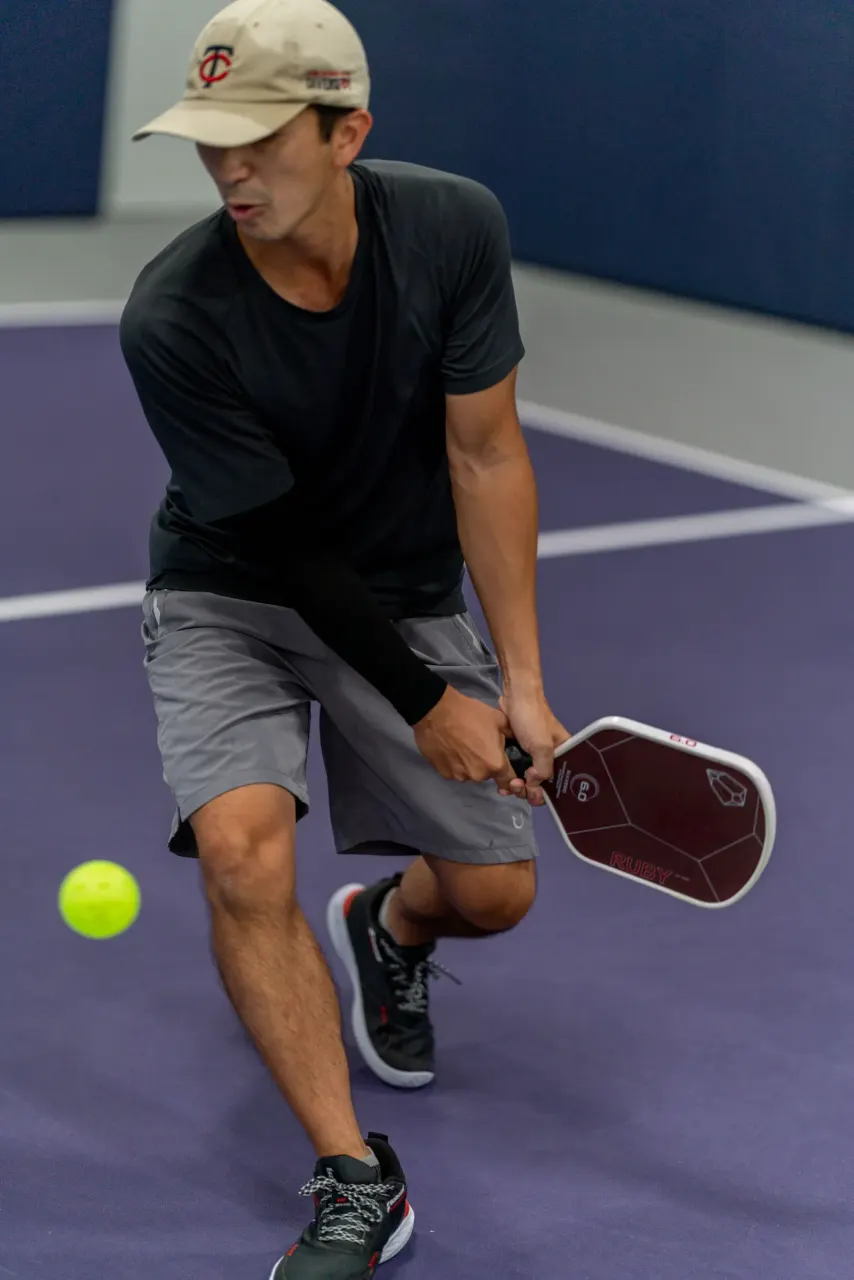
High, looping returns land right in the strike zone. They usually happen when your paddle face is too open at contact or your elbow drops. Keep your elbow up, paddle face neutral, and meet the ball out in front of your body.
Forgetting to move after the return
The return isn’t the last shot — it’s a launching pad. After you hit, immediately move toward the kitchen line. A lot of players hit a solid return and then stand and watch it. That stalls the transition and leaves your partner covering twice the court.
Holding tension in the grip
Tight hands slow your reaction time and rob you of touch. A grip pressure of about 4 out of 10 on soft returns, slightly firmer (6–7) on drives, keeps your swing fluid and lets you adjust late.
Drills to Sharpen Your Return
Target cone drill
Place two cones in the back corners of the opponent’s court. Have a partner feed serves (or use a ball machine) and practice landing returns within 2 feet of each cone. Track your percentage over 20 balls. When you hit 14 out of 20, move the cones 1 foot closer to the baseline.
Rapid-fire return drill
One player serves at normal pace, the other returns. No rallying — just serve, return, serve, return. The fast rhythm forces the returner to read depth and pace quickly and stops overthinking. Run 20–30 returns in a row, then switch.
Move-and-return drill
After each return, the returner has to physically touch the kitchen line before the server hits the third shot. This trains the most common return failure: hitting well but not moving afterward.
Drive-or-drop decision drill
The server shows a signal (thumb up = drive, thumb down = drop) just as they toss. The returner reads the signal mid-serve and executes the called shot. This builds the habit of reading the situation and committing, rather than hesitating at contact.
How to Handle a Tough Serve
Deep, fast serves
Backstep. A step-back bunt — a short, compact swing using the server’s pace — is more reliable than trying to wind up on a ball that’s already past your power zone. Aim for depth even if the pace is modest.
Spin serves
Topspin serves kick high and wide; slice serves stay low and skid. Read the server’s contact — a brushing motion from below means topspin, a side swipe or chop means slice. Topspin returns need a slightly closed paddle face to counteract the hop; slice returns benefit from a slightly open face and a longer follow-through.
Body serves
The body serve jams you. Step back and to the side (backhand side for most players) to create space for a full swing. If you’re caught, a short, controlled block toward the deep crosscourt is better than a panicked wild swing.
Putting It Together
The return of serve becomes reliable in layers. First, get consistent depth on a standard crosscourt return. Second, add the move-forward habit after every return. Third, build your crosscourt/down-the-line split. Fourth, introduce the drive vs. drop decision.
Each layer takes time in real rallies — not just isolated drills. The faster you can cycle through those reps, the faster your return goes from a liability to a weapon. Courts at Pickleland are open 8 a.m. to 10 p.m. weekdays if you want to put in the work with quality opponents.
Also worth reading:
- How To Improve Your Third Shot Drop
- How To Improve Your Dinks
- Top Pickleball Drills for Skill Improvement
Frequently Asked Questions
Should I always return deep?
Depth should be your default goal. An occasional short drop return can surprise aggressive net players, but if you’re not yet reliable with deep returns, prioritize depth first.
Is it better to drive or drop the return of serve?
For most recreational and intermediate players, a controlled groundstroke aimed deep crosscourt is the highest-percentage option. Drives add pressure when the serve is short; drops are useful when opponents crash the net. Learn the default first, then layer in the variations.
Where should I aim my return in doubles?
Aim crosscourt and deep to the server — that’s the player farthest from the net who has to execute the third shot. Avoid returning to the non-serving partner at the kitchen unless you’re intentionally targeting a weak side.
How do I stop popping up my returns?
Keep your elbow up, meet the ball out in front of your body, and maintain a neutral paddle face at contact. Most pop-ups come from dropping the paddle face open just before impact, usually caused by late contact or a dropped elbow.
How soon should I move to the kitchen after my return?
Immediately. The moment your paddle finishes the swing, your feet should be moving forward. The target is to reach the kitchen line before the server hits their third shot. Every step you delay is court position you give back.