
The short answer: for many people with an uncomplicated pregnancy, yes, with their ob-gyn’s approval. The American College of Obstetricians and Gynecologists (ACOG) says that “if you are an experienced runner, jogger, or racquet-sports player, you may be able to keep doing these activities during pregnancy,” after discussing it with your ob-gyn (ACOG FAQ119, reviewed November 2025). If you’ve never played, pregnancy is probably not the time to learn a new sport with quick direction changes. Walking, swimming or a stationary bike are ACOG’s top picks for beginners.
The reason for caution is specific: falls. Pregnancy shifts your balance, and falls cause most pickleball injuries treated in emergency rooms. This guide shows how to keep playing while managing that risk.
This is general information, not medical advice. Your ob-gyn knows your pregnancy, and their advice comes first.
Source: ACOG FAQ119 (2025); Orthopaedic Journal of Sports Medicine (2025), NEISS 2013–2022; ACE-sponsored study (2018)
What ACOG recommends for exercise in pregnancy
From ACOG’s patient guidance:
- Aim for at least 150 minutes of moderate-intensity aerobic activity a week. Moderate means you can talk normally but not sing.
- If you were very active before pregnancy, you can usually keep up your usual workouts with your ob-gyn’s approval.
- Avoid activities with a high risk of falls (ACOG lists downhill skiing, water skiing, surfing, off-road cycling, gymnastics and horseback riding) and sports where you could be hit in the abdomen (ice hockey, boxing, soccer, basketball).
- Don’t overheat, especially in the first trimester. ACOG suggests exercising “in a temperature-controlled room” and not exercising outside when it’s very hot or humid.
- Drink plenty of water before, during and after.
Pickleball isn’t on ACOG’s avoid list. It’s non-contact, and it’s moderate intensity: about 4.1 METs in recreational players (ACE-sponsored study, 2018). What it shares with the avoid list is the chance of a fall.
Why falls are the main risk
ACOG explains that pregnancy hormones relax the ligaments, making joints “more mobile and at risk of injury,” and that extra weight at the front shifts your center of gravity, so “you are less stable and more likely to lose your balance.”
Pickleball injury research points the same way. In a 10-year analysis of US emergency-room data, falls caused 65.5% of pickleball injuries and fractures were the most common diagnosis. Women had 69.1% of all fractures (Orthopaedic Journal of Sports Medicine, 2025). Another study found women had about twice the odds of men of being injured in a fall (Sports Health, 2025). In a survey of recreational players, the leading reasons for falling were lunging and moving backward (International Journal of Sports Physical Therapy, 2024).
So the adaptations below are about one thing: staying on your feet.
How to adapt your game
- Never back-pedal for a lob. Moving backward is a leading cause of falls. Let lobs go, or call your partner. Our guide to defending the lob explains turning and running instead of back-pedaling.
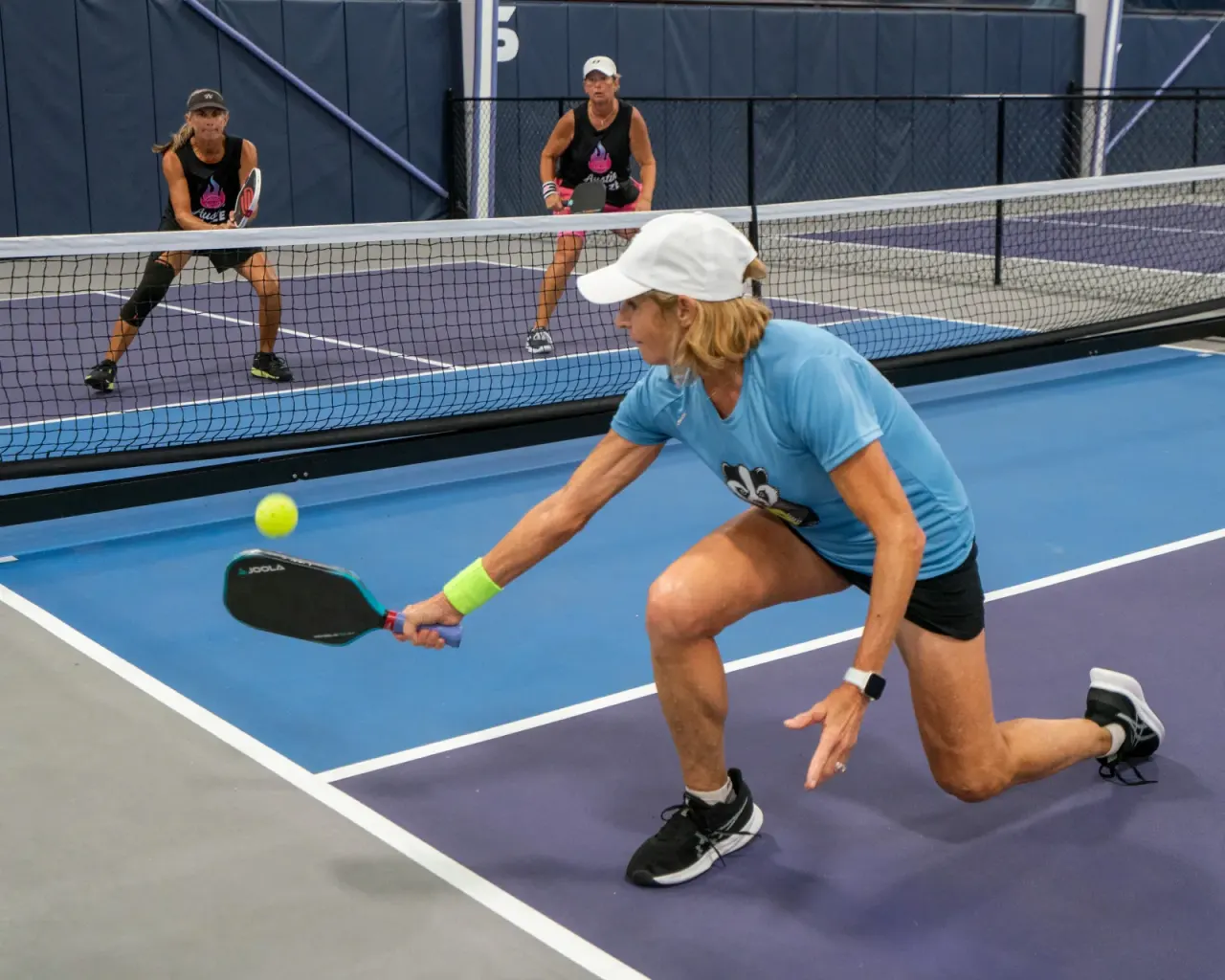
- Don’t lunge or dive. Let wide and short balls go. You’ll lose a few points.
- Play doubles, not singles. Half the court to cover and fewer sprints.
- Play at the kitchen line. The dinking game is the lowest-movement part of pickleball.
- Tell your partner. Agree that they take anything in the middle and every lob.
- Choose your court. Dry, flat, uncluttered. Stray balls underfoot cause falls, so stop play when one rolls on.
- Play indoors when it’s hot. ACOG specifically warns about overheating. In Texas, that means air conditioning for much of the year.
- Wear eye protection. Among pickleball eye injuries, paddle and ball strikes are the most common causes after falls (Digital Journal of Ophthalmology, 2026). See eye protection for pickleball.
- Rest between games and drink water. Stop if you feel any of ACOG’s warning signs (below).
Trimester by trimester
ACOG doesn’t publish sport-by-sport trimester rules, so this table applies its general guidance to pickleball.
| First trimester | Second trimester | Third trimester | |
|---|---|---|---|
| What changes (ACOG) | Overheating is a particular concern | Belly grows; balance starts to shift | Balance and breathing most affected |
| Pickleball adjustments | Play indoors or in the cool of the day; hydrate | Doubles only; no lunging or back-pedaling; partner takes lobs | Gentle dinking and drilling, if your ob-gyn agrees; or switch to walking, swimming or a stationary bike |
| Ask your ob-gyn | Whether your pre-pregnancy level is OK to continue | Whether any new symptoms change the plan | Whether to keep playing at all |
When to stop and call your ob-gyn
ACOG lists these warning signs. If you have any of them, stop exercising and call: bleeding from the vagina, feeling dizzy or faint, shortness of breath before starting exercise, chest pain, headache, muscle weakness, calf pain or swelling, regular painful contractions of the uterus, or fluid gushing or leaking from the vagina.
Your ob-gyn may also advise against exercise altogether for some conditions. That’s a conversation for your appointment, not a blog.
After the baby
ACOG notes that exercise after birth may improve mood and lowers the risk of deep vein thrombosis, which is more common in the weeks after childbirth. Ask your ob-gyn when you can return, and come back gradually: new and returning players are more likely to get hurt (see what injury research found).
Frequently Asked Questions
Is it safe to play pickleball while pregnant?
For many people with an uncomplicated pregnancy, yes, with their ob-gyn’s approval. ACOG says experienced racquet-sports players may be able to continue. The main risk is falling, so avoid lunging, diving and back-pedaling.
Can I start playing pickleball while pregnant?
ACOG’s advice for people new to exercise is to start slowly with activities like walking, swimming or a stationary bike. A new sport with fast direction changes carries more fall risk. Ask your ob-gyn.
What trimester should I stop playing pickleball?
There’s no fixed cut-off. Balance changes most in later pregnancy, so many players scale back to gentle play or switch activities. Your ob-gyn should make that call with you.
Can a pickleball hurt the baby?
Pickleball isn’t a contact sport, and ACOG’s concern about abdominal blows is mainly for sports like hockey, boxing, soccer and basketball. Falls are the bigger risk. Stand back from the net and let hard drives at your body go.
Is it OK to play pickleball outdoors in the heat while pregnant?
ACOG advises against exercising outside when it’s very hot or humid and recommends a temperature-controlled room. Play indoors or early in the day.