

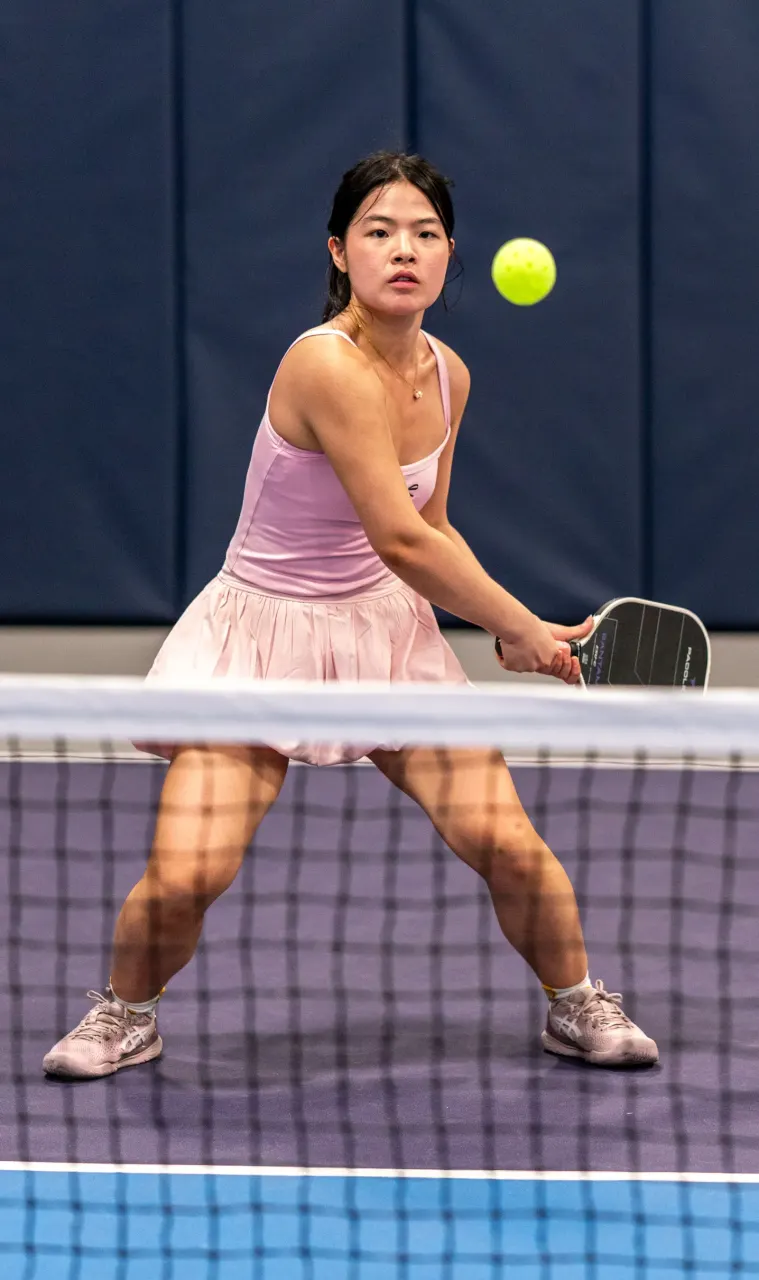
You don’t need a special wardrobe to play pickleball — but showing up in the wrong shoes can get you hurt, and wearing the wrong fabric in the middle of a rally is its own kind of miserable. Here’s what actually matters, what’s nice to have, and what to leave at home.
The Short Version
If you’re heading out for your first game and want a simple checklist:
- Shirt: Any moisture-wicking athletic top
- Bottoms: Athletic shorts, joggers, or a tennis skirt
- Shoes: Court shoes (tennis or pickleball-specific) — not running shoes
- Optional: Visor or cap, sunglasses, wristband
That’s it. The gear details below help you make smarter choices over time, but nothing on that list is exotic or expensive.
Tops: Prioritize Moisture-Wicking Fabric
Pickleball is more aerobic than it looks. You’ll be moving constantly during open play — quick shuffles to the kitchen line, side steps, overhead smashes — and a cotton T-shirt will feel like a wet blanket within 20 minutes.
What works well:
- Polyester or nylon athletic shirts (standard gym tops are fine)
- Tennis tops with built-in stretch
- Tank tops for warmer sessions
What to avoid:
- 100% cotton — holds sweat and gets heavy fast
- Loose, flowing fabric that can interfere with your swing
For indoor courts with air conditioning — like Pickleland’s 9 climate-controlled courts in Pflugerville — a standard athletic tee is usually enough. If you’re playing outdoors in Austin’s summer heat, a UPF-rated long-sleeve top keeps the sun off without cooking you.
Bottoms: Room to Move
Pickleball involves a wide athletic stance, low knee bends, and sudden lateral cuts. Your shorts or skirt need to move with you.
Best options:
- Athletic shorts — 5” to 7” inseam, with a built-in liner if you prefer extra coverage
- Tennis skirts — popular among women; most have built-in compression shorts underneath
- Joggers or track pants — comfortable for cooler mornings or evening sessions
Avoid: Jeans, cargo shorts with restrictive fits, or anything that limits a full squat. You’ll find yourself lunging for low balls more than you expect.
Shoes: The Most Important Call You’ll Make
This is where most beginners go wrong. Running shoes feel supportive, but they’re engineered for forward momentum — not the rapid side-to-side cuts pickleball demands. Rolling an ankle on a heel designed for straight-line running is a real risk.
Best shoe choices:
- Pickleball-specific shoes — built with reinforced lateral support, low-profile cushioning, and non-marking court soles. Brands like Selkirk, K-Swiss, and ASICS make solid options.
- Tennis shoes — the next-best choice. Tennis courts demand the same lateral movements, so tennis footwear translates directly.
- Volleyball or badminton shoes — excellent for indoor courts; grippy gum rubber soles work well on hardwood.
Indoor vs. outdoor soles matter:
- Indoor courts (like Pickleland’s): look for gum rubber or smooth herringbone soles that grip polished hardwood without leaving scuff marks
- Outdoor courts: harder rubber with deeper treads handles textured asphalt and concrete
Avoid:
- Running shoes
- Cross-trainers with heavily cushioned, rocker-style soles
- Any open-toe shoe
If you don’t own court shoes yet, come play in what you have — just be aware of the limitation and invest in a court-specific pair before you’re playing multiple times a week.
Accessories: What’s Actually Worth It
Eye Protection
Pickleball moves fast and the ball comes off paddles at surprising angles. At higher levels, eye protection is strongly recommended. Sports goggles or wraparound sunglasses protect against stray shots and reduce eye fatigue on bright outdoor courts.
Hat or Visor
Useful outdoors; optional indoors. A visor is generally preferred over a full cap since it doesn’t trap heat on your head.
Wristband
If you sweat heavily on your hands, a wristband keeps moisture off your grip. More important if you’re playing long sessions in warm conditions.
Gloves
A minority of players use a single paddle glove on their dominant hand for grip stability. Most players skip it — whether you want one depends on how much you sweat and your paddle’s handle texture.
Compression Gear
Compression shorts, knee sleeves, or calf sleeves can help players who’ve dealt with knee or calf injuries. They’re not required, but they’re a smart choice if you’re coming back from something or logging high-volume sessions.
What Not to Wear
- Jeans or cargo shorts: too restrictive for athletic movement
- Sandals, flip-flops, or open-toe shoes: injury risk and not allowed on most courts
- Running shoes: lateral support is insufficient for court sports
- Jewelry that swings: dangling necklaces and large hoop earrings can be distracting or hazardous; studs or nothing is fine
A Note on Indoor Play in Austin
Austin summers make outdoor sports punishing from May through September. One of the best reasons to play at a climate-controlled indoor facility like Pickleland is that your gear requirements simplify immediately: no sun protection, no UV layer, no worrying about outdoor ball behavior. A basic athletic outfit and good court shoes is all you need.
Indoor courts also tend to be harder on shoes — polished hardwood shows scuffs quickly, and facilities require non-marking soles. If you’re unsure whether your shoes qualify, Pickleland’s welcome desk can tell you in five seconds.
What We Stock at the Club
From the Pickleland shop: shirts, shoes and accessories. Each card shows the current price and availability.
Frequently Asked Questions
Do I need to buy pickleball-specific clothing?
No. Standard athletic wear works perfectly well. Pickleball-branded apparel exists, but there’s nothing in it that’s required or meaningfully better than what you probably already own.
Can I wear running shoes to pickleball?
Technically yes — but it’s not recommended. Running shoes lack the lateral support court sports need, which increases your risk of ankle rolls. If you only have running shoes, wear them for your first session, then invest in a court shoe before playing regularly.
What do most people wear to pickleball?
At any open play session, you’ll see a mix: athletic shorts and a T-shirt, tennis skirts, joggers, branded paddle company gear, and everything in between. There’s no standard uniform — wear what’s comfortable and gives you a full range of motion.
Is there a dress code at Pickleland?
Non-marking court shoes are required to protect the hardwood. Beyond that, standard athletic attire is expected — same as any gym. Detailed policies are at the welcome desk when you arrive.
Also read: