
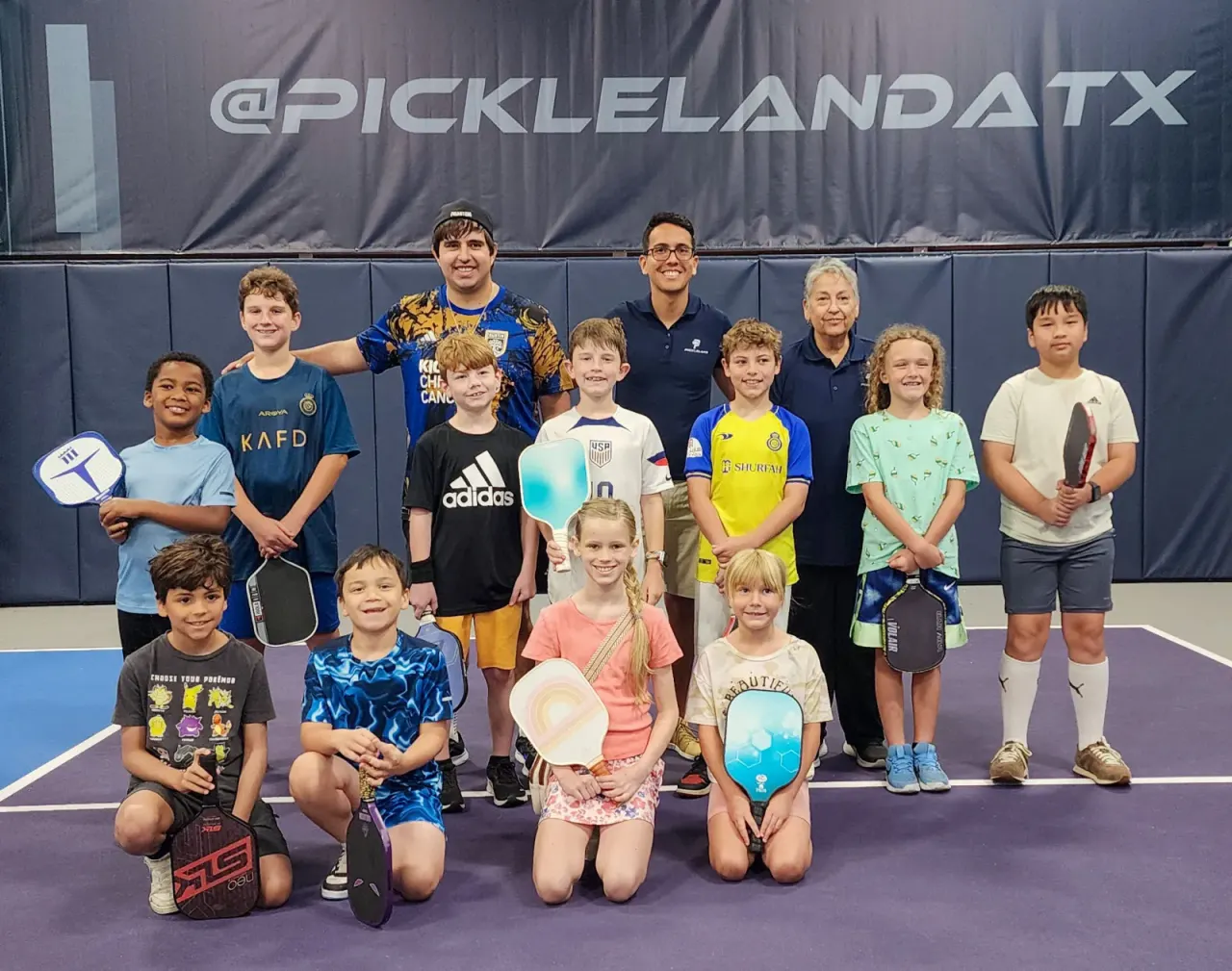
Few sports are as easy for a family to pick up together as pickleball. The court is small, the rules are simple, and within a single afternoon most kids can rally back and forth and even keep score — which means a lot less standing around and a lot more giggling.
If you are wondering where to begin, this guide walks you through it: what the game is, the gear your child needs, fun drills that build real skills, and the best ages, times, and places to play.

Understanding Pickleball
Pickleball takes place on a court similar in size to a badminton court. You can play pickleball on both indoor and outdoor courts, making it suitable for any type of environment.
Players of all ages whose goal is to hit the ball over the net so that it falls within the opponent’s court. Here are the basic rules to help your kids:
1. Serve
Remember, the game begins with a low, underhand serve that must be skillfully directed diagonally across the court, initiating the play with precision and setting the tone for the match.
2. Volley
After the ball has bounced once on each side of the court, players have the option to either volley the ball in the air or allow it to bounce again before returning.
3. Scoring
Points are scored solely by the serving team in pickleball. Pickleball is usually played to 11 points, and a player or team must win by at least a 2-point margin.
So, what are you waiting for? explore and learn our membership options today for more valuable tips and strategies to make your kids pickleball experience even more enjoyable and memorable.
How To Introduce Pickleball to Your Kids?
Introducing pickleball to your kids can be both fun and easy. Here’s a step-by-step approach:
1. Start with the Basic
Explain the game’s basics and goals clearly. Nothing to worry about because you can use simple terms and visual aids to help younger pickleball players kids grasp the concept, like:
- Use diagrams of the court.
- Show how to hold the paddle.
- Demonstrate a basic serve.
Don’t forget to make sure your kids have the correct gear, including a properly sized paddle and a lightweight pickleball that’s suitable for your kid’s age. You can do this by:
- Choosing a paddle suited for a kid’s grip.
- Selecting a ball that’s easy to handle.
- Ensuring equipment fits the kid’s size.
2. Practice Drills
Take note to start with basic pickleballdrills such as volleying the ball back and forth to enhance hand-eye coordination and build a foundational understanding of the game’s dynamics and reflexes.
Instruct your kids on executing an underhand serve while targeting a specific area of the court to develop precision and control in your kids serves, crucial for effective pickleball gameplay.
Additionally, you can include enjoyable mini-games like aiming for targets or playing “keep the ball in the air” to maintain the kid’s interest and make practice sessions engaging and fun.
3. Play Together
Since playing short games with your kids, gradually introduce the complete rules of pickleball. Keep the experience fun and motivating to ensure kids remain engaged and excited about the sport.
When to Play Pickleball?
1. Age Consideration
Take note that kids as young as 5 or 6 can begin learning pickleball, though the ideal age varies based on the child’s physical skills and interest level, such as:
- Coordination and balance
- Strength and stamina
- Enthusiasm for new activities
- Willingness to follow basic instructions
2. Time of Day
For optimal comfort, you can play during cooler parts of the day, particularly outdoors, to prevent heat-related problems. Weekends and after-school times are ideal for family-friendly activities and bonding moments.
Where To Play Pickleball?
1. Local Courts
Many neighborhoods feature pickleball courts in local parks or recreation centers. In addition, some tennis courts are adapted with markings for pickleball, providing flexible playing options for all pickleball enthusiasts.
2. Home Set-Up
If you have outdoor space, you might want to set up a temporary pickleball net in your driveway or backyard. This allows for easy and convenient practice right at home.
Why Pickleball Is Great for Kids?
Pickleball provides numerous advantages, and becoming a member today makes it an excellent choice for children:
1. Physical Fitness
While the game’s fast tempo boosts cardiovascular health, it also sharpens kids’ hand-eye coordination, enhances balance, and improves agility.
2. Social Interaction
Playing pickleball, whether in singles or doubles, helps teach kids valuable lessons in teamwork and communication, as kids learn to work together and strategize with their teammates on the court.
This provides an excellent opportunity for your kids to build new friendships and develop strong social skills.
3. Mental Development
When playing pickleball, kids develop strategic thinking and forward-planning skills, enhancing kids cognitive abilities. Achieving success in the game also significantly enhances kids’ self-esteem and overall confidence abilities.
What To Avoid?
To ensure a positive pickleball experience for your child, here are some common pitfalls to steer clear of:
1. Overcomplicating Rules
Avoid confusing kids with complex rules at first. Begin with simple rules and introduce more details as kids become comfortable and familiar with the game, ensuring a smoother learning experience.
2. Excessive Competition
Refrain from making pickleball games too competitive. Focus on making the experience fun and educational, as excessive competition can create stress and detract from overall enjoyment and development.
3. Skipping Warm-Ups
Never skip warm-ups before playing pickleball. Proper warm-ups help prevent injuries and prepare your child’s muscles and joints for the activity, making sure a more enjoyable and safe play experience.
4. Inconsistent Practice
You must avoid irregular practice schedules that can hinder skill development. Consistent practice helps improve your child’s abilities and keeps the child’s interest in the game, leading to better performance.
5. Ignoring Feedback
Listen to and act on your child’s feedback about their pickleball experience. Ignoring a kid’s input can lead to frustration and disengagement while addressing a child’s concerns can enhance progress.
6. Rushing Progress
Don’t rush your child’s progress and allow kids to develop the skills at their own pace, as pushing quickly can lead to frustration and diminish the love for the game.
Benefits of Getting Kids Involved in Pickleball
Starting your kids in pickleball can lead to long-term benefits:
1. Inclusive
Having a welcoming nature, pickleball accommodates various ages and skill levels, ensuring that every family member can join in and enjoy the game together. Its inclusivity fosters family bonding.
2. Accessibility
Don’t worry, because playing pickleball is simple to pick up and doesn’t demand expensive gear, making it accessible for many pickleball players regardless of budget or experience level.
3. Lifetime Sport
As a low-impact sport, pickleball is gentle on the joints and suitable for your kids, making it a very good choice for a lifetime of physical activity and kids’ enjoyment.
4. Family Bonding
How you engage in pickleball with your family is how you create valuable family moments that you will cherish, deepening connections and enhancing family bonds through shared activity and enjoyment.
Ignite Kids’ Passion for Pickleball with Fun and Friendship!
Introducing your kids to pickleball is rewarding, promoting physical activity, social skills, and mental growth. Understanding the game and how to play can create interest in the sport for children.
Check out our posts to inspire your child’s pickleball journey, whether a beginner or experienced player, these useful tips and resources help kids advance the game:
- Pickleball Vs. Padel Tennis – How Are They Different?
- How Does Pickleball Scoring Work? A Complete Guide
- Top Pickleball Drills For Skill Improvement: Serving, Dinking, And Fast Hands
Frequently Asked Questions (FAQs)
Do Millennials Play Pickleball?
Yes, Millennials are increasingly playing pickleball, attracted by its social and fitness benefits. The sport’s accessibility and fun nature appeal to the millennial generation’s desire for active and engaging activities.
How Fast Can You Learn Pickleball?
Pickleball can be learned quickly, with basic skills and rules grasped in a few sessions. Mastery takes more time, but most players start enjoying the game within a few weeks.
What Is the Hardest Part of Pickleball?
The hardest part of playing pickleball often involves mastering strategic play and shot placement. As players advance, developing precise control and effective strategies becomes very important for competitive success.