
No. You cannot serve overhand in pickleball. It is one of the clearest differences from tennis, and it’s the single most common illegal serve among players coming from a racquet-sport background.
What makes a volley serve legal
A volley serve — the standard serve, struck out of the air — has three requirements. As of the 2026 rulebook, all three must be clearly satisfied:
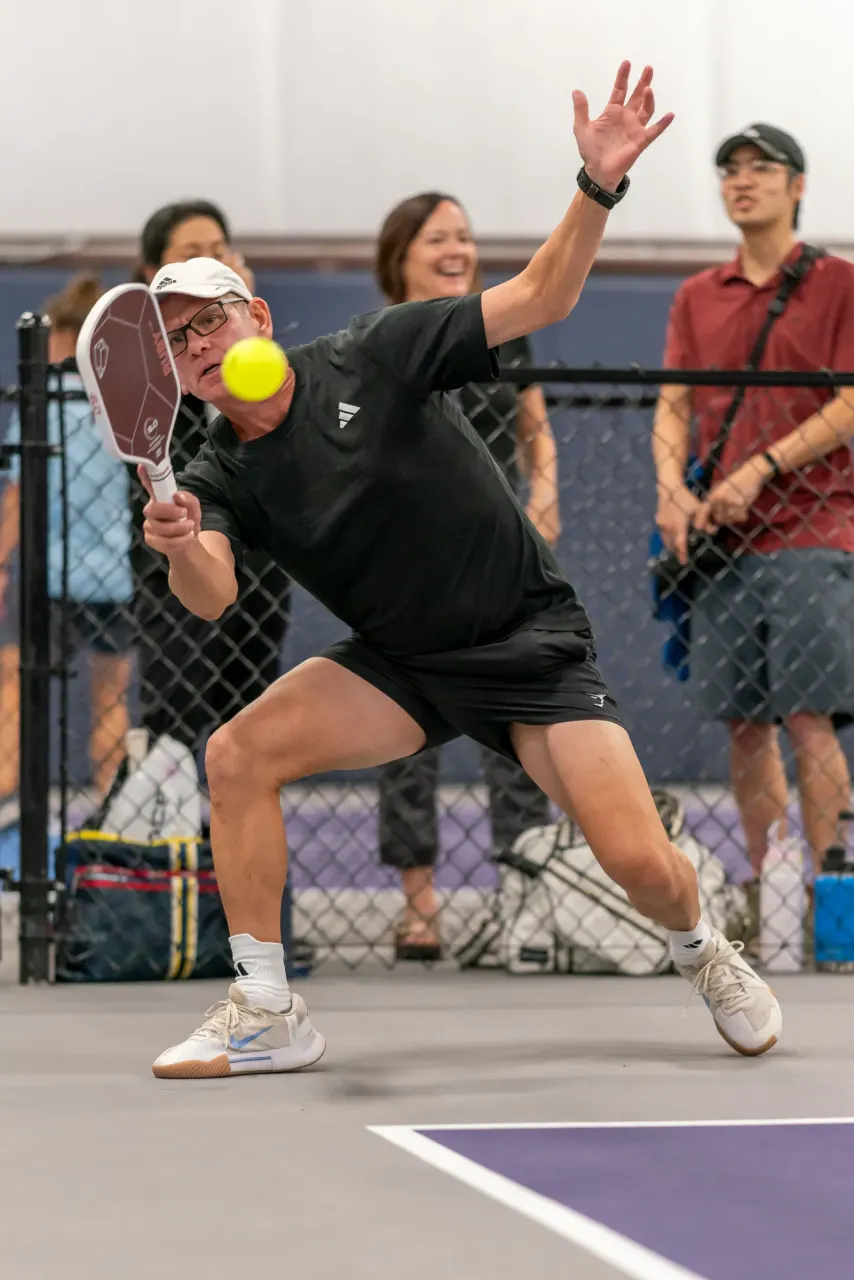
- Contact below the waist. The paddle must contact the ball below your waist level, understood as the navel.
- Paddle head below the wrist. At the moment of contact, the highest part of the paddle head must be below the highest part of your wrist.
- Upward arc. The paddle must travel in an upward arc through contact.
An overhand or sidearm motion fails all three at once. There’s no version of a legal overhand serve.
The word “clearly” was added to all three requirements for 2026, which flipped the burden: borderline serves used to get the benefit of the doubt, and now referees can fault a serve that isn’t obviously legal. Details in 2026 pickleball rule changes.
The other serve requirements
Motion is only half of it. The serve also has to be placed correctly:
- Struck diagonally into the opponent’s service court.
- Must clear the non-volley zone and the kitchen line — a serve landing on that line is a fault.
- Both feet behind the baseline at contact, within the imaginary extensions of the sideline and centerline. See pickleball foot fault rules.
The exception: the drop serve
Here’s what most people miss. The drop serve is not subject to those three motion requirements.
With a drop serve you release the ball — from your hand or off your paddle — let it bounce, and then hit it. Because you’re not striking a ball out of the air, the below-waist, paddle-below-wrist, and upward-arc rules don’t apply. You can hit a drop serve with essentially any motion.
What you cannot do is add force to the drop. The ball must be released and allowed to fall naturally; you may not throw it down or toss it up.
For anyone whose volley serve keeps drawing scrutiny under the stricter 2026 enforcement, the drop serve is the clean and entirely legal answer.
Why the rule exists
The underhand serve is deliberate design, not an accident of history. An overhand serve on a 20 × 44 ft court with a 34-inch net would be close to unreturnable — the server would win most points outright, and rallies would largely disappear.
Keeping the serve underhand keeps pickleball a rally sport. It’s the same reason the two-bounce rule exists: both rules exist to stop the serving team from dominating the first three shots.
Frequently Asked Questions
Can you serve overhand in pickleball?
No. A volley serve must be struck with an upward arc, with contact below the waist and the paddle head below the wrist. An overhand motion violates all three requirements.
Can you serve sidearm in pickleball?
Not as a volley serve — a sidearm motion fails the upward arc requirement. A drop serve, however, is not bound by that requirement.
Is the drop serve legal in pickleball?
Yes. You release the ball, let it bounce, and strike it. Because the ball is not hit out of the air, the below-waist, paddle-below-wrist, and upward-arc rules do not apply.
Can you hit a hard serve in pickleball?
Yes. Plenty of players generate real pace within a legal underhand motion, mostly through leg drive and racquet-head speed rather than a high contact point. See how to serve in pickleball.
What changed about the serve in 2026?
The word “clearly” was added to all three volley serve requirements, giving referees authority to fault serves that are not clearly legal instead of favoring the server on close calls.