

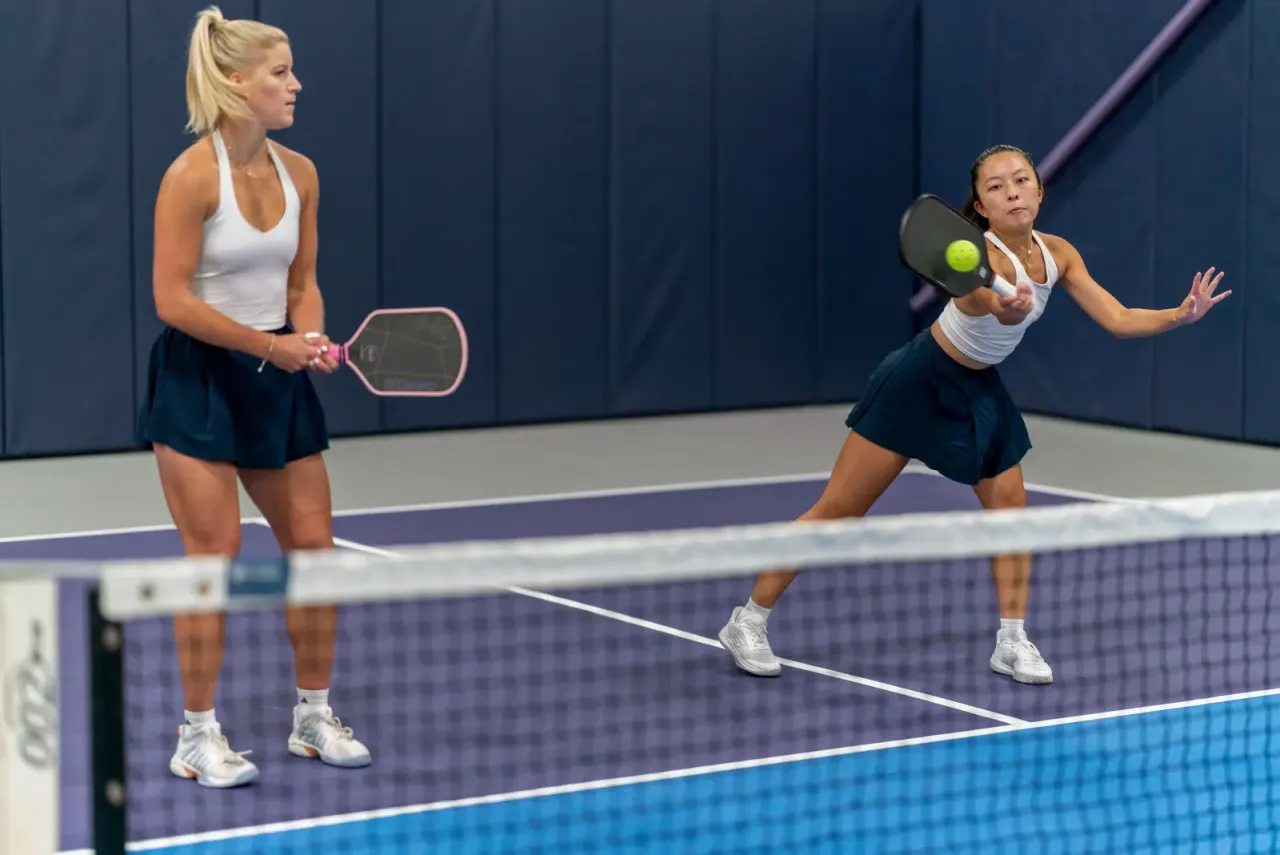
When a dink rally speeds up, the players who win are almost never the ones swinging hardest. They’re the ones with the shortest motion. That’s the punch volley.
What it is
A punch volley is a compact, firm block-and-push of a ball taken out of the air at the net. No backswing to speak of, no follow-through worth mentioning — just a short forward move through the ball.
It sits between two other shots:
- A block absorbs pace and drops the ball soft — see how to reset.
- A punch adds a little pace and drives the ball at a target.
- A speed-up initiates the attack from a dink.
The punch is your answer once someone else has sped the ball up at you.
The technique
Paddle out front and up. Ready position with the paddle head above your wrist, roughly chest height, out in front of your body. If your paddle is at your hip when the ball speeds up, you have already lost the exchange — you cannot get it up in time.
Firm wrist, loose forearm. The wrist should not flick or break. A firm wrist is what turns your paddle into a wall you can aim. Death grip isn’t required — around six out of ten pressure.
Short motion forward. Think of pushing a door closed. Maybe six inches of paddle travel. The ball already has pace; you’re redirecting it, not creating it.
Contact in front of your body. Late contact means the ball deflects wherever the paddle happens to be pointing. Meet it out front where you can control the face.
Stay low and still. Knees bent, head steady. Players who stand up during hands battles pop the ball up.
Where to aim
Three targets, and the order matters:
1. At the middle, low. The seam between opponents, aimed down at their feet. Both players hesitate, and neither has a comfortable ball.
2. At the dominant player’s right hip (for a right-hander). The hardest place to defend, because the paddle has to come across the body and there’s no natural stroke for it.
3. Straight back at whoever attacked you. Simple, effective, and the shortest distance means they get the least time.
Not the sidelines. In a fast exchange, going for a corner is how you hand over a free point.
Punch vs block: choosing
The read is your contact height.
Ball is above net height when you contact it → punch. You can drive down through it and put pressure on.
Ball is at or below net height → block or reset. Punching from below the net means hitting up, which sets up their next attack.
That single rule fixes most hands-battle losses. Players who lose them tend to punch everything, including balls at their ankles.
Common mistakes
Swinging. By far the most common. A full swing at a fast ball is a guess. Shorten the motion until it feels like you’re barely moving the paddle.
Paddle too low in ready position. Costs you the first ball of every exchange. Paddle up, out front, always.
Flicking the wrist. Adds pace and subtracts control. Keep the wrist firm and let the shoulder move the paddle.
Backing up. Instinct under pressure, but retreating gives the ball more time to drop and pulls you out of position. Hold your ground a paddle’s width behind the kitchen line.
Watching your own shot. Recover the paddle to ready immediately. Hands battles are five or six balls, not one.
Drills
Hands battle from the kitchen. Both players at the line, one foot back from it. Start with a dink, then anyone may speed up. Play the point out. Best drill in the sport for this shot, and it builds reaction speed nothing else does.
Punch to the middle. Partner feeds firm balls at chest height; you punch every one into a target in the middle of the court. Twenty reps, then swap.
High-low decision. Partner alternates feeds above and below net height at random. Punch the high ones, reset the low ones. Trains the read, which is the actual skill.
Frequently Asked Questions
What is a punch volley in pickleball?
A compact, firm volley taken out of the air at the net with almost no backswing, used to redirect a fast ball at a target rather than to generate power.
How do you win hands battles in pickleball?
Keep the paddle up and out in front, use the shortest motion you can, contact the ball in front of your body, and aim low at the middle. Punch balls above net height and reset balls below it.
Should you punch or block a fast ball?
Punch if you contact the ball above net height. Block or reset if it’s at or below net height, since punching from below the net forces you to hit up and sets up their next attack.
Where should you aim a punch volley?
Low at the middle seam between opponents, at the dominant player’s paddle-side hip, or straight back at whoever attacked you. Avoid the sidelines in fast exchanges.
Why do I keep popping the ball up at the net?
Usually contact below net height with an upward paddle path, or standing up out of your stance. Stay low and reset those balls instead of punching them.